
Spending one day in Montevideo is more common than you might think. Uruguay’s capital is a regular stop on South Atlantic cruise itineraries, and it’s the most popular day trip from Buenos Aires, reachable by a fast ferry across the Río de la Plata in under three hours. In both cases, you land in or near the same place, the port area on the western edge of Ciudad Vieja, and you have roughly six to eight hours before you need to head back. That’s enough time to walk the historic core, eat a proper lunch at the Mercado del Puerto, and cover a stretch of the Rambla that shows you why Montevideo’s waterfront is one of the finest in South America.
This itinerary is designed to work on foot, in a single continuous loop, with real walking times between every stop. It works whether you’re stepping off a Buquebus ferry at 10:00 AM or disembarking from a cruise ship at 8:00 AM. The difference is just how much time you have and where you start walking.
Two Ways In, One Itinerary
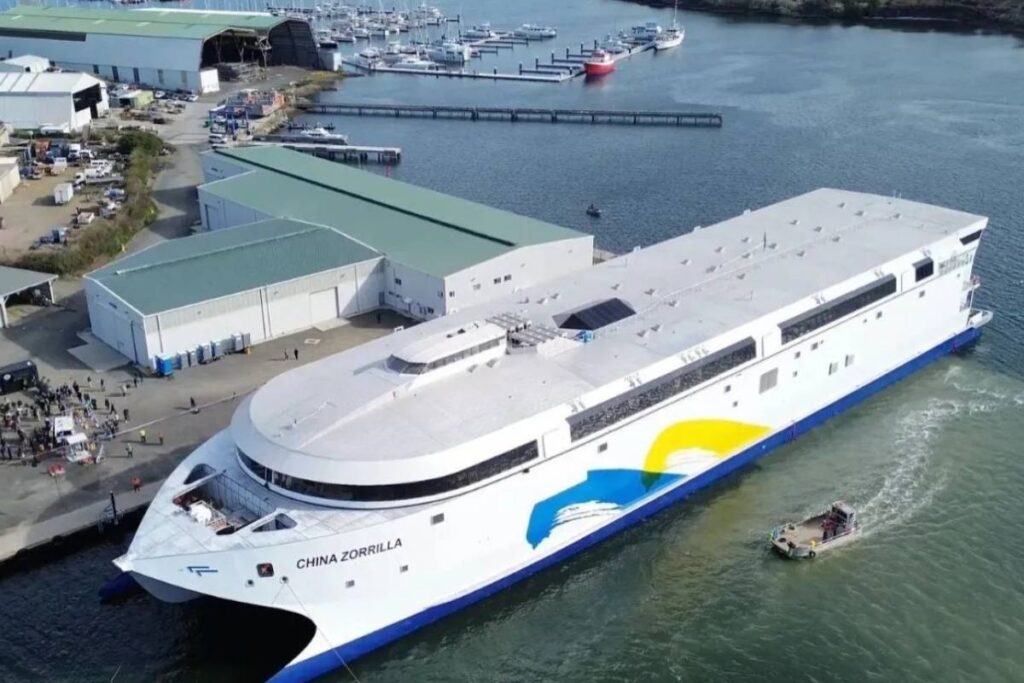
If you’re coming from Buenos Aires by ferry, you’ll arrive at the Terminal Fluvial on the edge of Ciudad Vieja, either via the fast ferry (about 2 hours 15 minutes from Buenos Aires) or the slower Colonia Express route via Colonia del Sacramento (ferry plus bus, roughly 4 hours total). The fast Buquebus deposits you directly in Montevideo’s port. Immigration is quick, and you’ll be walking within minutes of docking.
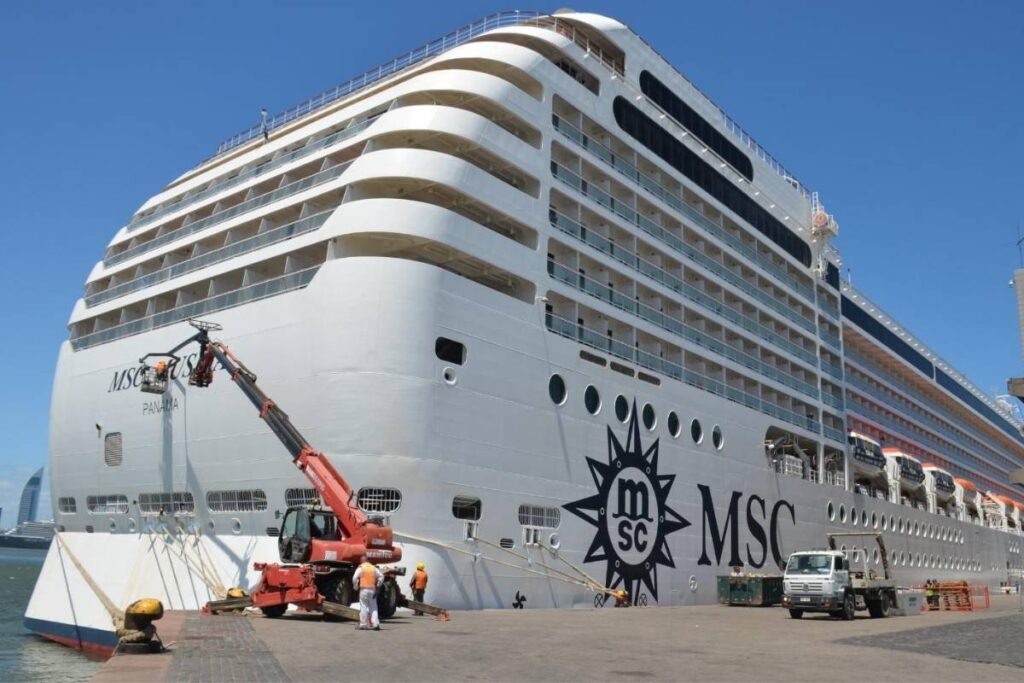
If you’re arriving by cruise ship, your vessel docks at the Terminal de Cruceros, roughly 500 meters east of the ferry terminal. You’ll clear the port and emerge onto Rambla 25 de Agosto, with Ciudad Vieja immediately to your left. Cruise passengers typically arrive between 7:00 and 9:00 AM and need to be back on board by 5:00 to 6:00 PM, giving you a full day.
Either way, getting in from the port or airport is straightforward, and Ciudad Vieja is where you start.
Morning: Walking Ciudad Vieja
Distance: approximately 3 km. Time: 2 to 3 hours, depending on stops.
Ciudad Vieja is Montevideo’s historic heart, a compact grid of colonial and art deco buildings on a peninsula that juts into the Río de la Plata. It’s the oldest part of the city, founded in 1724, and everything you need to see in the morning fits within a roughly 15-block area.
Plaza Independencia
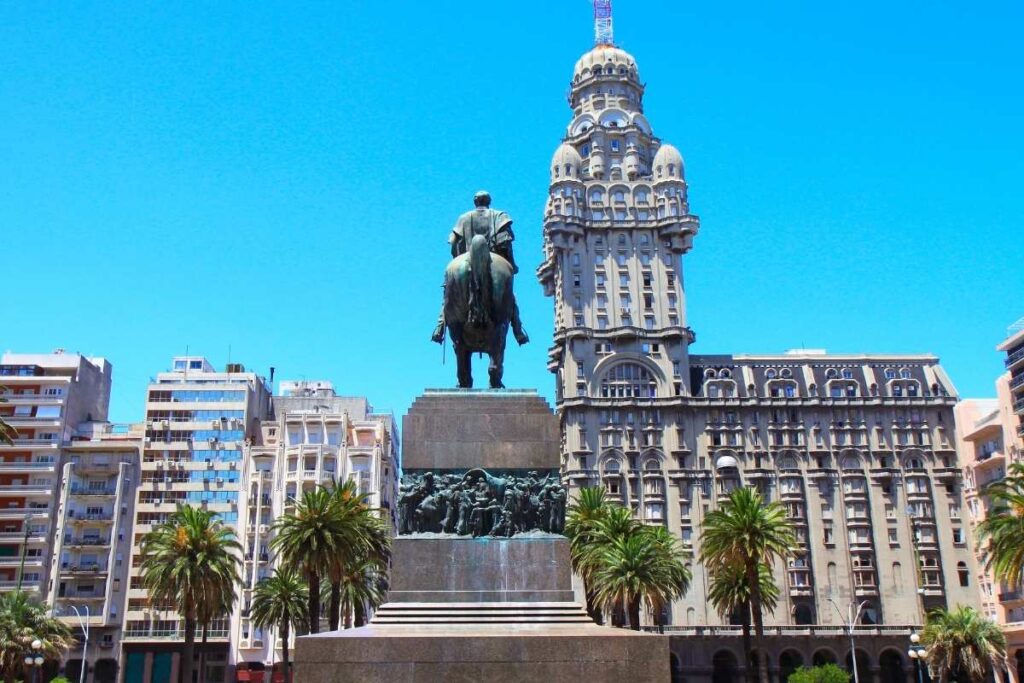
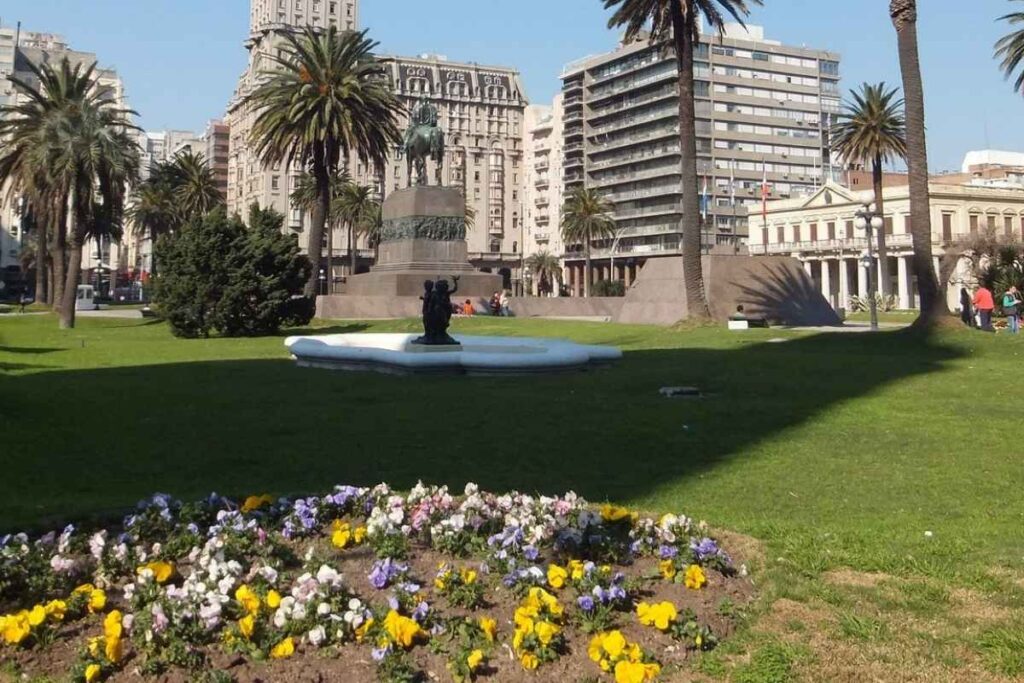
Start at Plaza Independencia, the large square that marks the boundary between Ciudad Vieja and the modern Centro district. The plaza is dominated by the Mausoleo de Artigas, the underground memorial to José Gervasio Artigas, Uruguay’s national hero and the father of its independence. A ceremonial guard stands watch over the remains, and the marble chamber below the plaza is worth the five-minute descent.
On the plaza’s southern side, the Palacio Salvo rises 100 meters above the street. When it was completed in 1928, it was the tallest building in South America, and its eclectic mix of Art Deco, Neo-Gothic, and Italian Renaissance elements makes it one of the most distinctive structures in the city. The Torre Ejecutiva (presidential offices) and the historic Teatro Solís flank the plaza on other sides.
Teatro Solís, inaugurated in 1856, is Uruguay’s most important performing arts venue and one of the finest theaters in South America. Guided tours run throughout the morning and take about 40 minutes, covering the main auditorium, the backstage areas, and the building’s 170-year history. If this is your first paid stop, you can book tours and tickets in Montevideo in advance to guarantee a time slot, though availability is rarely a problem outside of cruise-heavy days.
Calle Sarandí and the Pedestrian Core
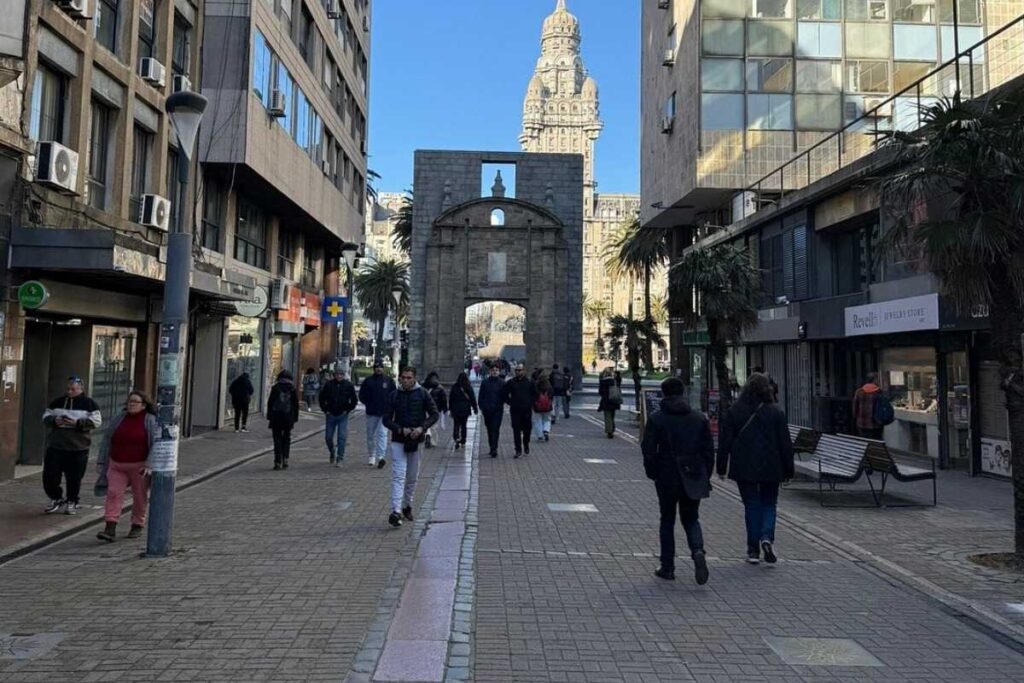
From Plaza Independencia, walk west along Calle Sarandí, the pedestrian street that serves as Ciudad Vieja’s commercial spine. The architecture here shifts between restored colonial buildings and weathered facades that haven’t been touched in decades, and both contribute to the character. Street vendors, buskers, and mate-drinking locals fill the sidewalks, and the general atmosphere is relaxed in a way that feels specifically Uruguayan.
Along Sarandí, you’ll pass the Museo Torres García, dedicated to the Uruguayan painter Joaquín Torres García, one of Latin America’s most influential modern artists. His signature style, a grid-based composition that merges Constructivism with Pre-Columbian symbolism, is instantly recognizable, and the museum’s three floors trace his evolution from early European work to the mature paintings that made him famous. Entry is affordable and the visit takes roughly 30 to 40 minutes.
Plaza Constitución and the Cathedral
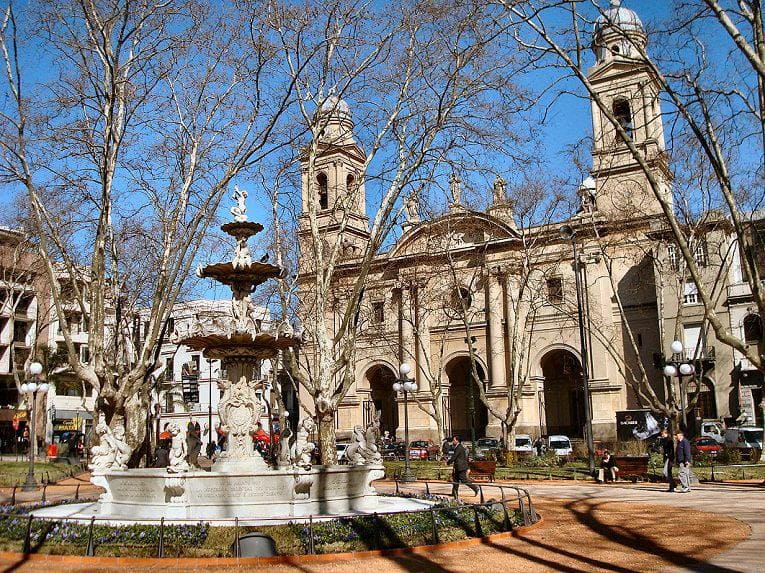
Continue along Sarandí to Plaza Constitución (also called Plaza Matriz), the original main square of colonial Montevideo. The Catedral Metropolitana, dating to 1804, occupies the eastern side with its neoclassical facade and twin bell towers. The Cabildo de Montevideo, the old town hall, faces it from across the square and now houses the Museo y Archivo Histórico Municipal. On weekday mornings, an informal market fills the plaza with antique and handicraft vendors.
Plaza Zabala
Walk two blocks north to Plaza Zabala, a quieter, tree-lined square surrounded by some of the finest architecture in Ciudad Vieja. The Palacio Taranco, a Beaux-Arts mansion built in 1908 for a wealthy merchant family, now serves as the Museo de Artes Decorativas and is free to enter. The interiors, with their original furniture, imported marble, and French-designed rooms, offer a glimpse into the opulent world of Montevideo’s early 20th-century elite.
From Plaza Zabala, walk south toward the waterfront. You’ll pass through blocks that mix renovated buildings with grittier, unrestored streets, which is part of what makes Ciudad Vieja feel authentic rather than curated. The entire walk from Plaza Independencia to the port area takes roughly 25 minutes at a comfortable pace.
Lunch: Mercado del Puerto
Time: 12:00 to 1:30 PM. Distance from Plaza Zabala: 5-minute walk.
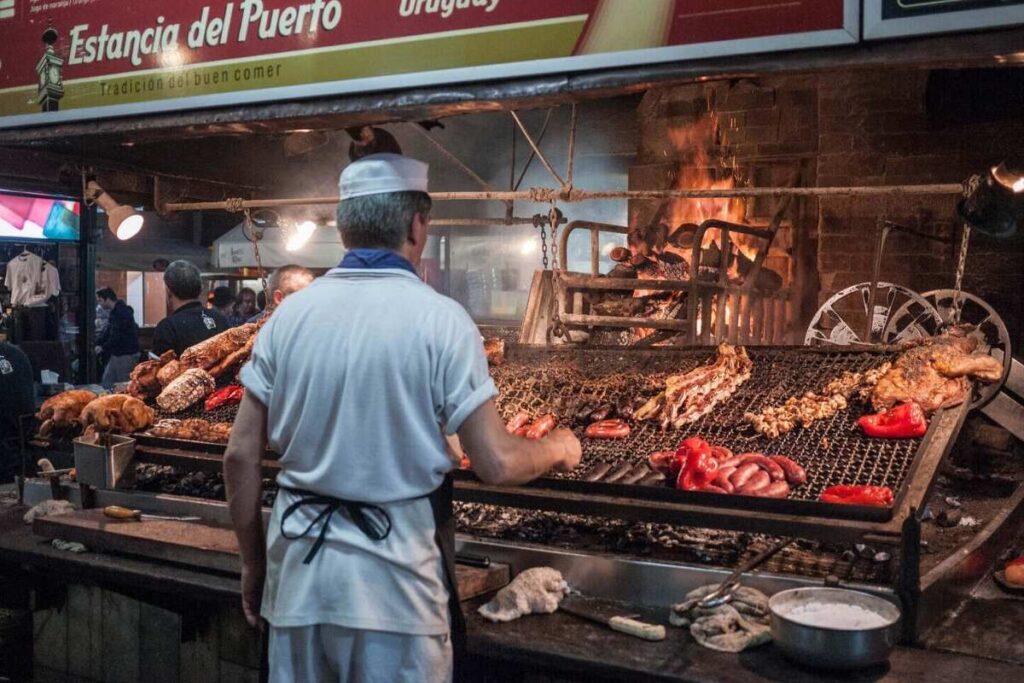
The Mercado del Puerto is a wrought-iron market hall built in 1868 that has become Montevideo’s most iconic food destination. The interior is filled with parrilla restaurants where whole sides of beef, pork, and sausage cook over open wood fires, and the smoke and the smell hit you before you walk through the door.
This is not a refined dining experience. It’s loud, smoky, crowded on weekends, and utterly wonderful. You sit at a counter or a shared table, order a parrillada (mixed grill), a glass of Tannat (Uruguay’s signature red wine, made from a grape that thrives in the country’s clay soils), and let the asador handle the rest. The standard order includes asado de tira (short ribs), chorizo, morcilla (blood sausage), and whatever else the grill master recommends. Medio y medio, a half-sparkling wine, half-white wine cocktail invented in the Mercado, is the traditional aperitif.
For a deeper understanding of what to order and why it matters, what to eat at the Mercado del Puerto covers the menu, the etiquette, and the stalls worth seeking out.
Allow at least an hour for lunch. Rushing through the Mercado defeats the purpose.
Afternoon: Walking the Rambla
Distance: 6 to 10 km depending on how far you walk. Time: 2 to 4 hours.
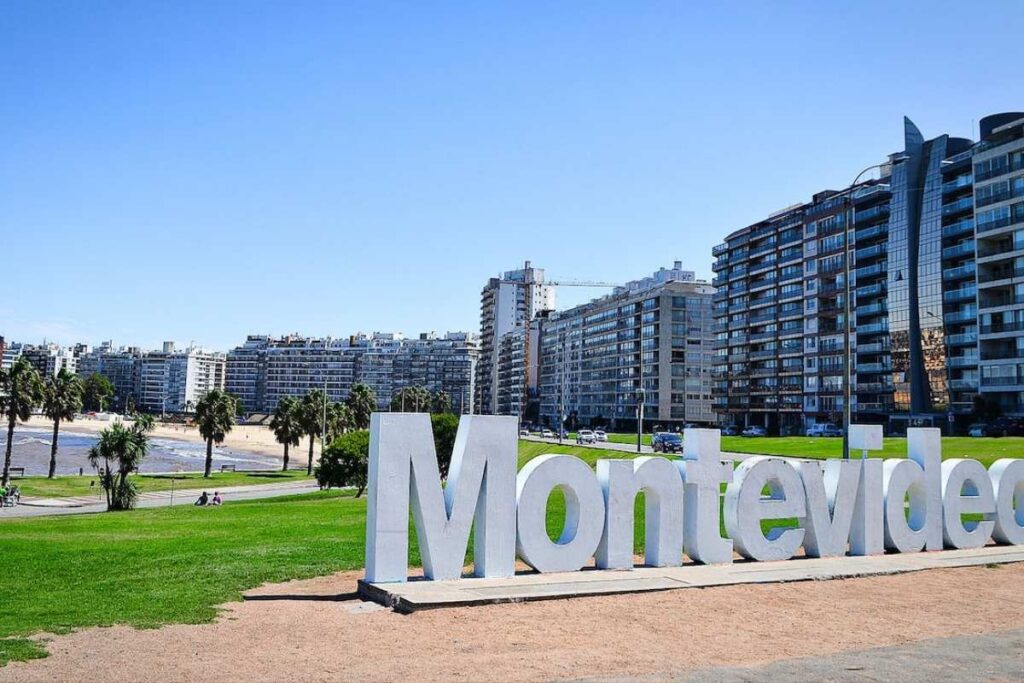
The Rambla is Montevideo’s waterfront promenade, and at 22 kilometers from end to end, it is one of the longest continuous coastal walkways in the world. You won’t cover all of it in an afternoon, but the stretch from Ciudad Vieja southeast to Pocitos is the most rewarding section and is entirely walkable in 2 to 3 hours at a comfortable pace.
From the Mercado del Puerto, walk east along Rambla 25 de Agosto, which traces the edge of Ciudad Vieja along the port. The initial stretch passes through the working waterfront, with fishing boats, port infrastructure, and views across the Río de la Plata that stretch to the horizon on clear days. The river here is so wide (roughly 220 kilometers at its mouth) that it looks and behaves like an ocean, with tides, currents, and a color that shifts between brown and silver depending on the light.
As you continue southeast, the Rambla passes through Barrio Sur and curves around Parque Rodó, a green, shaded park that houses the Museo Nacional de Artes Visuales (free entry, strong collection of Uruguayan art) and a small amusement park. The park is a natural rest stop, with benches under old trees and views of the water.
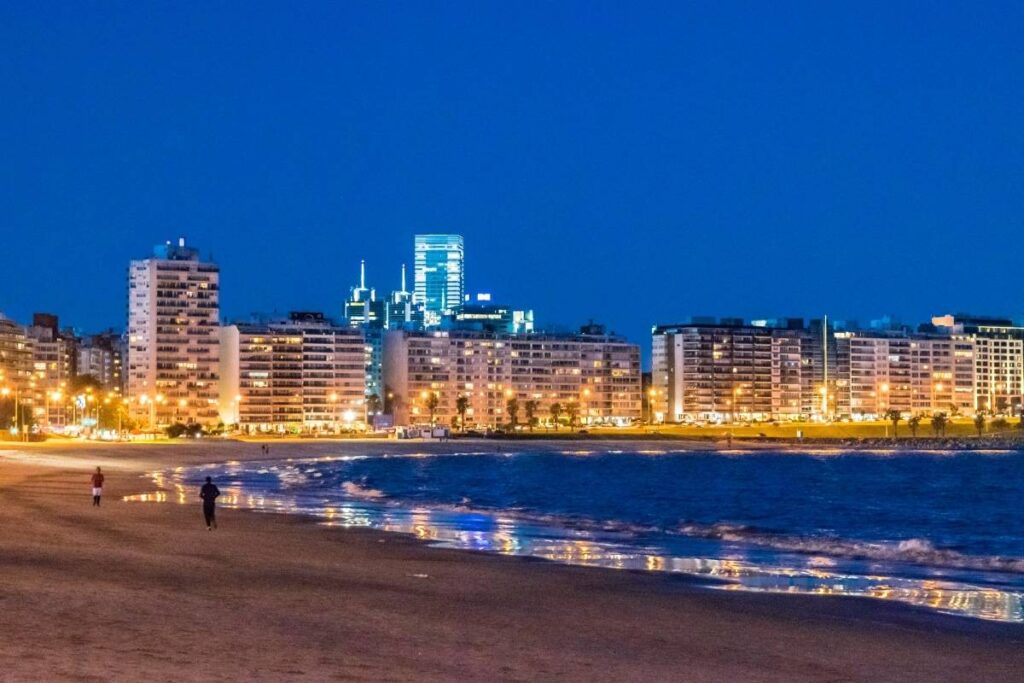
Beyond Parque Rodó, the Rambla continues along Playa Ramírez and into Pocitos, the most popular beach neighborhood in the city. Playa Pocitos is a wide, crescent-shaped beach backed by modern apartment buildings, and the promenade here fills with joggers, cyclists, dog walkers, and families on any afternoon when the weather cooperates. The Montevideo sign (large white letters spelling the city’s name) sits at the eastern end of Pocitos beach and has become one of the most photographed spots in the city.
For details on the full route, viewpoints, and how to pace yourself, walking the Rambla covers the complete stretch with distances and landmarks.
How Far to Walk
For cruise passengers who need to return to the port by late afternoon, walking from the Mercado to Parque Rodó (approximately 4 km, about 50 minutes) and then taking an Uber or taxi back to the port (10 minutes, roughly USD 5 to 8) is the most practical plan. This gives you the best section of the Rambla without risking your reboard deadline.
For ferry day-trippers with a later departure (most evening ferries leave between 7:00 and 9:30 PM), you can walk all the way to Pocitos (approximately 7 km from the Mercado), spend time on the beach, and take a taxi back to the Terminal Fluvial in about 15 minutes.
Late Afternoon: Winding Down
If you have time before your ferry or before returning to your ship, two options work well.
Option A: Return to Ciudad Vieja and spend your remaining hour in the cafés and shops around Calle Pérez Castellano and Calle Piedras, the blocks immediately surrounding the Mercado del Puerto. This area has a growing number of independent shops, wine bars, and galleries that are easy to miss on the morning walk when the focus is on the historic landmarks.
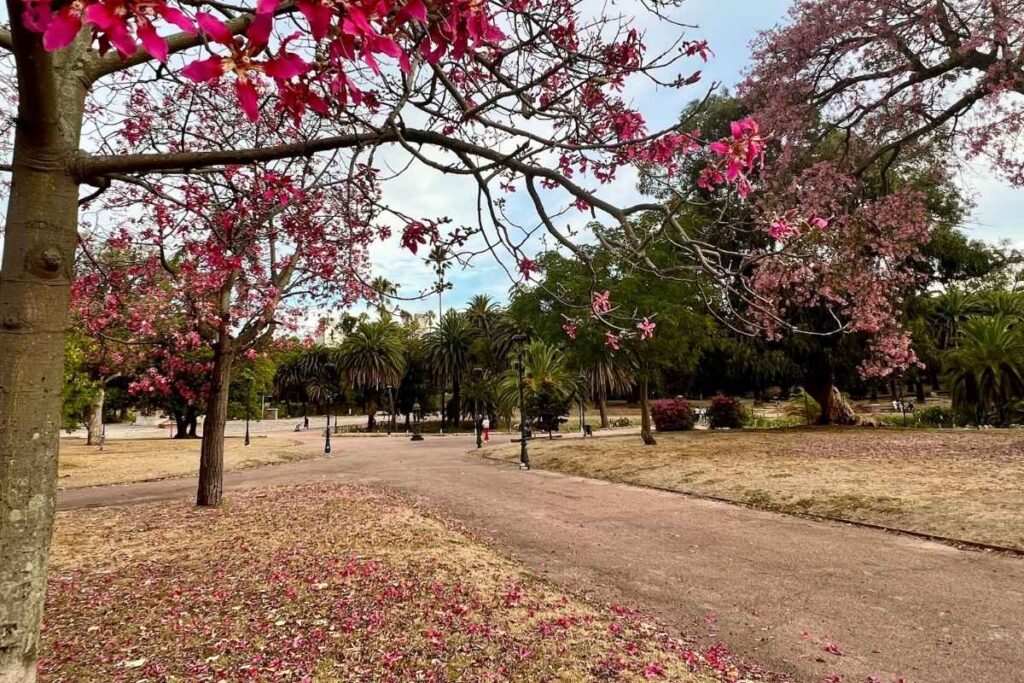
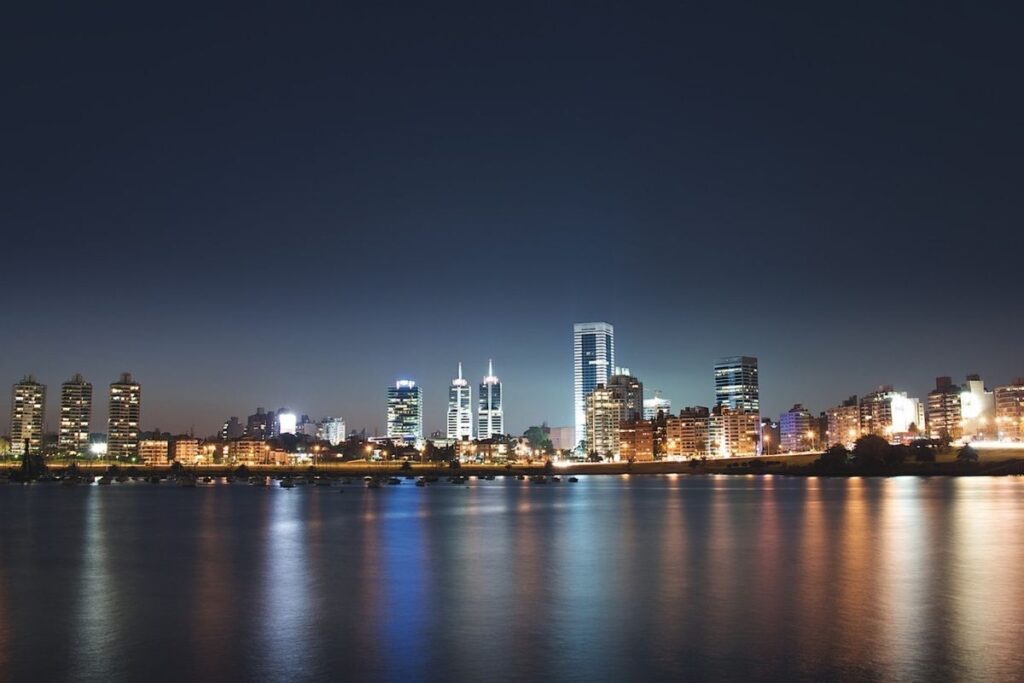
Option B: Sunset from Parque Rodó or Pocitos. If your schedule allows, catching the sunset over the Río de la Plata from the Rambla is one of those simple, free experiences that stays with you. The light at this latitude, particularly in the shoulder seasons of March to May and September to November, turns the water gold and the sky a deep, layered orange.
Practical Notes for Your Day
Currency: Uruguay uses the Uruguayan peso (UYU). Cards are accepted at most restaurants and shops in Ciudad Vieja and along the Rambla, but carry cash for the Mercado del Puerto, where some stalls prefer it.
Transport: Uber and Cabify work reliably in Montevideo. Taxis are metered and honest. Buses are cheap but harder to navigate for a single-day visit. For the Rambla walk, your feet are the best option going out and a ride app is the most efficient option coming back.
Safety: Ciudad Vieja and the Rambla are safe during daylight hours. Standard urban precautions apply: keep your phone out of sight on quieter streets, avoid carrying large amounts of cash, and be aware of your surroundings in less-trafficked blocks of the old town.
What to bring: comfortable walking shoes (you’ll cover 10 to 14 km total), sunscreen (the Rambla offers almost no shade), a light layer for wind off the river, and a reusable water bottle. Tap water in Montevideo is safe to drink.
Mate etiquette: you will see mate everywhere. If a local offers to share theirs, accept it. Drink the gourd dry, pass it back, and say gracias only when you’ve had enough. Stirring the yerba or blowing on it is considered bad form.
One day in Montevideo won’t show you everything the city has to offer, but it will show you enough to understand why the people who live here rarely seem to be in a hurry to leave. Walk the old town, eat at the Mercado, follow the Rambla until your legs or your schedule tell you to stop, and let Montevideo’s quiet, understated charm do the rest.
Book the Best Activities and Tours in Montevideo: