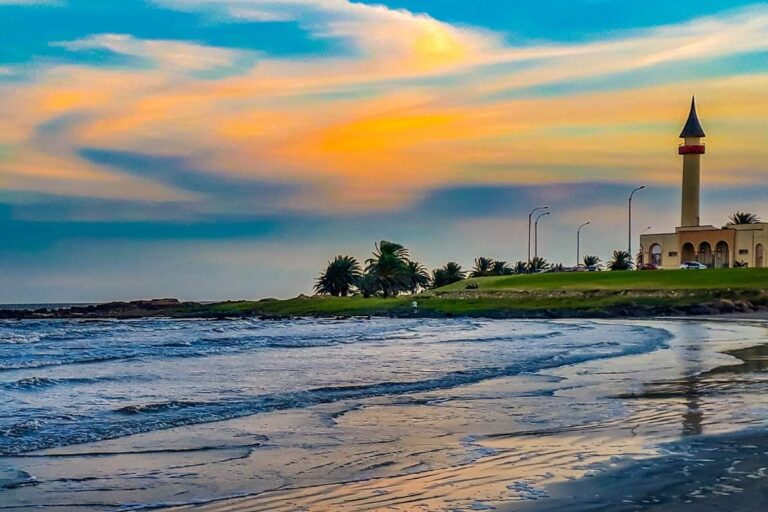

The honest answer depends almost entirely on when you’re going. Punta del Este in January and Punta del Este in June are not the same destination. One is South America’s most glamorous beach resort, packed with Argentine and Brazilian money, open-air restaurants, nightlife that doesn’t start until midnight, and beaches that rival anything in the Mediterranean. The other is a quiet, largely shuttered coastal town where half the restaurants are closed, the wind off the Atlantic cuts through your jacket, and the most exciting thing happening is a sunset at Casapueblo watched by twelve people instead of twelve hundred.
Both versions have value. But booking a Punta del Este day trip from Montevideo without understanding which version you’re getting is the fastest way to either overpay for crowds or show up to a ghost town. This article treats the season as the axis, because everything else follows from it.
The Seasonality Question
Punta del Este operates on a cycle that is more extreme than most beach destinations. The town’s identity, infrastructure, and pricing are built around a three-month summer window, and the rest of the year runs on a completely different frequency.
December to February: Full Volume
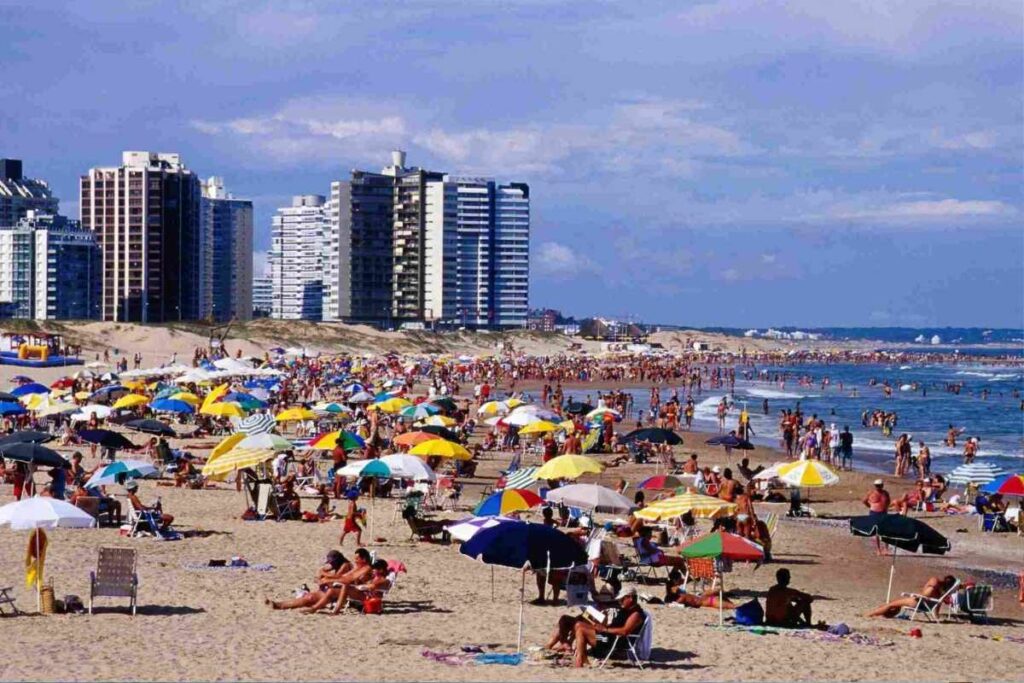
This is the Punta del Este that appears in magazines. Temperatures sit between 25°C and 30°C, the days are long, the beaches are full, and the social scene operates at a level that earns the “St. Tropez of South America” comparison. Playa Mansa fills with families and paddleboards. Playa Brava draws surfers and swimmers to its open-ocean waves. The yacht harbor is packed. The restaurants are booked. And the prices reflect all of it.
A summer day trip from Montevideo works well, but you’ll share the town with the peak-season crowd, and everything from bus tickets to beachside lunches costs more. If you’re visiting Montevideo in summer and want the full Punta experience, this is the window. Just book transport and any tours from Montevideo to Punta del Este in advance, because availability tightens fast in January.
March to May: The Sweet Spot
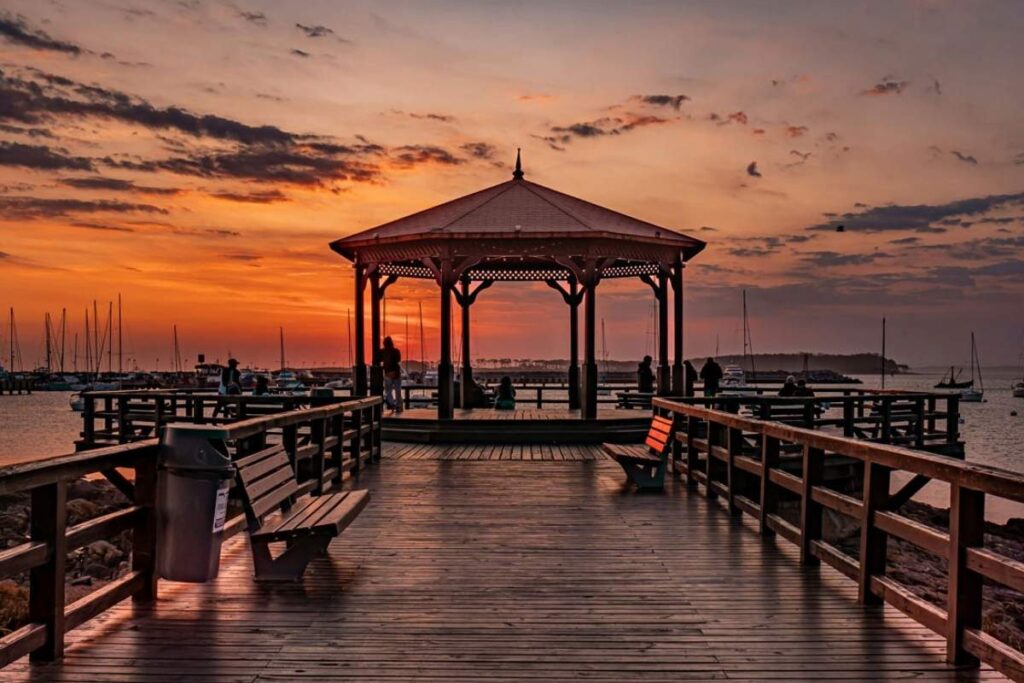
Autumn is when Punta del Este becomes genuinely appealing for day-trippers. The summer crowds disperse, the temperatures remain comfortable (18°C to 24°C in March, cooling through May), and the town’s restaurants and cultural attractions stay open. Prices drop significantly. The beaches are quieter but still swimmable through March. And the light along the coast takes on a warmer, lower tone that photographers love.
This is the season I recommend most for a Montevideo-based day trip. You get the town’s physical beauty and cultural offerings without the summer markup or the winter shutdown. Casapueblo at sunset in April, with a fraction of the crowd, is a different experience than the same sunset in January.
June to August: Proceed With Caution
Winter in Punta del Este is not a beach trip. Temperatures range from 6°C to 14°C, the wind off the Atlantic is persistent, and a significant number of restaurants, shops, and hotels close for the season. The town doesn’t die completely, as Casapueblo, the Ralli Museum, and a handful of restaurants remain open year-round, but the energy that defines Punta in summer is entirely absent.
A winter day trip can still work if you go specifically for Casapueblo, the La Mano sculpture, and a quiet drive along the coast. But it’s a contemplative experience, not a beach day, and you need to know that going in. Checking Montevideo weather by month before choosing your dates helps set expectations for both the capital and the coast.
September to November: The Reopening
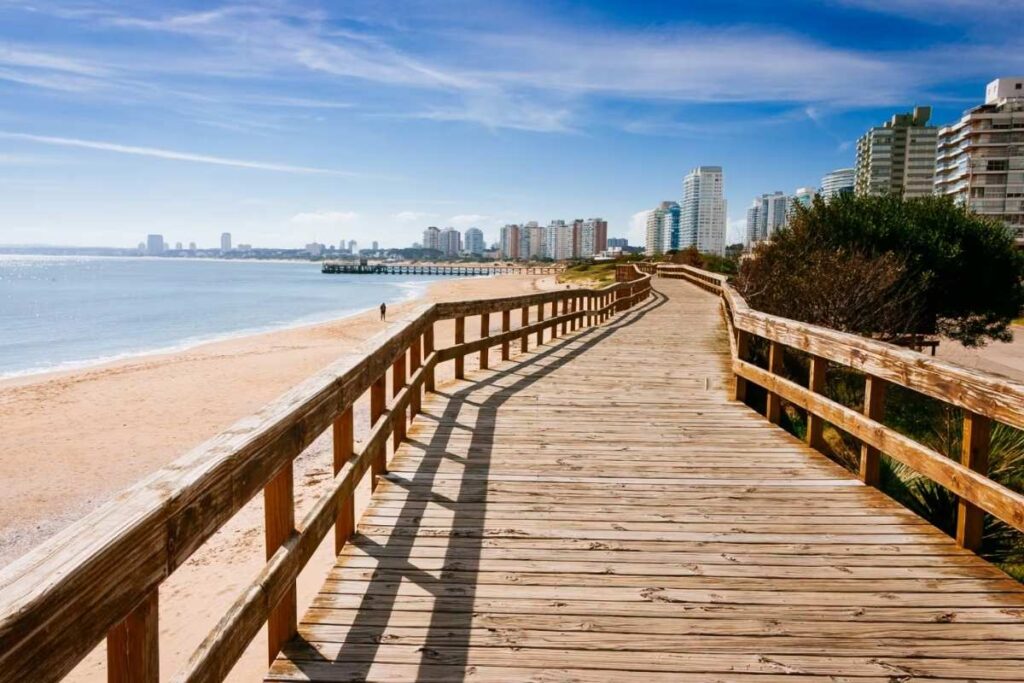
Spring brings warmer temperatures (16°C to 23°C), longer days, and the gradual reopening of the town’s seasonal infrastructure. By November, most restaurants and attractions are operational, and the beaches are pleasant for walking even if the water is still cool. Prices remain at off-season levels, and the atmosphere is relaxed. It’s a solid window for a day trip, particularly in November, when the weather approaches summer conditions without the summer crowds.
What to See in a Day
Regardless of the season, a day trip to Punta del Este follows a natural route from the peninsula outward.
The Peninsula
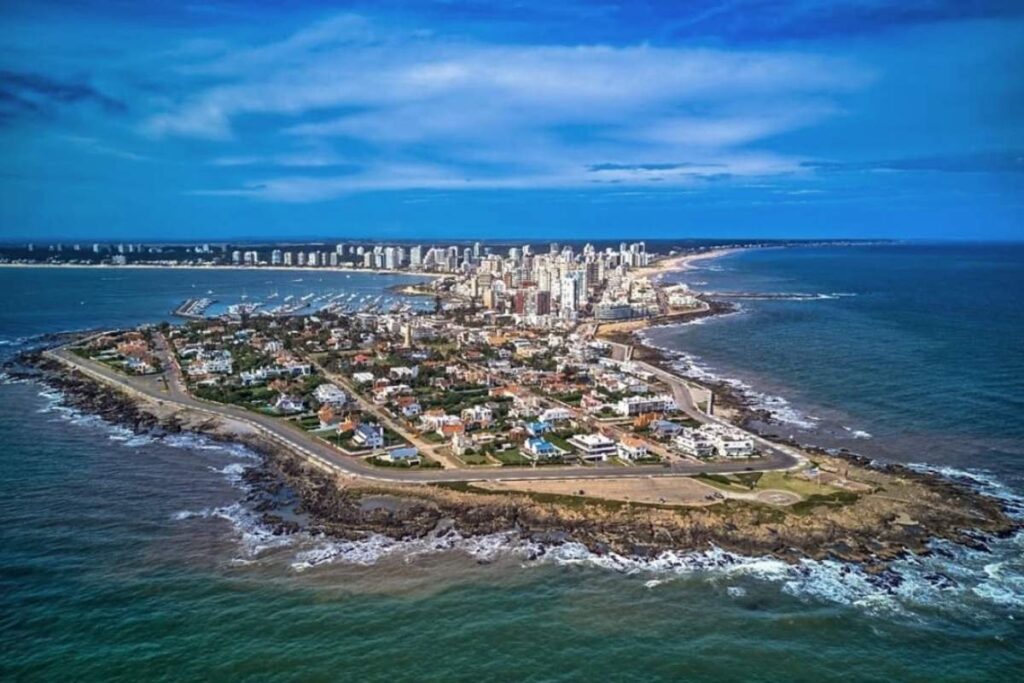
The town occupies a narrow peninsula that separates the calm waters of Playa Mansa (west, facing the Río de la Plata) from the open surf of Playa Brava (east, facing the Atlantic). This geographic split defines the town’s personality: Mansa is for floating, paddleboarding, and sunset drinks. Brava is for waves, long walks, and the town’s most famous landmark.
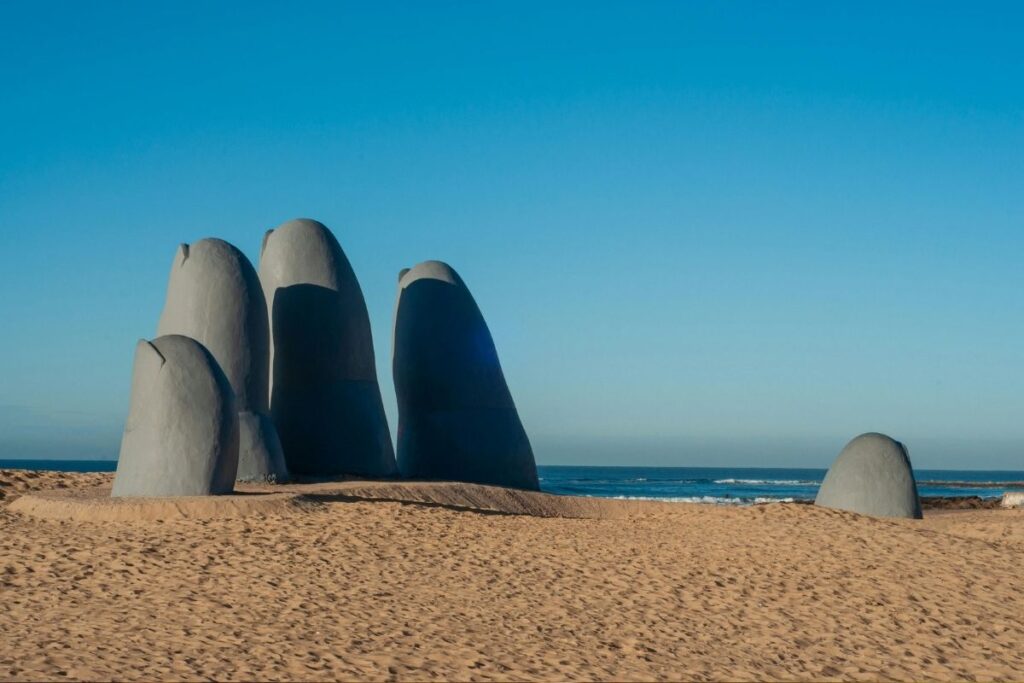
La Mano (officially La Mano de Punta del Este), the giant sculpture of fingers emerging from the sand on Playa Brava, was created by Chilean artist Mario Irarrázabal in 1982. It’s meant to evoke a drowning figure and warn of the beach’s strong currents, but it has become the single most photographed object in Uruguay. Visit early in the morning for photos without crowds, or accept the crowds and enjoy the spectacle.
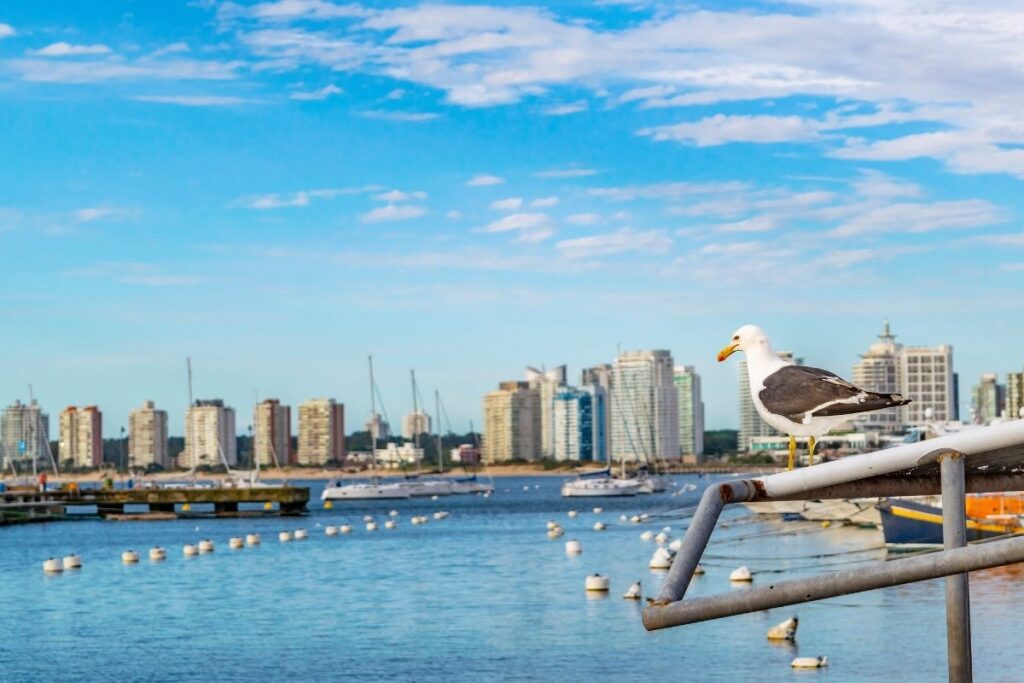
The yacht harbor on the Mansa side is worth a walk for the boats, the seafood restaurants, and the views back toward the peninsula’s high-rise skyline.
Casapueblo
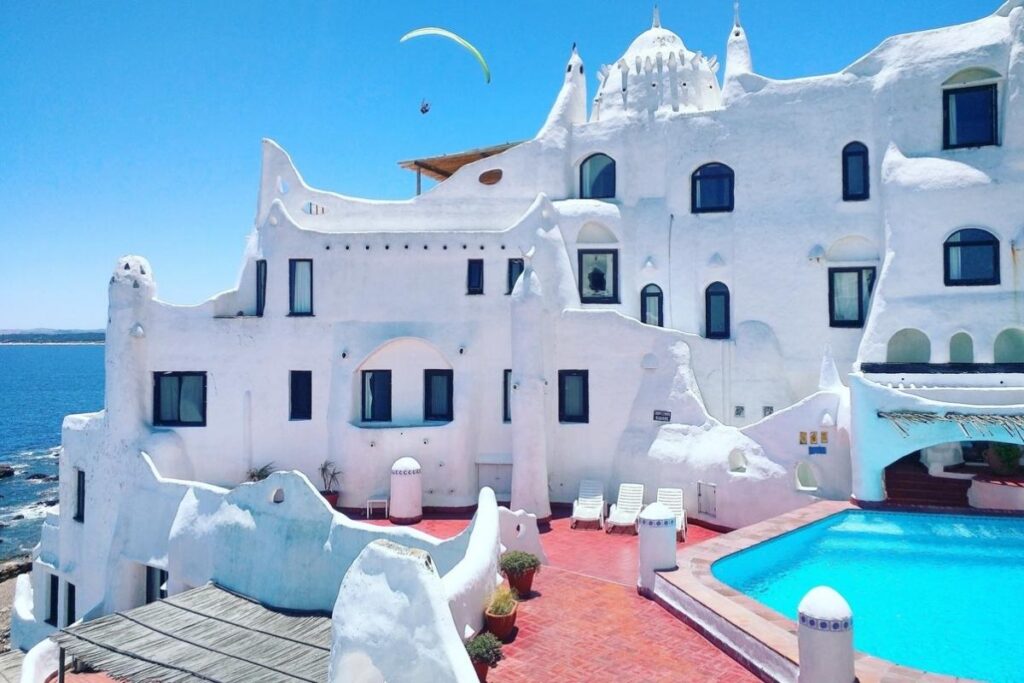
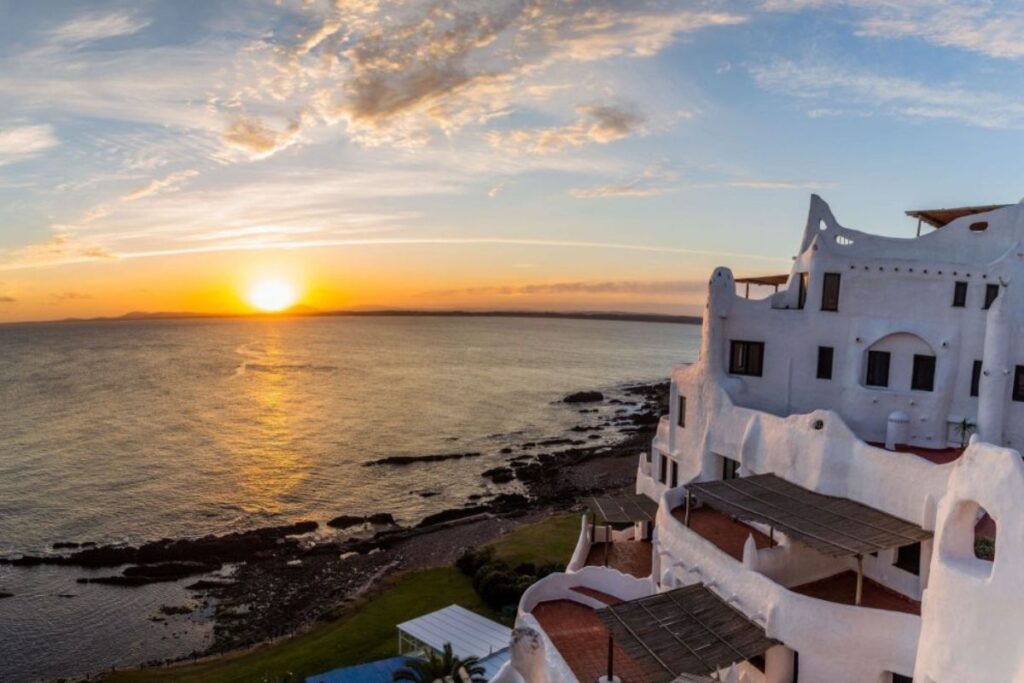
Casapueblo is not in Punta del Este proper. It sits 13 kilometers west on the cliffs of Punta Ballena, but no day trip to the area is complete without it. Built over decades by Uruguayan artist Carlos Páez Vilaró, the structure is a cascading, whitewashed sculpture-building that clings to the cliff face, inspired by the nests of the local hornero bird. It functions as a museum, a hotel, and an art gallery.
The ritual to know about: every evening at sunset, a recording of Páez Vilaró’s voice plays over the terrace as the sun touches the water, reading a poem he wrote bidding farewell to the day. It’s a personal, almost spiritual moment, and even on crowded summer evenings, the terrace goes quiet.
If you’re visiting by bus, reaching Casapueblo requires a taxi or ride app from Punta del Este (about 15 minutes). If you’re driving, the stop is a natural addition to the route.
Ralli Museum
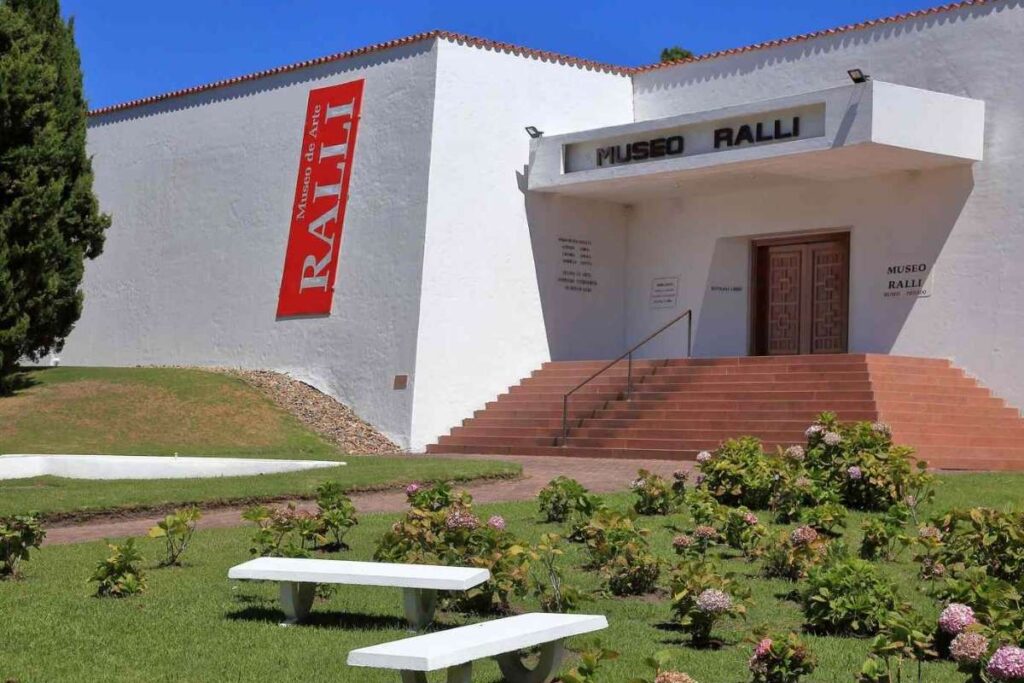
The Museo Ralli, located in the Beverly Hills neighborhood of Punta del Este, houses one of the most important collections of Latin American art in the world, including works by Salvador Dalí and contemporary Latin American sculptors. Entry is free, the building is set in parkland, and the visit takes about an hour. It’s one of only five Ralli museums worldwide and is open year-round.
Beyond Punta: José Ignacio
If you have a car and a full day, continuing 30 minutes east to José Ignacio adds a dimension that Punta itself doesn’t offer.
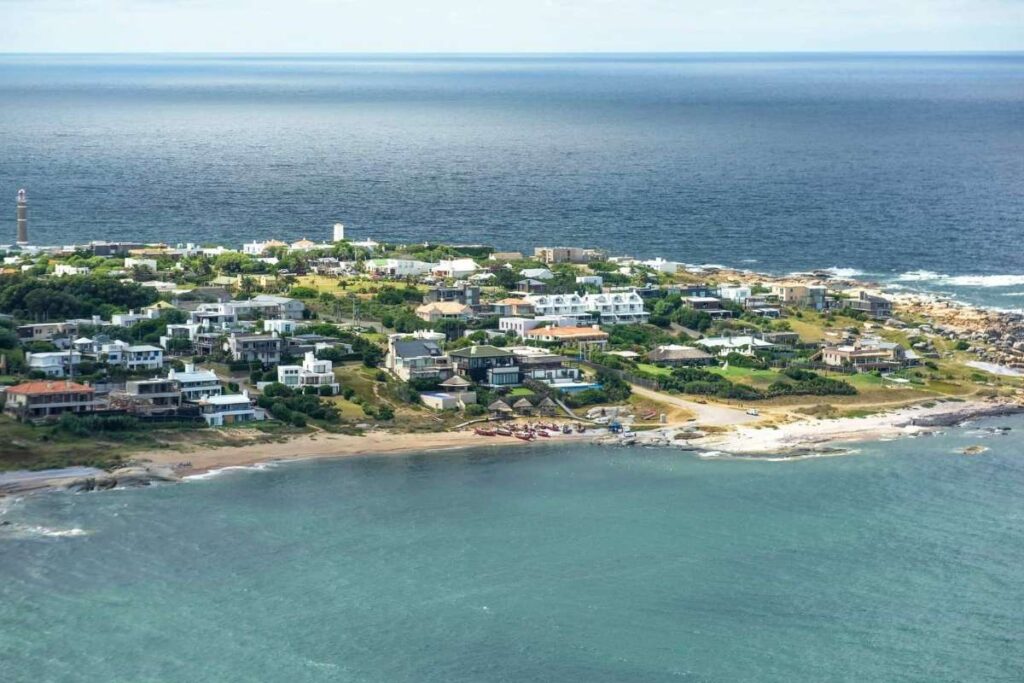
This tiny fishing village has become one of the most exclusive destinations in South America, with La Huella, a beachfront restaurant cooking over open fire, drawing reservations from around the continent. The lighthouse, the wild beaches, and the quiet of a village where wealth hides behind simplicity make José Ignacio a compelling extension, particularly in the shoulder seasons when Punta can feel like the warm-up act.
How to Get There
By Bus
COT and Copsa buses run from Montevideo’s Tres Cruces Terminal to Punta del Este throughout the day. The ride takes approximately 2 hours and 15 minutes on a comfortable highway coach with air conditioning and reclining seats. One-way tickets cost roughly USD 15. The Punta del Este bus terminal sits near the peninsula, within walking distance of both beaches, the harbor, and the central restaurant strip.
The bus is the simplest option for a day trip focused on the peninsula and the town center. Take a morning departure (between 7:00 and 9:00 AM), explore through the afternoon, and catch an evening bus back (departures run until roughly 9:00 to 10:00 PM).
By Car
Renting a car for the day trip makes sense if you want to reach Casapueblo, José Ignacio, or the beaches east of the peninsula that sit outside walking distance from the bus terminal. The drive from Montevideo takes approximately 2 hours on the Ruta Interbalnearia, a well-maintained highway. Rental costs start around USD 35 to 50 per day, and parking in Punta del Este is generally available outside of peak summer weekends.
The car option also lets you build a loop: Montevideo → Punta del Este → Casapueblo at sunset → return to Montevideo in the evening. This is the ideal structure for a full-day visit and the one that captures the most of what the coast has to offer.
Where to Eat
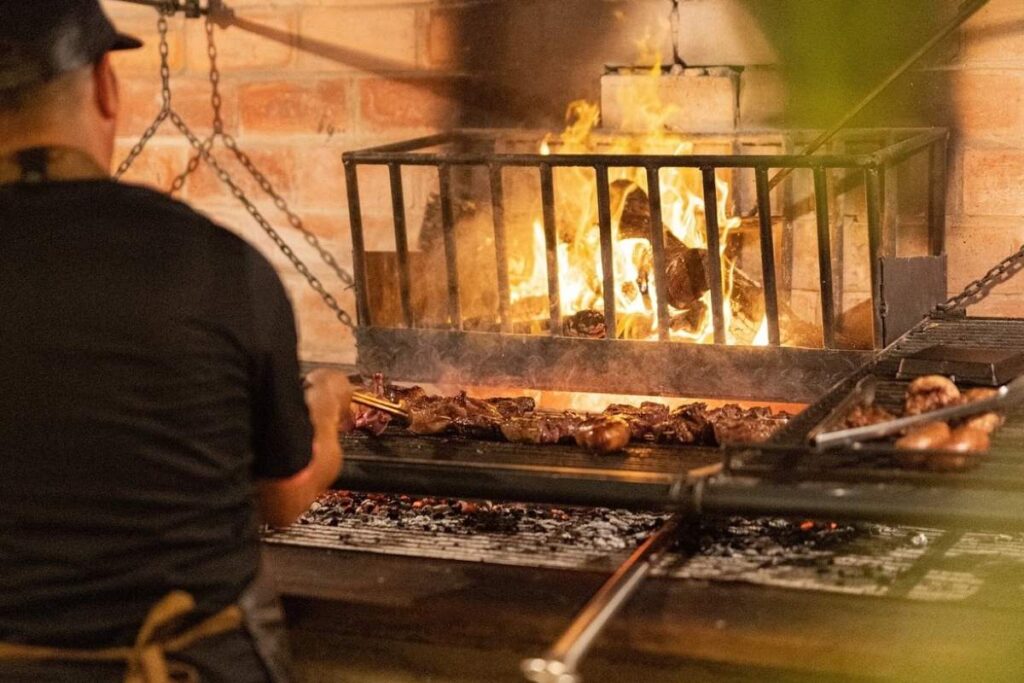
The food in Punta del Este reflects its international clientele. Seafood dominates, with grilled fish, shrimp, and the local corvina appearing on most menus. Parrilla restaurants serve Argentine-quality beef at Uruguayan prices (slightly higher in summer, reasonable the rest of the year). And the waterfront restaurants along the Mansa harbor offer the best combination of food and views.
For lunch, the restaurants around the yacht harbor serve reliable seafood in a setting that feels like the Mediterranean. For something more casual, the peninsula’s smaller streets have empanada shops, pizza counters, and cafés that cater more to locals than to the summer influx.
If you make it to José Ignacio, eating at La Huella is the experience to prioritize, but reservations in summer must be made well in advance. In the shoulder seasons, walk-ins are possible.
The Verdict
Punta del Este from Montevideo is absolutely worth the trip in the right season. December through March delivers the full beach resort experience. April and May offer the best balance of weather, atmosphere, and value. September through November works well for architecture, art, and coastal drives without the crowds. And June through August is only worth it if you go specifically for Casapueblo and the drive, with no expectations of beach life.
The day trip works. Two hours each way by bus, six to eight hours in the town, and you’ll see the peninsula, the beaches, La Mano, and either Casapueblo or the Ralli. A car expands the radius to José Ignacio and the wilder coast. And if you find yourself at Casapueblo at sunset, listening to a dead artist’s voice bid farewell to the day while the sky turns orange over the Atlantic, you’ll understand why people keep coming back regardless of the season.
For travelers spending more than two days in Montevideo, fitting it into a longer stay alongside Colonia and the capital itself turns a city break into a proper Uruguayan experience.