
Four days in Buenos Aires is enough to understand why people fall in love with this city and not nearly enough to get over it. The Argentine capital sprawls across 203 square kilometers of flat terrain along the Río de la Plata, divided into 48 neighborhoods that each carry their own rhythm, architecture, and food. Trying to see it all in four days would mean spending most of your time in transit. The better approach, and the one this itinerary follows, is to group each day geographically, keeping your walking routes tight and your commutes short.
This Buenos Aires 4 day itinerary is designed to be followed exactly as written, but it’s flexible enough to rearrange. If you can, align Day 3 with a Sunday, so the legendary Feria de San Telmo falls into your schedule naturally rather than requiring a detour on another day.
Before you start, two practical notes. First, decidewhere to stay. San Telmo and Palermo are the two best bases for this itinerary: San Telmo puts you closer to Day 1 and Day 3, Palermo puts you closer to Day 2, and both are well-connected by subway and ride apps. Second, getting around Buenos Aires is easier than it looks. The Subte (subway) covers the main corridors, buses reach everywhere else, and Uber, Cabify, and DiDi all operate reliably. A SUBE card (rechargeable transit card) is essential and can be purchased at any kiosk or subway station.
Day 1: Centro and San Telmo
Total walking: approximately 8 km. Transit needed: none if based in San Telmo, one Subte ride if based in Palermo.
Morning: Plaza de Mayo and the Historic Core
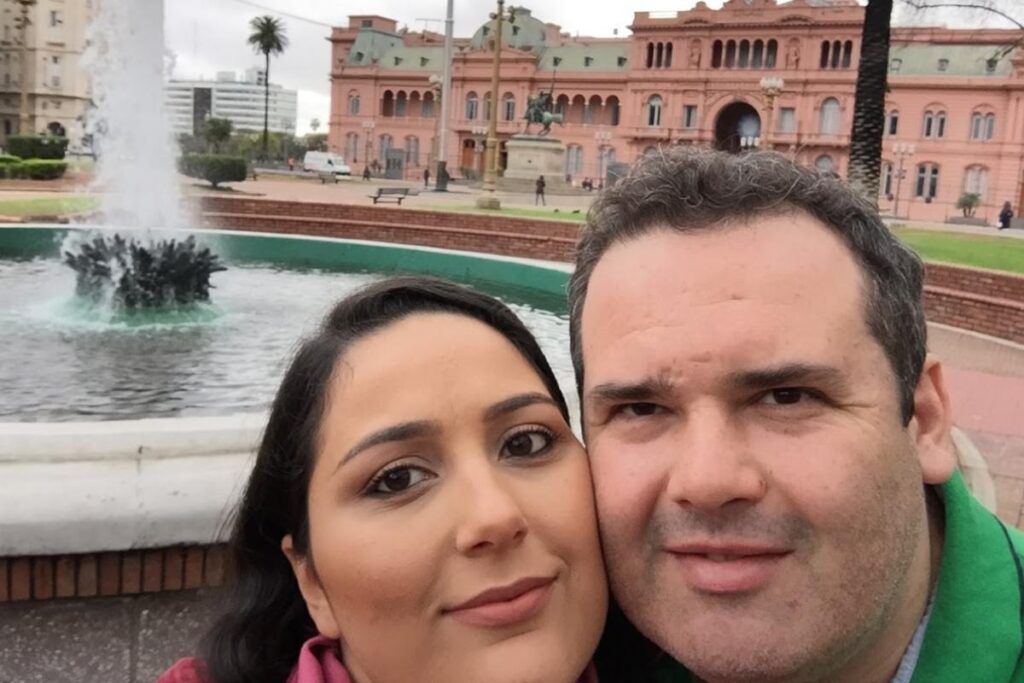
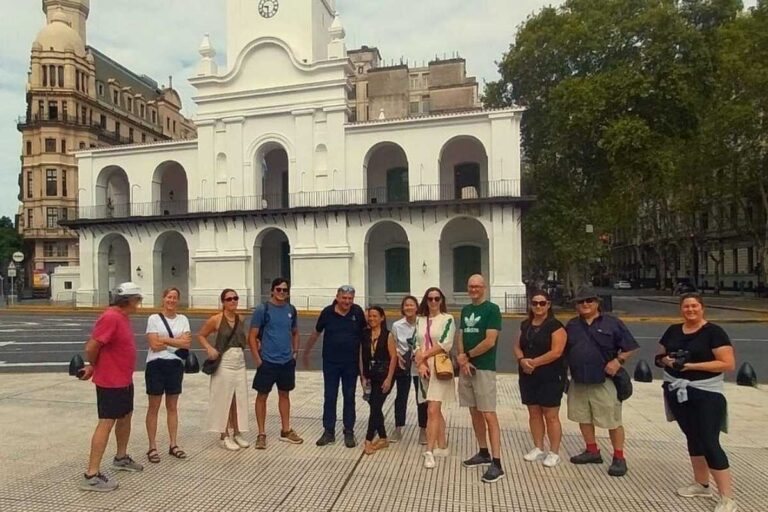
Start at Plaza de Mayo, the political heart of Argentina since the country’s independence in 1816. The square is framed by three of the city’s most significant buildings: the Casa Rosada (the presidential palace, famous for its pink facade and the balcony where Evita addressed the crowds), the Cabildo (the colonial-era town hall, now a museum), and the Catedral Metropolitana, where Pope Francis served as Archbishop before his election.
In the Above Photo: Me and Bruna at the Plaza De Mayo, in front of the Casa Rosada. (Lord I miss my hair)
The white headscarf markers painted on the pavement commemorate the Madres de Plaza de Mayo, the mothers who marched here weekly during the dictatorship demanding answers about their disappeared children.
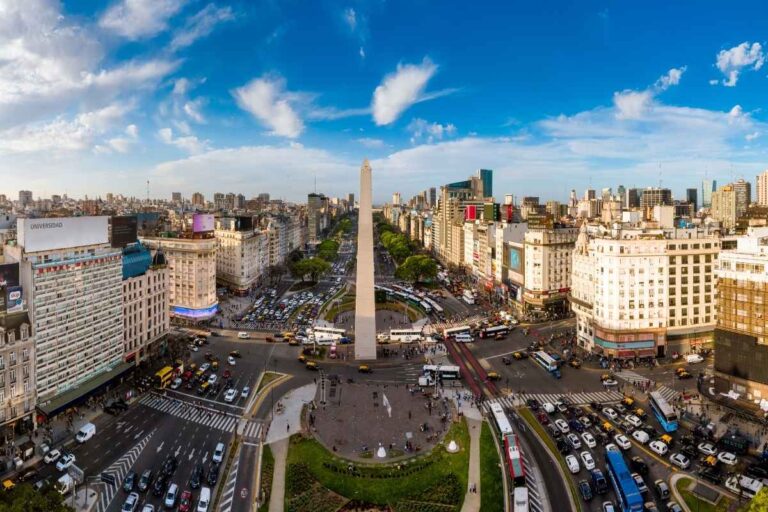
From the plaza, walk five blocks northwest along Avenida de Mayo to the Obelisco at Plaza de la República, the 67-meter monument marking the intersection with Avenida 9 de Julio, which at 140 meters wide claims to be the widest avenue in the world.
Late Morning: Teatro Colón
Continue three blocks north to the Teatro Colón, one of the most important opera houses in the world and arguably the finest piece of architecture in Buenos Aires. The building took nearly 20 years to complete (1889 to 1908) and seats 2,487 people, with acoustics that are consistently ranked among the top five globally. Guided tours run throughout the day and take approximately 50 minutes, covering the main auditorium, the Golden Hall, and the backstage workshops where scenery and costumes are still made by hand. If this is your first paid attraction, you can book tours and tickets in Buenos Aires in advance to avoid the queue.
Lunch and Early Afternoon: Café Tortoni and Avenida de Mayo
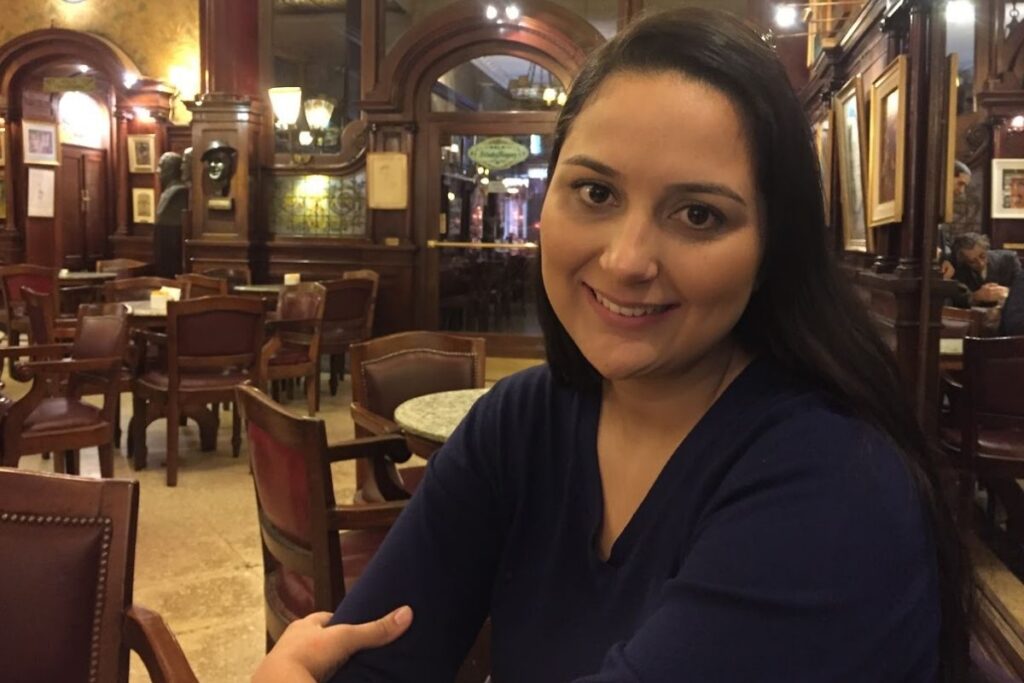
Walk back down Avenida de Mayo and stop at Café Tortoni, Buenos Aires’ most famous café, operating since 1858. The interior is preserved almost exactly as it was a century ago: dark wood, stained glass, marble tables, and medialunas that are a Buenos Aires institution.
Continue southeast along Avenida de Mayo toward San Telmo. The transition happens gradually: the grand European facades of Centro give way to lower, older buildings, cobblestone streets, and the faint sound of tango drifting from a doorway.
Afternoon: San Telmo
San Telmo is the oldest residential neighborhood in Buenos Aires, and its character is built on layers: colonial architecture, antique dealers, street artists, tango dancers, and a bohemian energy that has survived decades of gentrification without losing its edge.
Walk along Calle Defensa, the neighborhood’s main artery, lined with antique shops, vintage stores, and small galleries. Visit the Mercado de San Telmo, a massive iron-and-glass market hall built in 1897 that now houses food stalls, artisan vendors, and some of the best empanadas and choripán in the city. If you’re here on any day other than Sunday, the market is the best way to experience San Telmo’s food culture without the crowds. If you’ve aligned Day 3 with Sunday, you’ll return for the full street fair experience.
Stop at Plaza Dorrego, the small cobblestoned square that serves as the heart of San Telmo. On weekday afternoons, tango dancers perform here for tips, surrounded by café terraces and antique shops.
Evening: Dinner in San Telmo
Stay in the neighborhood for dinner. San Telmo’s restaurant scene ranges from traditional parrillas (try the tira de asado and a glass of Malbec) to modern Argentine kitchens reinventing the classics. El Desnivel on Calle Defensa is a no-frills institution. For something more refined, the restaurants along Calle Carlos Calvo and Estados Unidos offer excellent options without the tourist markup.
Day 2: Recoleta and Palermo
Total walking: approximately 10 km. Transit: 15-minute Subte ride from San Telmo to Recoleta (Line C to Line D), or 10 minutes by taxi.
Morning: Recoleta Cemetery and the Surroundings
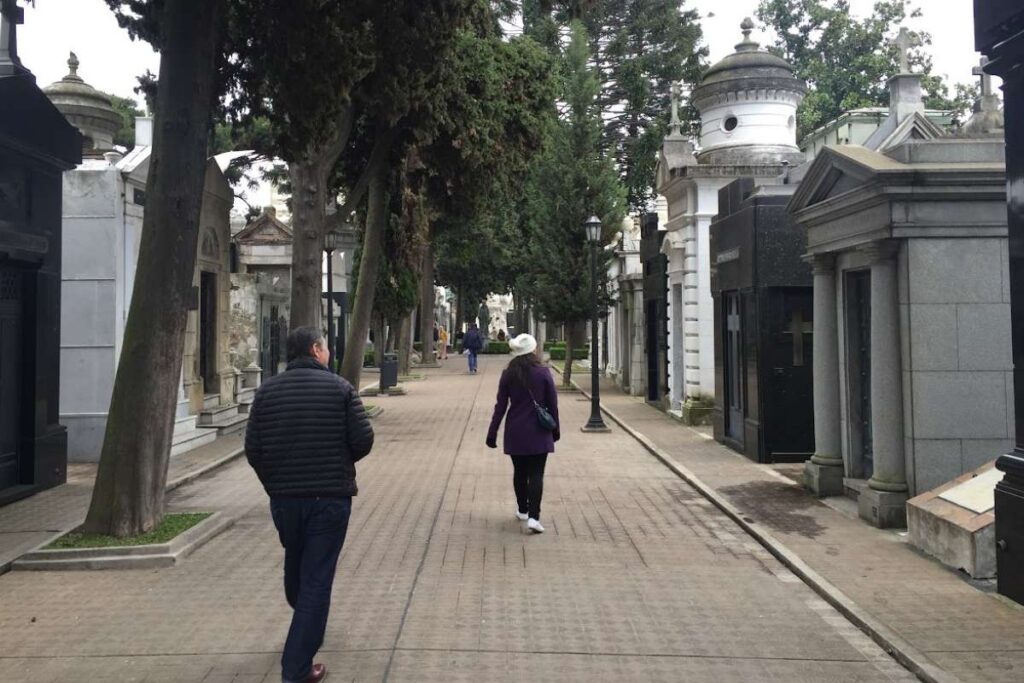
Begin at the Cementerio de la Recoleta, one of the most extraordinary cemeteries in the world. Over 4,800 above-ground vaults and mausoleums fill a labyrinth of narrow passageways, housing the remains of presidents, Nobel laureates, military heroes, and Argentine aristocracy. The most visited tomb belongs to Eva Perón, marked by fresh flowers and a small plaque that understates everything about the woman it commemorates.
The cemetery is free to enter and takes roughly 60 to 90 minutes to explore properly. Afterward, walk through the adjacent Plaza Francia, where an artisan fair operates on weekends, and visit the Basilica Nuestra Señora del Pilar, a white colonial church dating to 1732 that provides a striking contrast to the elaborate mausoleums next door.
Late Morning: Museums and Avenida Alvear
Walk two blocks to the Museo Nacional de Bellas Artes, Argentina’s most important fine art museum, housing works by Monet, Renoir, Rodin, El Greco, and an extensive collection of Argentine art. Entry is free, and the collection rewards at least an hour.
From the museum, walk south along Avenida Alvear, the most elegant avenue in Buenos Aires, lined with French-influenced mansions, luxury boutiques, and the landmark Alvear Palace Hotel. The architecture here earned Recoleta the nickname “the Paris of South America,” and on a sunny morning, the comparison holds.
Lunch: Transition to Palermo
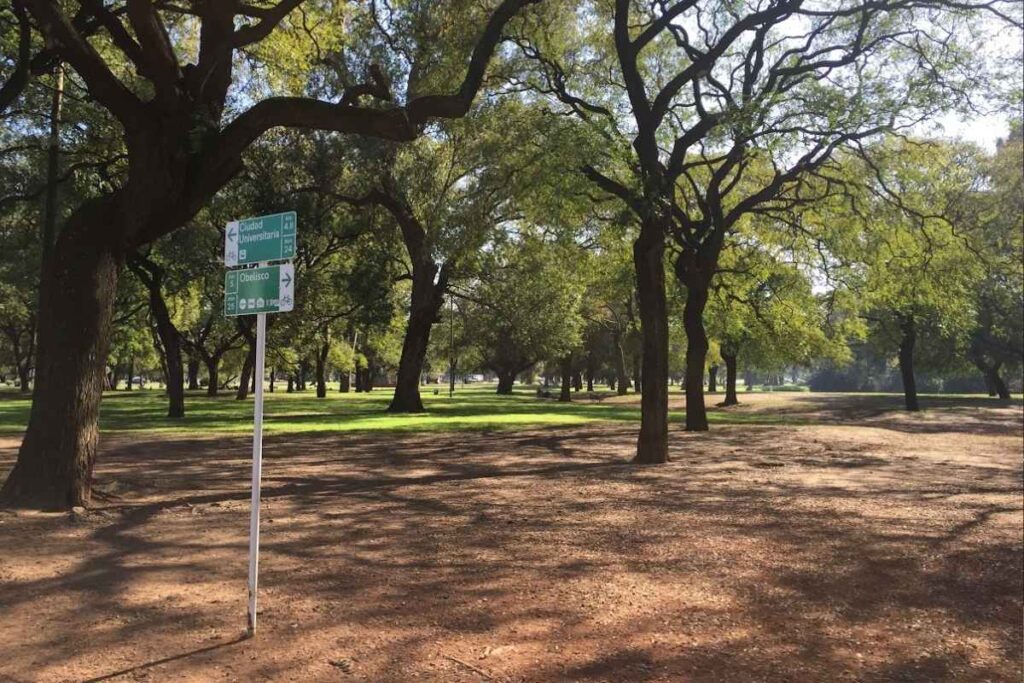
The boundary between Recoleta and Palermo is soft, and you’ll cross it without noticing. Walk west through the Bosques de Palermo (Palermo Woods), a 400-hectare park system that includes the Rosedal (a rose garden with over 18,000 plants), the Planetario Galileo Galilei, and wide walking paths shaded by jacarandas and tipas.
Have lunch in Palermo Soho, the restaurant-dense grid of streets around Plaza Serrano (officially Plaza Julio Cortázar) where the options range from modern Argentine to Peruvian, Japanese, and everything in between.
Afternoon: Palermo Soho and Palermo Hollywood
Spend the afternoon exploring Palermo’s two most walkable sub-neighborhoods. Palermo Soho, roughly centered around Plaza Serrano, is the epicenter of Buenos Aires’ independent fashion, design, and street art scenes. The murals here change regularly, and the density of interesting shops, bookstores, and cafés per block is remarkable.
Cross Avenida Juan B. Justo into Palermo Hollywood, named for the TV and film studios that moved here in the early 2000s. The vibe shifts: more cocktail bars, more international menus, and a craft beer scene that has exploded in recent years. An afternoon cerveza artesanal at one of the neighborhood bars is a fine way to rest your feet.
Evening: Tango
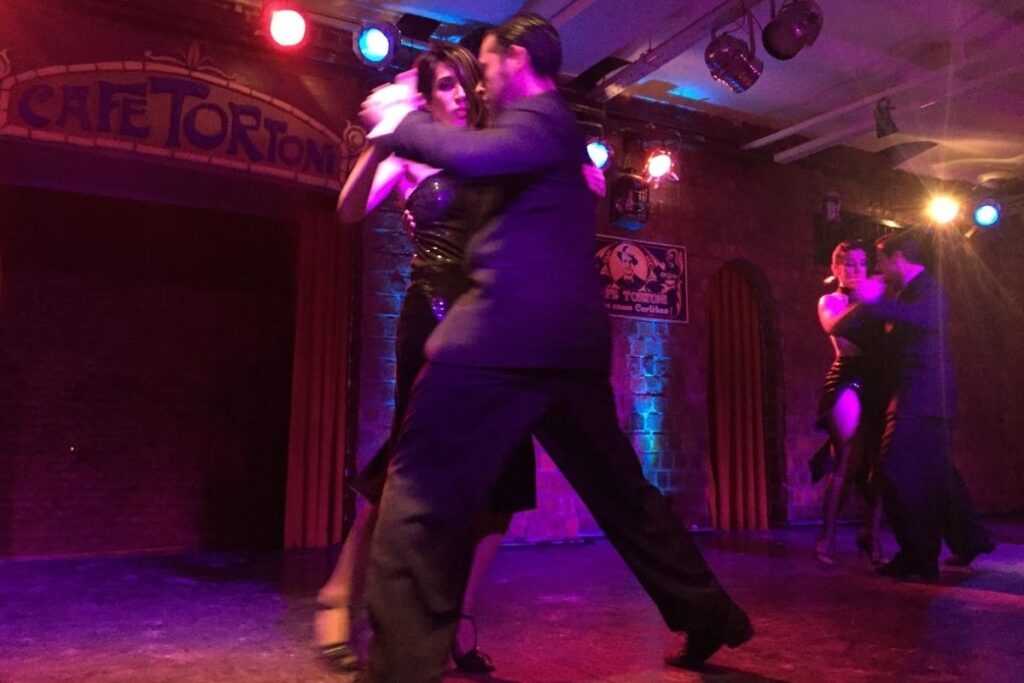
Day 2 is the right night for tango, because you’re already in the part of the city where the best options concentrate. Buenos Aires’ tango scene operates on two levels: the milongas (social dance halls where locals go to dance) and the tango shows (staged performances for visitors, ranging from tourist-oriented dinner shows to genuinely excellent productions).
Both are worth experiencing, but they’re very different things, and seeing tango properly means knowing which format suits what you’re looking for.
Day 3: La Boca, Puerto Madero, and the Sunday Fair
Total walking: approximately 9 km. Transit: 20-minute bus ride from Palermo to La Boca (Bus 29), or 15 minutes by taxi. Important: do not walk to La Boca from areas outside the tourist zone.
If this is Sunday, start in San Telmo for the fair, then continue to La Boca in the early afternoon.
Morning (Sunday): Feria de San Telmo
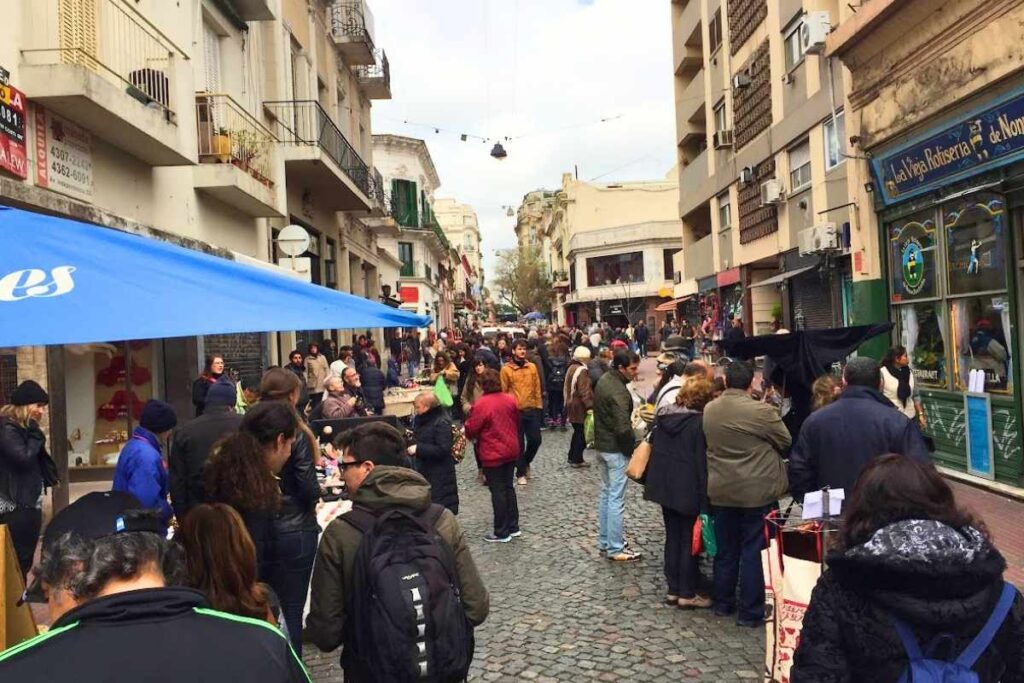
The Feria de San Telmo is the largest open-air market in Buenos Aires, stretching over 30 blocks along Calle Defensa and the surrounding streets every Sunday from 10:00 AM to 5:00 PM. Hundreds of vendors sell antiques, vintage clothing, handmade jewelry, leather goods, vinyl records, and artwork, while tango dancers, musicians, and street performers fill Plaza Dorrego with a carnival-like energy. Arrive by 10:00 AM to beat the heaviest crowds. Allow two to three hours.
Morning (Non-Sunday): La Boca
If Day 3 falls on a weekday, go directly to La Boca in the morning.
Early Afternoon: La Boca and Caminito
Take Bus 29 or a taxi to La Boca, the colorful, working-class neighborhood on the banks of the Riachuelo River that is home to two of Buenos Aires’ most iconic symbols: the painted-tin houses of Caminito and La Bombonera, the stadium of Boca Juniors, one of the most passionately supported football clubs on the planet.
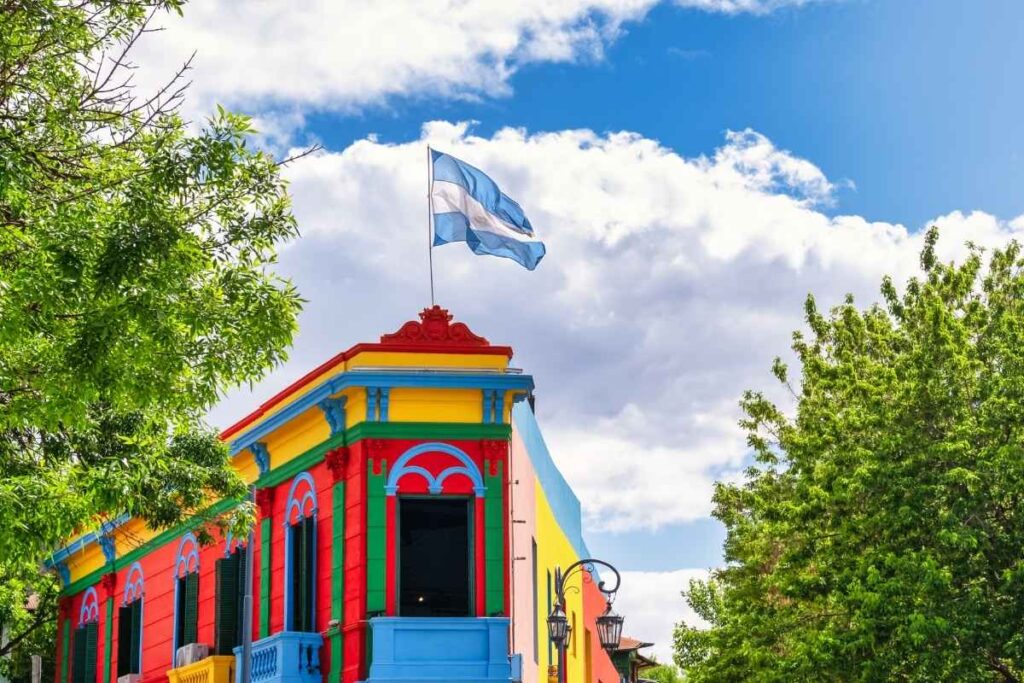
Caminito is a short, open-air pedestrian street turned art museum, where the brightly painted corrugated-metal houses reflect the Italian immigrant shipyard workers who built them using leftover paint from the port. The street is small, heavily touristed, and worth seeing once. Tango dancers perform for tips, artists sell paintings from makeshift galleries, and the whole scene is louder and more chaotic than anywhere else in Buenos Aires.
La Bombonera (officially Estadio Alberto J. Armando) is a 54,000-seat stadium wedged into a residential block in a way that seems physically impossible. Even if you’re not a football fan, the Museo de la Pasión Boquense inside the stadium tells a story about identity, immigration, and belonging that transcends sport. If you can get tickets to a match, the atmosphere is unlike anything else in world football.
Safety note: stay within the tourist area around Caminito and the stadium. The surrounding blocks of La Boca can be unsafe for visitors, especially with visible cameras and phones.
Late Afternoon: Puerto Madero

From La Boca, walk north along the waterfront (approximately 20 minutes) or take a short taxi ride to Puerto Madero, the city’s newest neighborhood built on the old docklands. Cross the Puente de la Mujer, Santiago Calatrava’s striking white suspension bridge, and walk along the eastern side to the Reserva Ecológica Costanera Sur, a 350-hectare nature reserve offering walking trails, birdwatching, and views of the Río de la Plata.
The sunset from the waterfront, with the skyline reflected in the dock basins, is genuinely beautiful.
Evening: Dinner on the Costanera
The restaurants in Puerto Madero tend to be pricier than elsewhere, but the setting makes up for it. For better value with equal atmosphere, walk inland to the San Telmo side and eat there, especially if the Sunday fair drew you back to the neighborhood earlier.
Day 4: Flexible Day with Tigre Option
Your fourth day is intentionally open. Three full days of walking Buenos Aires leaves most travelers with specific things they want to revisit and other things they wish they’d had more time for. Use this day accordingly.
Option A: Tigre and the Delta
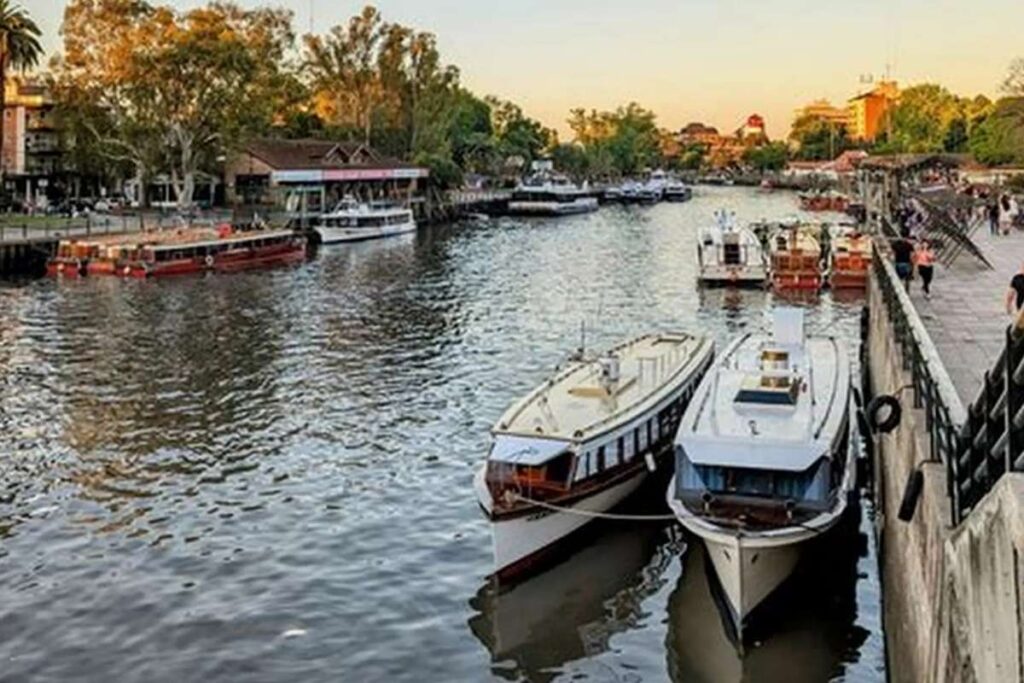
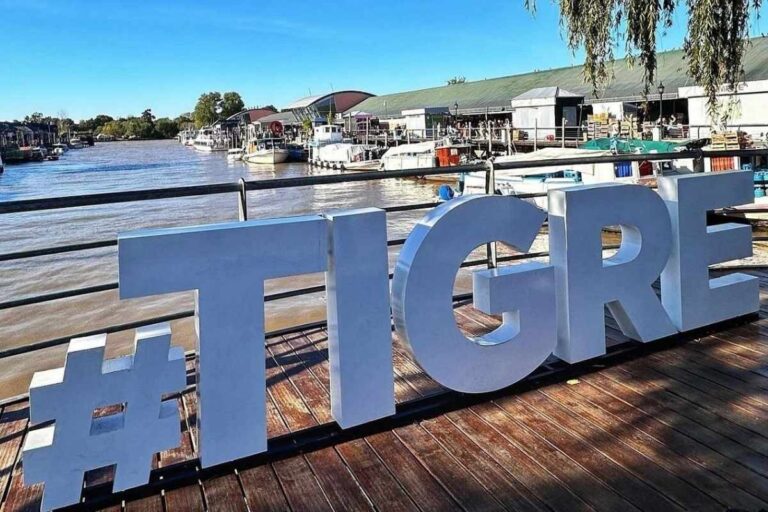
Tigre sits 30 kilometers northwest of Buenos Aires, at the mouth of the Paraná Delta, one of the largest river deltas in the world. The train from Estación Retiro takes approximately 55 minutes on the Línea Mitre and costs almost nothing with a SUBE card. From Tigre’s train station, it’s a five-minute walk to the Puerto de Frutos market and the boat docks.
The experience is the delta itself: a labyrinth of rivers, channels, and islands where houses sit on stilts and commuter boats replace buses. A boat tour takes two to four hours and is the best way to see how people actually live here. The Museo de Arte Tigre (MAT), housed in a beautifully restored Belle Époque clubhouse, is worth a visit if you arrive early.
Beyond Tigre, other day trips from the city include Colonia del Sacramento across the river in Uruguay and wine country excursions into the province.
Option B: Revisit and Go Deeper
Use the morning to return to whatever called you most. A second visit to Palermo Soho for the shops and street art you walked past. A longer session at the Museo Nacional de Bellas Artes without rushing. A return to the Mercado de San Telmo for the empanada stall you noticed but didn’t try. Or a morning at Parque Lezama, the green hilltop park at the southern edge of San Telmo, where the Museo Histórico Nacional traces Argentine history from pre-Columbian times through independence.
Option C: Football Game
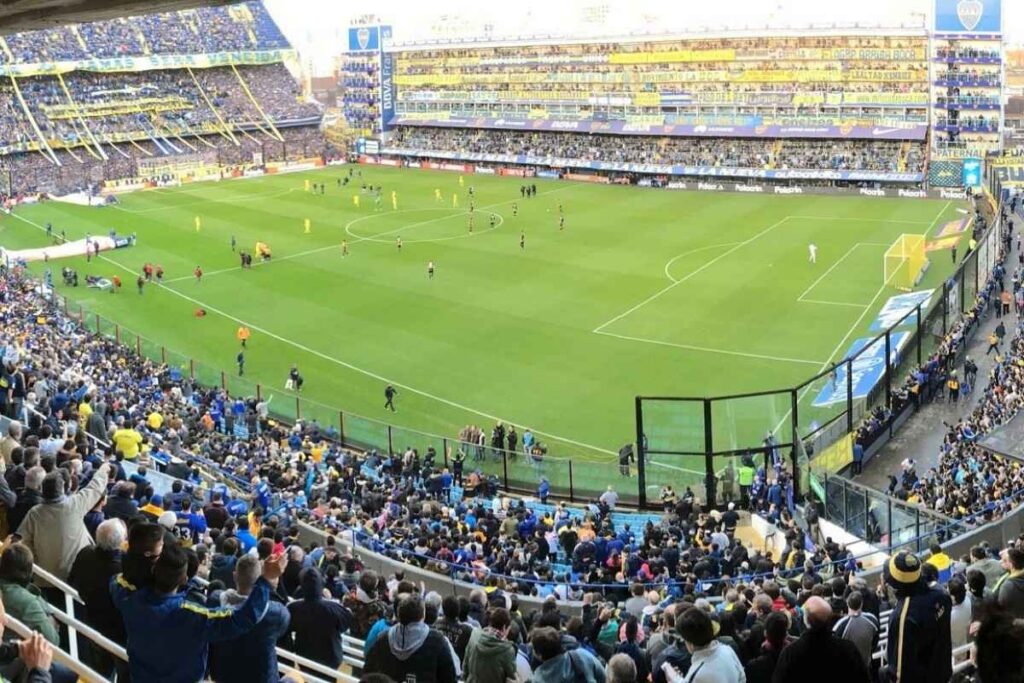
If a Boca Juniors or River Plate match falls on your Day 4, rearranging your schedule to attend is worth the effort. Argentine football is a full-body cultural experience involving drums, flags, coordinated chanting, and a level of collective emotion that is impossible to forget. Attending with a guided group is the safest and most practical option for first-timers.
Evening: Final Asado
End your 4 days in Buenos Aires the way the city itself ends every important gathering: with an asado. A proper Argentine barbecue, whether at a traditional parrilla or a more contemporary restaurant, is the definitive Buenos Aires food experience. Order the tira de asado (short ribs), entraña (skirt steak), provoleta (grilled provolone), and a bottle of Malbec from Mendoza. Take your time. Let the meal run long. Buenos Aires was built for long dinners, and your last night should honor that.
Practical Notes
Buenos Aires is a cash and card city. Most restaurants and shops accept credit cards, but carry Argentine pesos for buses, markets, and smaller vendors. The official exchange rate and the parallel (“blue dollar”) rate can differ significantly, so research the current situation before you arrive.
Safety is comparable to most large South American cities. Stay aware of your surroundings, avoid displaying expensive electronics, and use ride apps rather than hailing taxis at night. The neighborhoods in this itinerary are all safe for daytime walking, but exercise caution after dark in Centro and especially La Boca.
Weather varies by season. Buenos Aires summers (December to February) are hot and humid, with temperatures above 30°C. Winters (June to August) are cool, with lows around 5°C. Spring (September to November) and autumn (March to May) offer the most comfortable conditions.
This itinerary gives you the structure. Buenos Aires will give you the reasons to come back.
Book Tours and Excursions in Buenos Aires