
Buenos Aires is a city that keeps you busy. Four days of walking its neighborhoods barely scratches the surface, and the temptation to spend every available hour inside the city limits is real. But some of the best experiences within reach of the Argentine capital require leaving it, and the three day trips from Buenos Aires covered here are the ones that consistently deliver the most value for the time they take.
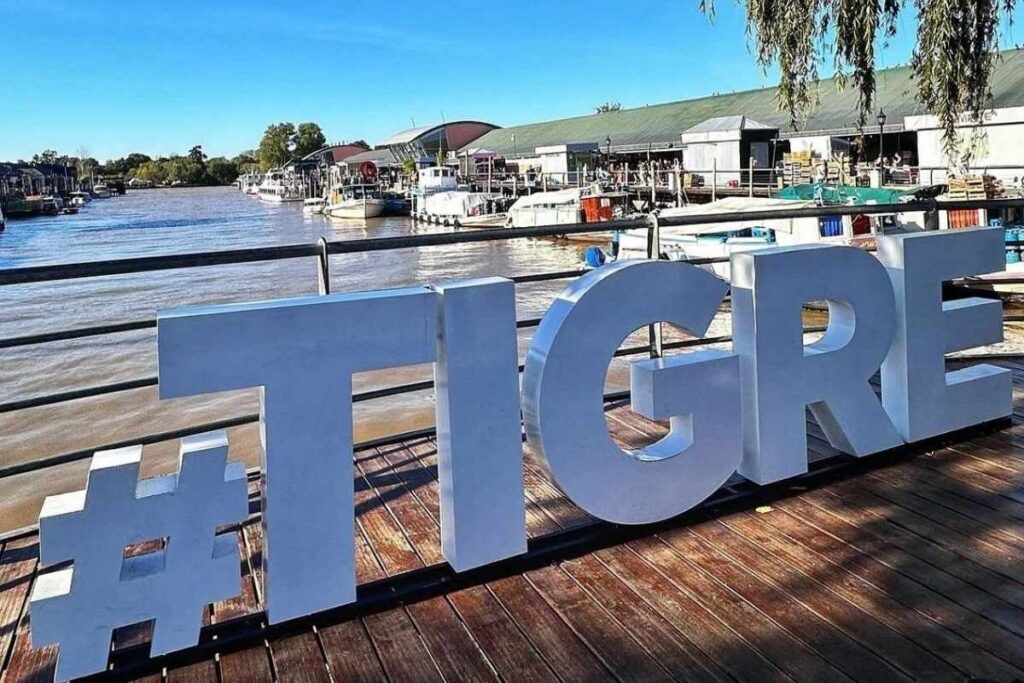
Tigre puts you on the water in under an hour. Colonia del Sacramento gets you across the border to Uruguay for a full day in a UNESCO-listed colonial town. And San Antonio de Areco takes you into the Argentine pampas for an immersion in gaucho culture that the city can’t replicate. Each one is a genuinely different experience, and together they cover water, history, and countryside in three directions from the capital.
All three work as independent trips using public transport, but if you’d rather have the logistics handled, you can book a day trip with a guide who covers the transport, timing, and context so you spend the day exploring instead of navigating.
Tigre and the Paraná Delta
The Basics
Distance from Buenos Aires: approximately 30 kilometers north. Travel time: 55 minutes by train from Estación Retiro. Time needed: half day minimum, full day ideal.
What It Is
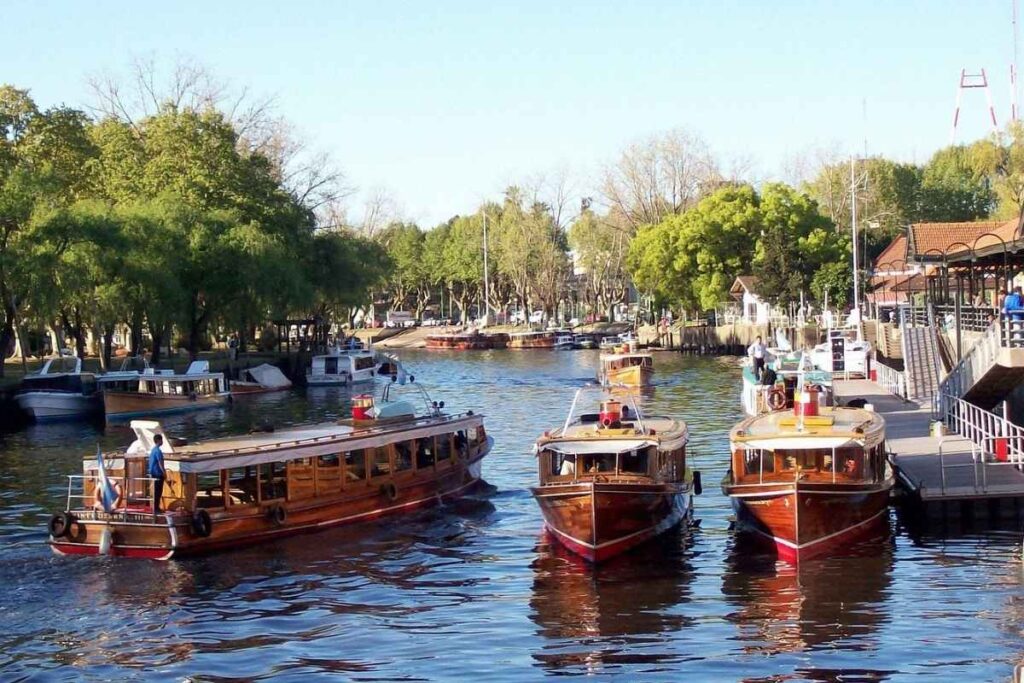
Tigre is a small city at the mouth of the Paraná Delta, one of the largest river deltas in the world. The delta itself is a sprawling network of rivers, channels, and islands where roughly 5,000 people live year-round in houses built on stilts along the waterways. Commuter boats replace buses. Groceries arrive by launch. Kids ride to school on water taxis. It’s a functioning community that happens to exist in one of the most unusual landscapes within reach of any major city in South America.
The town of Tigre serves as the gateway to the delta. The Puerto de Frutos, a market specializing in wicker furniture, crafts, and regional food, sits near the boat terminal and is worth an hour of browsing. But the real draw is the water.
How to Get There on Your Own
The simplest option is the Línea Tigre train from Estación Retiro (the main train station in Buenos Aires, served by Subte Line C). The ride takes 55 minutes, runs frequently throughout the day, and costs next to nothing with a SUBE card. The train terminates at Tigre station, and the boat terminal is a two-minute walk across the roundabout.
For a more scenic route, take the Línea Mitre from Retiro to Estación Mitre in Olivos (about 20 minutes), then cross the street to connect to the Tren de la Costa, a tourist-oriented train that runs along the river through leafy suburban stations before terminating near Tigre’s Puerto de Frutos. The connection sounds complicated but is straightforward: exit one station, cross the road, enter the other.
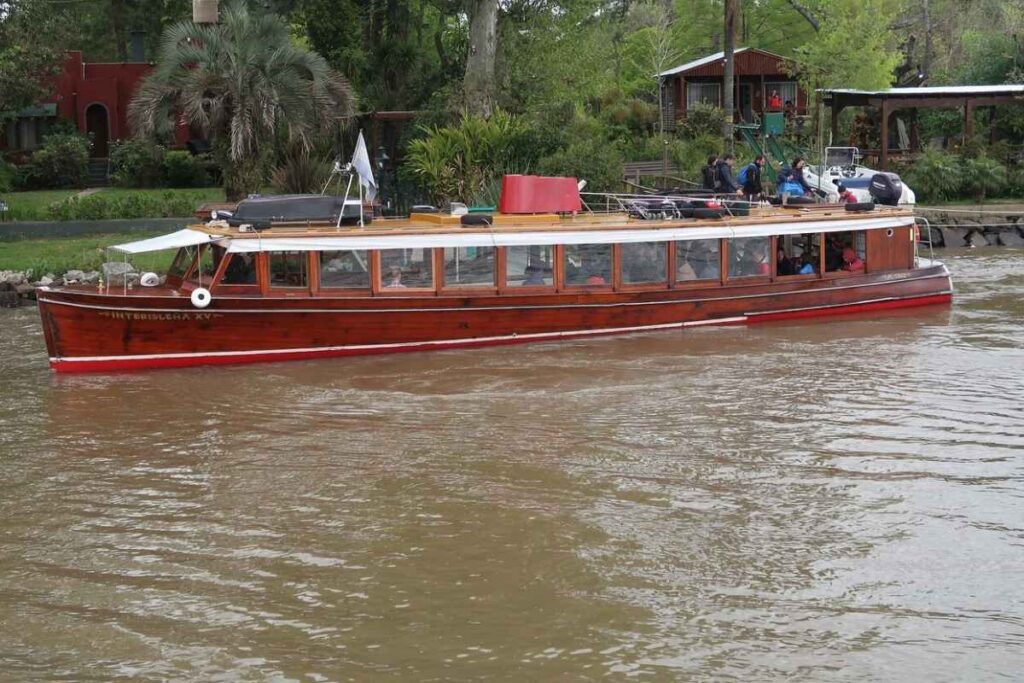
Once in Tigre, you have two main boat options. The lanchas colectivas are the public water buses that locals use to commute between the islands. They’re cheap, frequent, and give you an authentic view of delta life, but they follow fixed routes and don’t offer commentary. Private boat excursions depart from the main dock, last between one and three hours, and navigate the quieter channels with a guide who explains the ecosystem and the communities along the way.
Guided vs. DIY
The train-and-boat DIY route is easy enough for anyone comfortable with basic public transport. But the Tigre Delta tour with a guide adds value if you want context about the delta’s ecosystem, its history as a weekend retreat for Buenos Aires’ elite, and the communities that live on the islands full-time. A guided option also handles the hotel pickup and return, which eliminates the Retiro connection entirely.
Is It Worth the Day?
Yes, without hesitation. Tigre is the easiest day trip from Buenos Aires, the cheapest, and the one that delivers the most dramatic change of scenery for the least effort. You go from a dense urban grid to a green, watery labyrinth in under an hour. A half day is sufficient if you just want the boat ride and the market. A full day lets you eat lunch on the waterfront, explore the Museo de Arte Tigre (MAT) in its restored Belle Époque clubhouse, and take a longer boat excursion into the quieter reaches of the delta.
Best for: anyone who wants an easy escape from the city, families, nature lovers, and travelers with a spare half day who don’t want to commit to a long excursion.
Colonia del Sacramento, Uruguay
The Basics
Distance from Buenos Aires: approximately 50 kilometers across the Río de la Plata. Travel time: 1 hour 15 minutes by fast ferry. Time needed: one full day (leave early, return evening).
What It Is
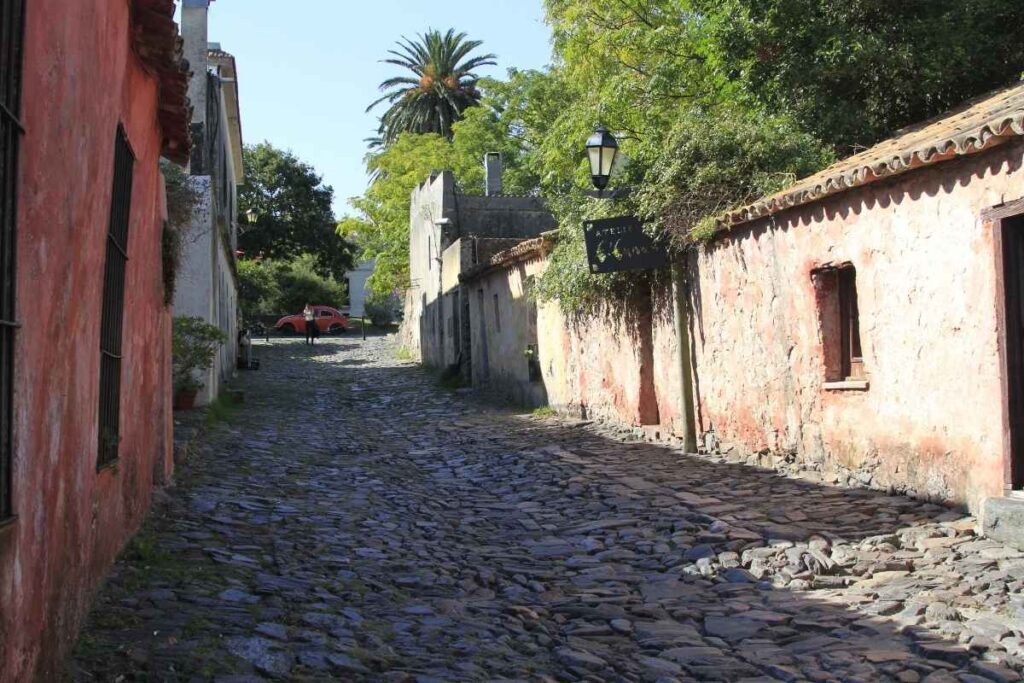
Colonia del Sacramento is a small Uruguayan city whose Barrio Histórico (Historic Quarter) is a UNESCO World Heritage Site and one of the most photogenic colonial towns in South America. Founded by the Portuguese in 1680, fought over by Spain and Portugal for the next century, and eventually absorbed into independent Uruguay, Colonia carries the architectural DNA of both empires in its cobblestone streets, crumbling stone walls, and pastel-colored buildings that lean into each other along narrow lanes.
The historic quarter is compact enough to walk in a few hours but rich enough to fill a full day. The Calle de los Suspiros (Street of Sighs), one of the oldest streets in the town, is lined with original Portuguese and Spanish colonial buildings. The lighthouse, built on the ruins of a 17th-century convent, offers panoramic views of the river and, on clear days, the Buenos Aires skyline on the opposite shore. Small museums scattered through the quarter cover everything from Portuguese-era tiles to indigenous artifacts.
The afternoon light in Colonia is exceptional. The town faces west across the Río de la Plata, and the sunset over the water, with Buenos Aires a faint silhouette on the horizon, is one of the best in the region.
How to Get There
The ferry across the river is operated by two companies. Buquebus runs fast ferries (catamarans) that cross in approximately 1 hour and 15 minutes and slower ferries that take about 3 hours. Colonia Express runs a similar fast service, often at slightly lower prices. Both depart from terminals on the Buenos Aires waterfront, near Puerto Madero.
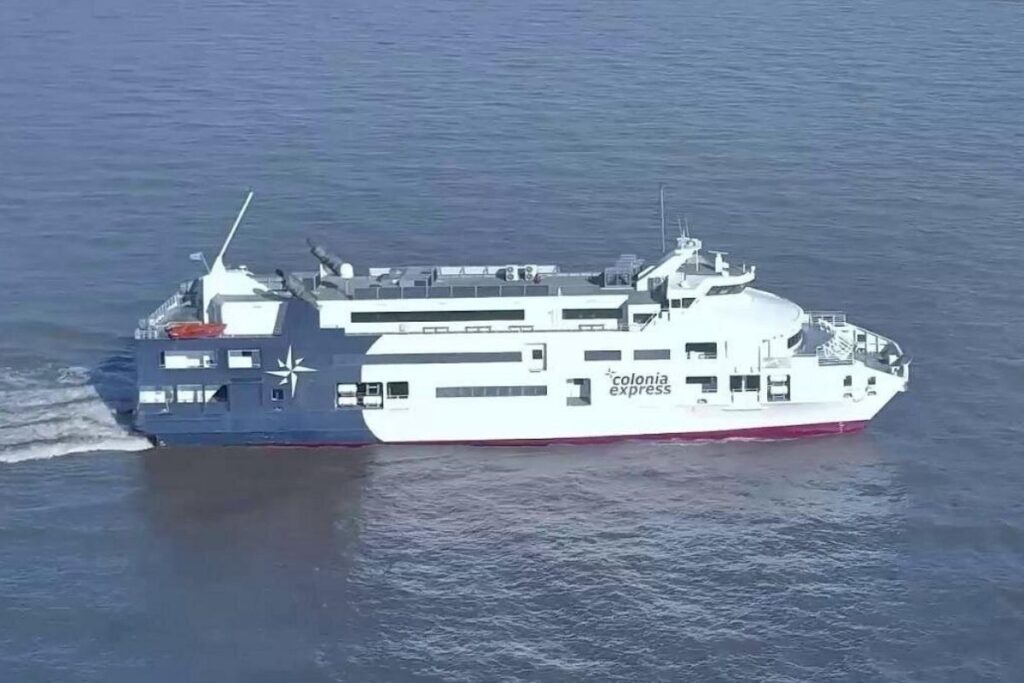
A few logistics to note. You’ll need your passport for the crossing, as this is an international border. Uruguayan immigration is handled at the terminal before boarding (Buenos Aires side) and sometimes again on arrival (Colonia side). The process is quick but adds 30 to 45 minutes to your departure timeline, so arrive at the terminal with time to spare. Book your ferry in advance, especially for weekend crossings and the early morning departures that maximize your time in Colonia.
The typical day trip structure: take the first morning ferry (usually departing between 7:30 and 8:30 AM), arrive by mid-morning, explore the town and have lunch, and catch an evening return (departures between 5:00 and 8:30 PM, depending on the day and the operator).
Guided vs. DIY
Colonia is one of the easiest international day trips you’ll ever take. The town is small, walkable, and clearly signposted. You don’t need a guide to enjoy it. That said, a guided walking tour through the historic quarter adds historical context about the Portuguese-Spanish rivalry, the colonial-era smuggling routes, and the specific buildings whose architecture tells the story of who controlled the town at what point. The guides are typically Uruguayan and bring local perspective that signage can’t replicate.
Is It Worth the Day?
Yes, especially if you’ve never been to Uruguay. Colonia offers a genuine change of country, culture, and pace for the cost of a ferry ticket and a day’s time. The food is different (Uruguayan chivito sandwiches, Tannat wine, grilled fish on the waterfront), the atmosphere is quieter, and the historic quarter is beautiful in a way that Buenos Aires’ colonial remnants mostly aren’t, because Colonia’s were preserved while Buenos Aires’ were largely rebuilt.
The honest caveat: if you’ve already spent time in Montevideo and explored Uruguay’s coast, Colonia might feel like a lighter version of what you’ve already seen. But for travelers whose Buenos Aires trip is their only time in the region, Colonia is the easiest and most rewarding way to add a second country to the itinerary.
Best for: history lovers, photography enthusiasts, couples, and anyone who wants the satisfaction of visiting two countries in one trip.
San Antonio de Areco
The Basics
Distance from Buenos Aires: approximately 113 kilometers northwest. Travel time: 2 hours by bus from Estación Retiro. Time needed: one full day.
What It Is

If Tigre gives you the water and Colonia gives you the history, San Antonio de Areco gives you the Argentine soul. This small pampas town of roughly 25,000 people is considered the spiritual capital of gaucho culture, and it has been since the 19th century, when Argentine writer Ricardo Güiraldes set his novel Don Segundo Sombra here, cementing Areco’s identity as the literary and cultural heart of the gaucho tradition.
The town itself is quiet, handsome, and colonial in character. The main plaza is surrounded by low buildings, a church, and the kind of cafés where old men drink mate at 10:00 AM on a Tuesday and nobody is in any hurry. The streets radiating outward are lined with platerías (silversmith workshops) where artisans still make traditional gaucho knives, belt buckles, and mate bombillas using techniques passed down through generations. The Museo Gauchesco Ricardo Güiraldes, set in a colonial-era park on the edge of town, houses a collection of gaucho artifacts, clothing, tools, and art that traces the culture from its origins to its modern symbolism.
But the defining experience of an Areco day trip happens outside town, at one of the surrounding estancias (ranches). A día de campo (day in the countryside) is a full-day program that typically includes a horseback ride across the pampas, a demonstration of traditional horse-taming skills (doma), folk music, and a long, slow asado cooked over open fire by the estancia’s own asador. You eat outside, under the trees, with the flat grassland stretching to the horizon in every direction.
How to Get There on Your Own
Buses to San Antonio de Areco depart from Estación Retiro (the bus terminal, not the train station) and run several times daily. The ride takes approximately 2 hours on a comfortable coach and costs very little. The bus drops you in the center of town, within walking distance of the main plaza, the museum, and the silversmith workshops.
Getting to an estancia independently is harder. Most are located outside town on rural roads without public transport. If you want the estancia experience without a guided tour, you’ll need to arrange private transport or rent a car for the day.
Guided vs. DIY
For the town itself, DIY works. Areco is small, easy to navigate, and charming on foot. For the estancia experience, a guided day trip is the most practical option. Tour operators handle the transport from Buenos Aires to the estancia, the full día de campo program (horseback riding, asado, demonstrations), and the return, all in a single package. Trying to replicate this independently adds logistical complexity without saving much money, since estancias bundle their activities into fixed-price packages regardless of how you arrive.
Is It Worth the Day?
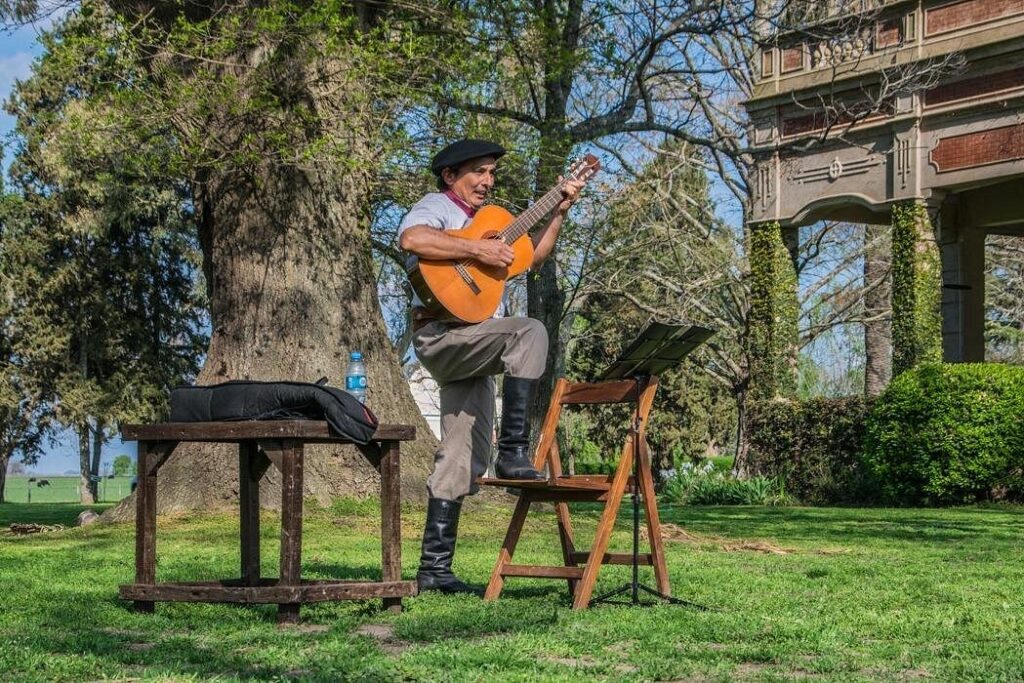
Yes, but for a specific kind of traveler. If you have any interest in Argentine culture beyond Buenos Aires, Areco delivers something the city fundamentally cannot: the pampas, the horses, the gaucho tradition, and an asado cooked in the countryside with the kind of unhurried attention that a city restaurant will never match.
The caveat is that the day is long. Four hours of bus travel round-trip, plus the estancia program, means you’ll be out from roughly 8:00 AM to 7:00 or 8:00 PM. If your Buenos Aires schedule is already tight, Tigre is the easier call. But if you have a full day free and you want to understand why Argentines talk about the pampas the way they do, Areco is the answer.
Best for: culture-focused travelers, anyone interested in rural Argentina, couples who want a long asado in the countryside, and travelers who’ve already seen the city and want something genuinely different.
Which One Should You Choose?
If you only have time for one day trip, Tigre is the safest choice: easy logistics, short travel time, and a guaranteed change of scenery. If you have two days available, add Colonia for the international dimension and the historic quarter. If you have three and want the full range, Areco completes the picture with the pampas and the gaucho tradition.
And if you’re trying to decide between all three, consider what you want your Buenos Aires trip to feel like when you look back on it. Tigre gives you the river. Colonia gives you the cobblestones. Areco gives you the horizon. The best trips include at least two.