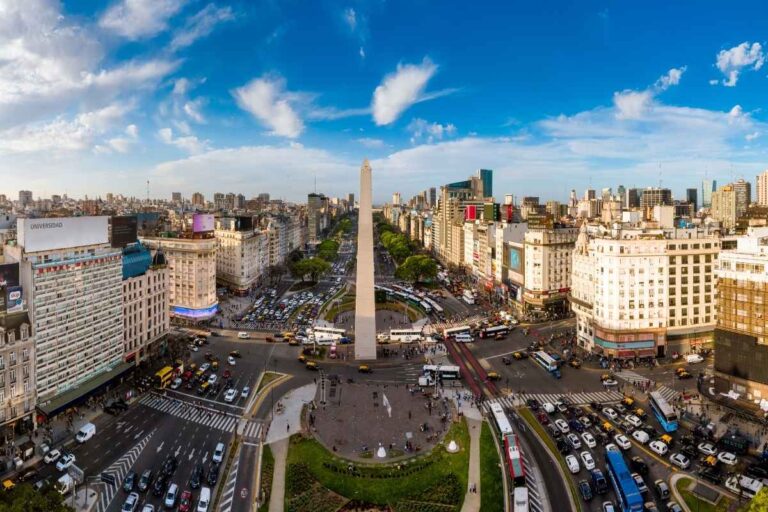

Getting around Buenos Aires is easier than it looks, but the learning curve hits in the first hour. You land at the airport, realize cash is king for some things and cards for others, hear the word SUBE repeated by everyone you ask, and discover that the subway is called the Subte, the buses don’t accept cash, and the taxis are black and yellow but the Ubers are whatever the driver happens to own. Once you decode those first few details, the city opens up. Buenos Aires is flat, grid-based, and served by a public transport network that reaches every neighborhood for a fraction of a dollar per ride.
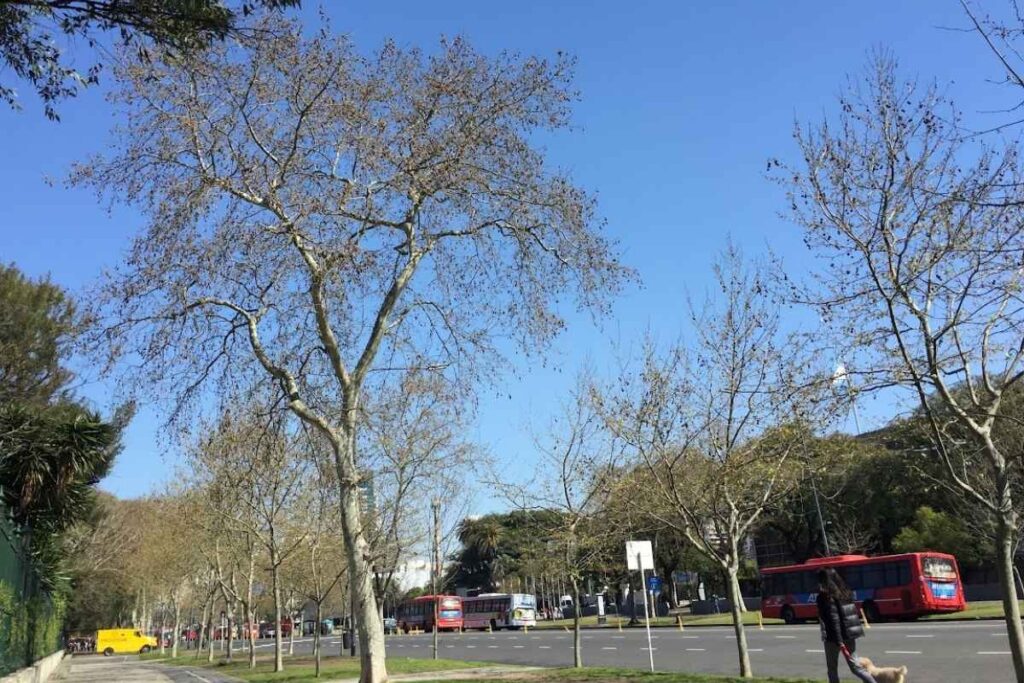
This guide covers every way to move through the city, starting with the one thing you need to sort before anything else.
The SUBE Card: Your First Priority
The SUBE card (Sistema Único de Boleto Electrónico) is a rechargeable contactless card that works on every form of Buenos Aires public transport: the Subte (subway), all colectivos (buses), suburban trains, and trolleybuses. You cannot ride a bus without one. You cannot ride a train without one. The Subte now accepts contactless credit cards as an alternative, but the SUBE remains the most reliable and cheapest option across the entire network.
Where to Buy It
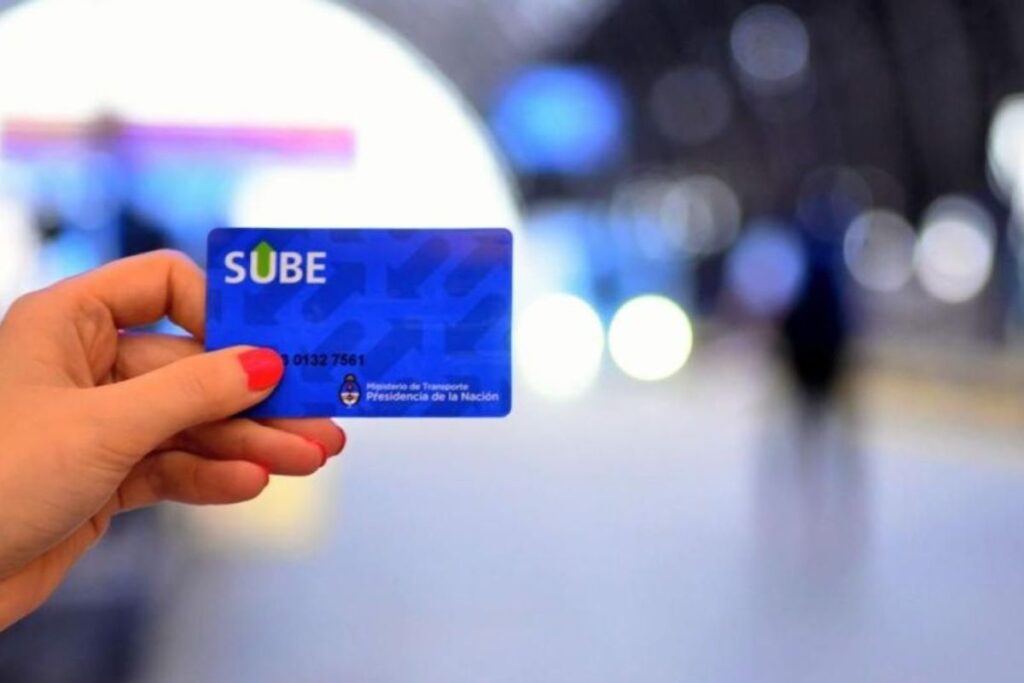
You can pick up a SUBE card at Subte stations, kioscos (the small corner shops found on virtually every block), train stations, and the city’s Tourist Assistance Centers. The card costs approximately AR$1,500 (roughly USD 1 to 1.50 at current rates). No documents are required. Just ask for a SUBE card, pay, and it’s yours.
If you’re arriving at Ezeiza International Airport (EZE), look for kioscos in the arrivals hall. Availability can be inconsistent, so if you don’t find one at the airport, any Subte station or kiosco in the city will have them. Sorting your airport transfer to the city before landing also saves time, especially if you want the SUBE card waiting at your first stop rather than hunting for one with luggage in hand.
How to Load It
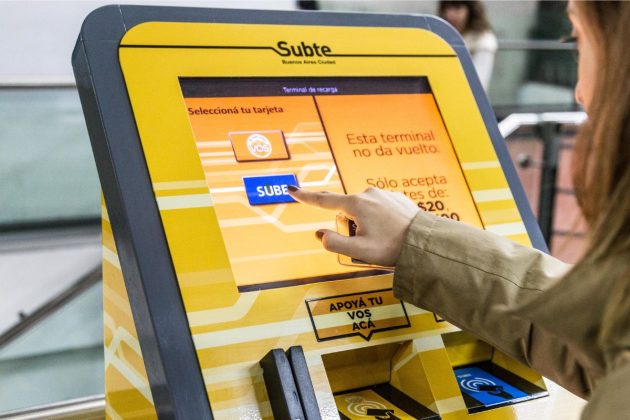
Top up your SUBE at Subte station ticket windows, at kioscos displaying the “Carga SUBE” sign, at national lottery outlets, and at automated terminals found in some stations. Bring cash for top-ups. Most kioscos and smaller top-up points do not accept cards.
You can also top up online through the official SUBE website or app, but there’s a catch: after loading credit online, you need to validate the balance by tapping your card on a terminal at a Subte station or on the reader of a bus. Until you validate, the credit won’t be usable.
How Much to Load
For a four-day visit, loading AR$5,000 to AR$8,000 (roughly USD 4 to 7) should cover all your Subte and bus rides comfortably. Individual fares are low, and the system offers a transfer discount when you switch between transport modes within two hours. If you run low, topping up takes less than a minute at any Subte station.
The Contactless Alternative
Since early 2025, the Subte accepts contactless credit and debit cards (Visa, Mastercard) and mobile payments like Apple Pay and Google Pay directly at the turnstiles. This is convenient if you only plan to use the subway, but it does not work on buses, which still require a SUBE card. If you plan to take even one bus ride during your trip, get the SUBE.
The Subte: Fast, Cheap, Limited
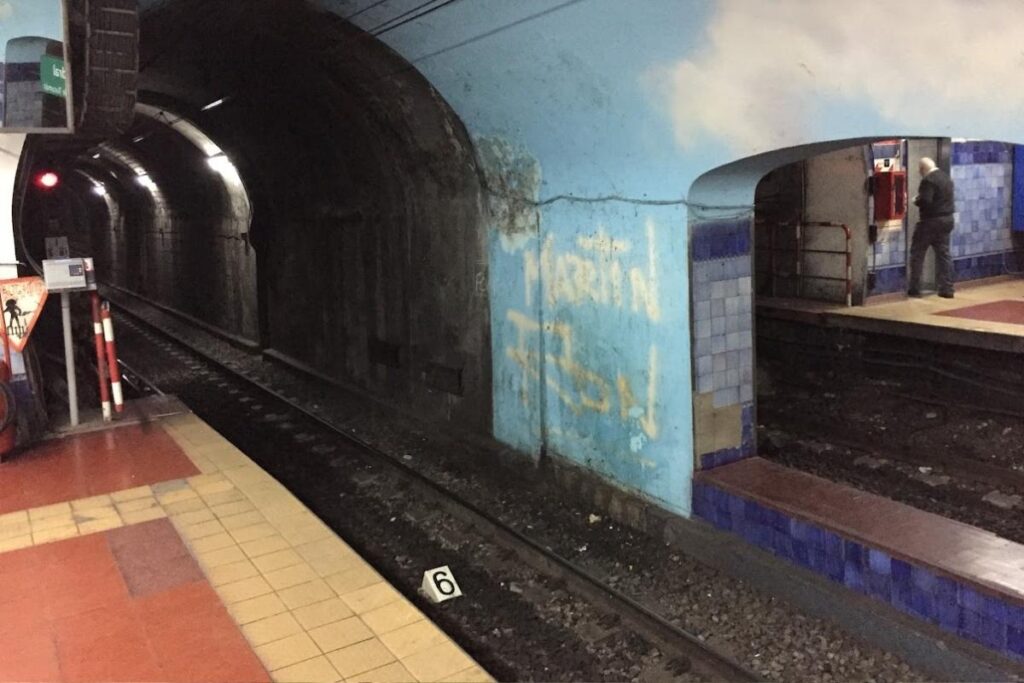
The Subte is Buenos Aires’ subway system, and it’s the fastest way to cover long distances across the city center. Six lines (A, B, C, D, E, and H) run beneath the main avenues, connecting key neighborhoods and transit hubs.
Line A runs beneath Avenida de Mayo from Plaza de Mayo to San Pedrito (useful for Centro). Line B runs from Leandro N. Alem to Juan Manuel de Rosas (useful for crossing the city east-west).
Line C connects Retiro to Constitución, passing through Centro (useful for San Telmo via San Juan station). Line D runs from Catedral to Congreso de Tucumán (useful for Recoleta and Palermo via Bulnes and Plaza Italia stations). Line E runs from Bolívar to Plaza de los Virreyes. Line H runs north-south, connecting several of the above lines (useful for transfers).
The Subte operates from approximately 5:30 AM to 11:00 PM, Monday through Saturday. Sunday hours are shorter. Trains run every 3 to 6 minutes during peak hours and every 8 to 12 minutes off-peak. The system is clean, safe, and efficient during the day, though it gets crowded during morning and evening rush hours.
The Subte’s Limitation
The network covers the central corridor well but doesn’t reach several neighborhoods that tourists visit. La Boca has no Subte station. Puerto Madero has no Subte station. Palermo Hollywood is a 10-minute walk from the nearest stop. For these gaps, you’ll need a bus, a ride app, or your feet.
Colectivos: The Buses That Go Everywhere
The colectivos are Buenos Aires’ bus network, and they are extraordinarily comprehensive. Over 150 lines run 24 hours a day, 7 days a week, reaching every corner of the city and Greater Buenos Aires. If the Subte doesn’t go there, a bus does.
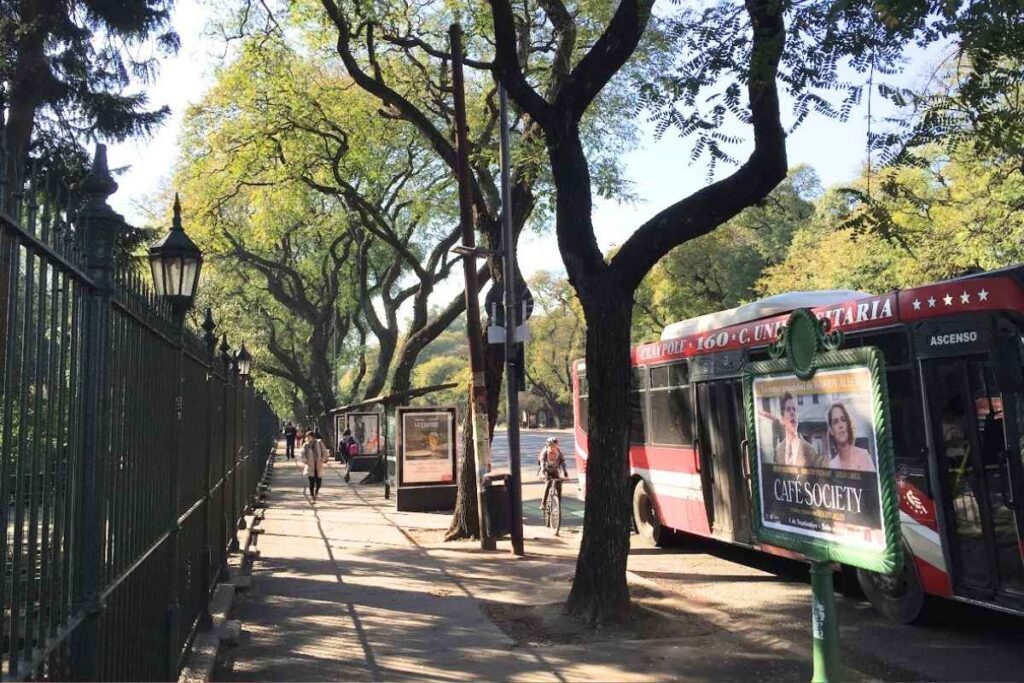
The catch: navigating the bus system as a visitor is confusing. Routes are numbered but not always intuitive, stops are sometimes unmarked, and you need to tell the driver your destination so the correct fare is charged. Two apps solve this problem almost entirely:
BA Cómo Llego (the city’s official transport app) and Moovit both provide real-time bus routes, stop locations, and step-by-step directions. Enter your origin and destination, and the app tells you which bus to take, where to board, and when to get off. Without one of these apps, the bus system is a puzzle. With one, it’s the most powerful transport tool in the city.
Important: buses do not accept cash. You must tap your SUBE card on the reader when boarding. The driver will tell you the fare after you state your destination.
Taxis: The Black and Yellow Option
Buenos Aires taxis are black with a yellow roof, and they’re everywhere. You can hail one on virtually any major street by raising your hand. The “Libre” sign on the windshield means it’s available.
When Taxis Make Sense
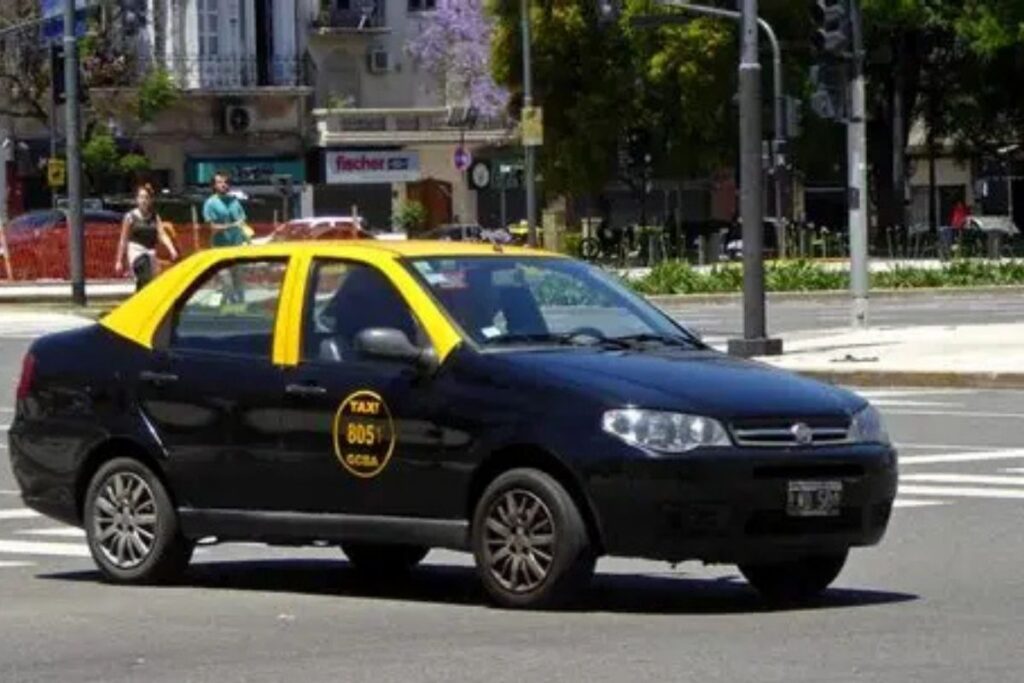
Taxis work best for short cross-town trips where the Subte doesn’t connect directly, for late-night travel after the Subte closes, and for situations where you’re carrying luggage or groceries. A typical ride between neighborhoods (say, San Telmo to Palermo) costs roughly USD 3 to 6, depending on traffic and the time of day.
What to Know
All taxis are metered. Make sure the driver starts the meter (the device mounted on the dashboard) when the ride begins. If someone offers a flat rate instead of using the meter, decline and find another cab. Tipping is not mandatory, but rounding up to the nearest convenient number is common and appreciated.
Keep small bills handy. Taxi drivers in Buenos Aires are chronically short on change, and paying a AR$5,000 fare with a AR$20,000 note can create a problem. Taxis accept cash only in most cases, though some newer units accept card payments.
Ride Apps: Uber, Cabify, and DiDi
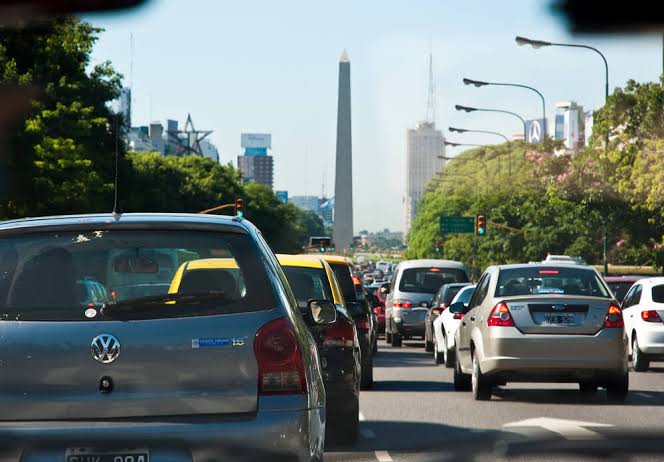
Uber, Cabify, and DiDi all operate in Buenos Aires and are the most practical transport option for visitors who want predictable pricing, GPS-routed navigation, and the ability to pay by card without handling cash.
Ride app pricing is generally 10 to 30 percent cheaper than metered taxis for the same route, and the experience is smoother: you set your destination in the app, the driver follows GPS, and there’s no negotiation over routes or fares. Receipts are automatic, and you can track your ride in real time.
Practical note: some ride app drivers in Buenos Aires will ask you to sit in the front seat. This is normal and relates to the legal gray area that ride apps still occupy in the city. It’s not a safety concern; it’s a visibility strategy.
All three apps work reliably across the tourist neighborhoods. Uber has the largest driver base. Cabify tends to have slightly newer vehicles. DiDi occasionally offers the lowest prices. Having at least two installed gives you a backup if one has surge pricing or long wait times.
Walking: The Best Way to See the City
Buenos Aires is one of the most walkable major cities in South America. The terrain is completely flat, the blocks are short and grid-based, and the tourist neighborhoods (Centro, San Telmo, Recoleta, Palermo) are dense enough that major landmarks are rarely more than a 20-minute walk from each other within the same barrio.
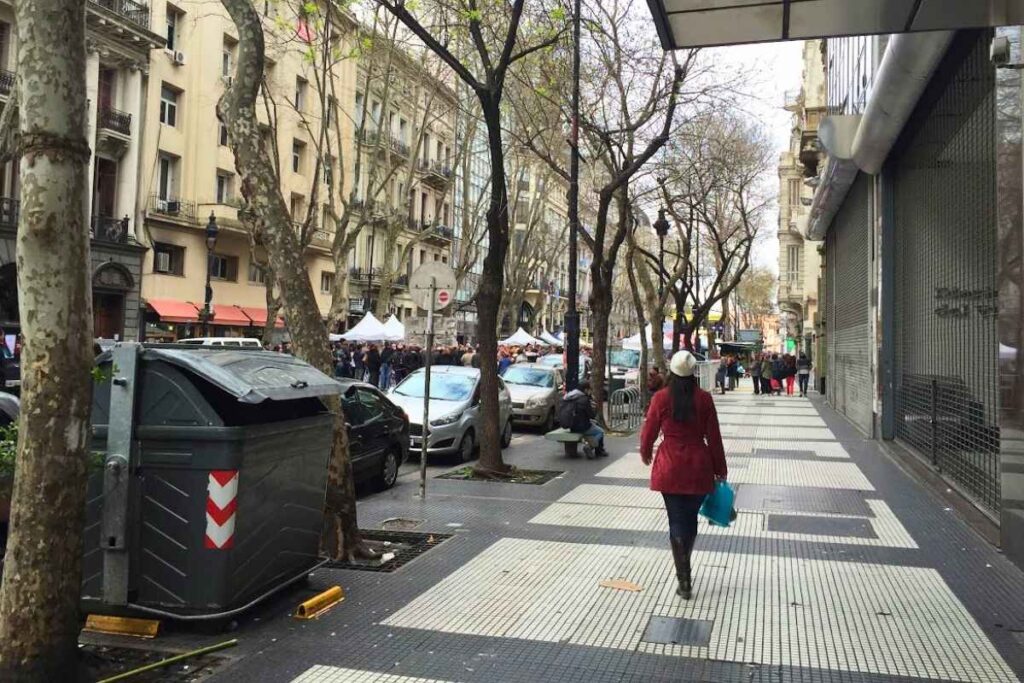
Walking is also how you discover what makes Buenos Aires interesting beyond the guidebook stops: the corner café you wouldn’t have noticed from a taxi, the street art that only appears on a side street, the empanada counter with a line of locals and no sign. Some of the best guided walking tours in the city are structured around exactly this principle, covering neighborhoods on foot with a local who knows where to look.
A Few Walking Notes
The cobblestones (adoquines) in San Telmo and parts of La Boca are beautiful but unforgiving on thin-soled shoes. Wear something with support. Sidewalks in Buenos Aires are the responsibility of each building owner, which means the surface can change from smooth tile to cracked concrete to a missing slab within the same block. Watch your step, especially at night. And during summer, the shade side of the street is always the right choice.
Renting a Car: When It Makes Sense (and When It Doesn’t)
For getting around Buenos Aires itself, a rental car is almost never necessary and usually counterproductive. Traffic is aggressive, parking is scarce and expensive in the tourist neighborhoods, and the combination of one-way streets, poorly marked lanes, and local driving habits makes the experience stressful for anyone unfamiliar with the city.
Where renting a car does make sense is for trips outside Buenos Aires: driving to the pampas, visiting a gaucho estancia, or heading to the Argentine wine country in Mendoza (though most visitors fly). If your Buenos Aires plans include excursions beyond the city limits, rent the car on the day you leave and return it when you come back. Don’t keep a rental vehicle parked in the city for days you won’t use it.
The Summary
The hierarchy for getting around Buenos Aires is simple. Walk whenever the distance is under 20 minutes. Take the Subte for longer north-south or east-west crossings along the main corridors. Use a ride app for anything the Subte doesn’t reach, for late-night travel, or when you’re tired. Take a taxi when you’re in a hurry and one’s right there. Use the bus when the Subte can’t get you where you’re going and you want to save money. And get a SUBE card before you do any of it.
Every transport option in this guide connects back to the walking routes in our 4-day itinerary, which is designed to minimize unnecessary transit and keep you in the streets where Buenos Aires actually happens. Get the SUBE, download the apps, wear comfortable shoes, and the city takes care of the rest.