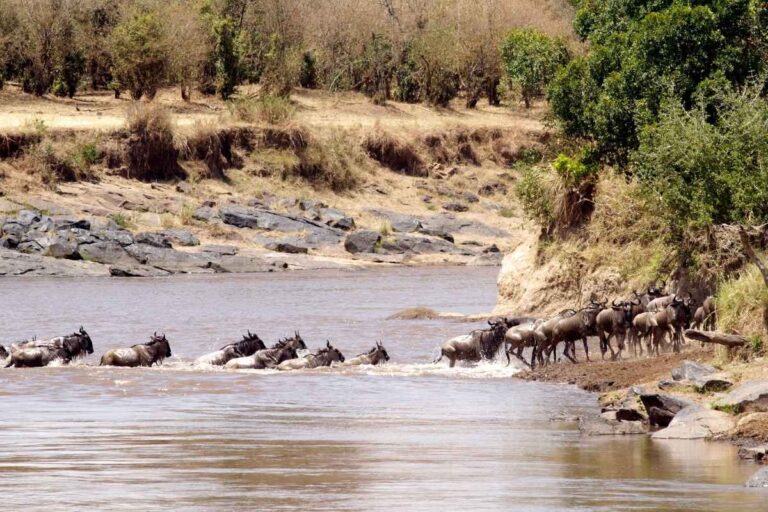

Choosing the best safari destinations in the world is ultimately a question of what you want to feel when you get there. The word “safari” comes from Swahili, meaning simply “journey,” and the range of what that journey can look like in practice is vast. You can watch 2.5 million wildebeest cross a crocodile-filled river in East Africa. You can glide through a flooded delta in a dugout canoe in Botswana. You can sit three meters from a silverback mountain gorilla in a Rwandan bamboo forest. You can track Bengal tigers through dry deciduous forest in India.
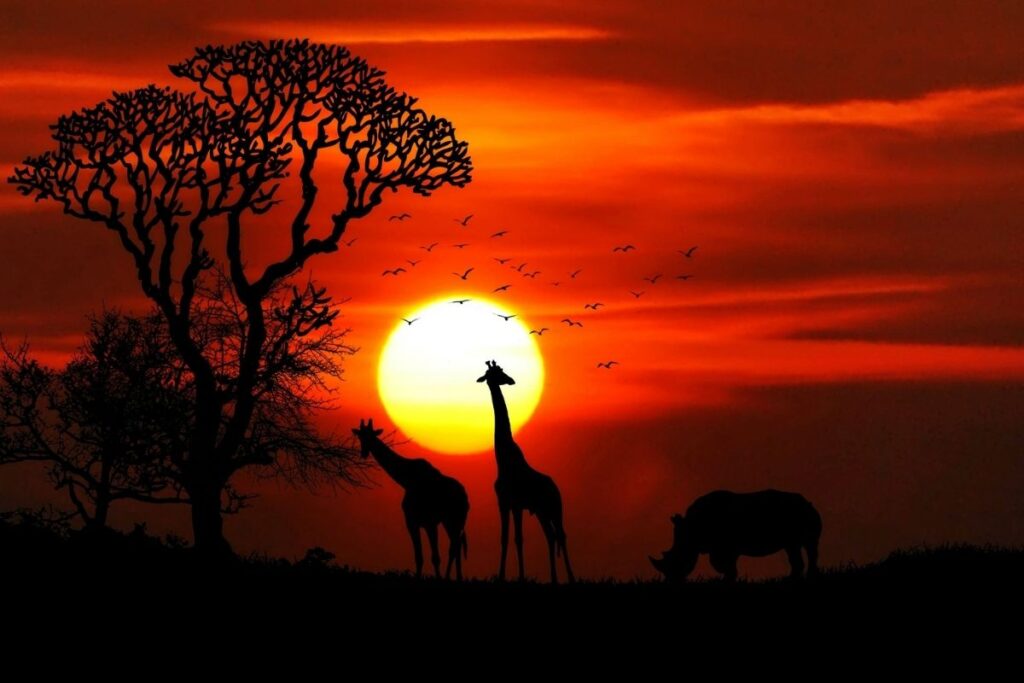
The common thread is not the landscape or the species. It’s the experience of being in a place where the animals have the right of way.
One thing I always tell people before their first safari is this: the destination matters more than the lodge. A five-star tent in a mediocre reserve will never match a simple camp in the right ecosystem at the right time of year. The destinations below were chosen because they consistently deliver extraordinary wildlife encounters, and each one offers something the others don’t.
Serengeti National Park, Tanzania
The Serengeti is the benchmark against which every other safari destination is measured.
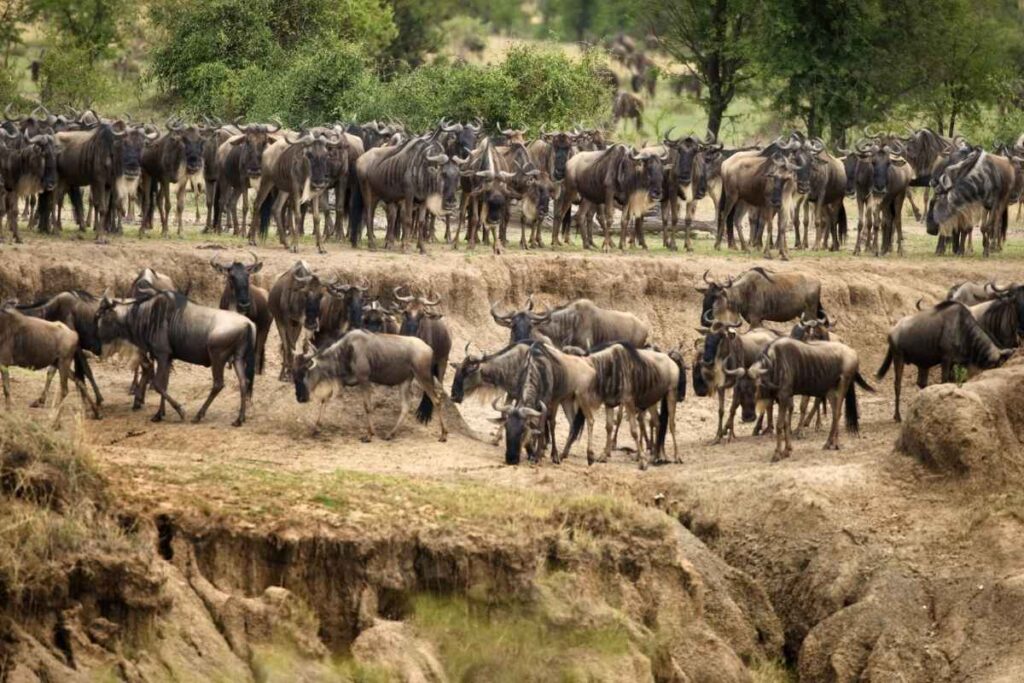
This 14,750 square kilometer expanse of savanna in northern Tanzania hosts the Great Wildebeest Migration, the largest terrestrial animal movement on Earth, in which roughly 2.5 million wildebeest, zebra, and gazelle follow a circular route through the ecosystem in search of fresh grazing. The migration spends significant time in the Serengeti’s southern plains (December to March, the calving season) before moving northwest toward the Masai Mara in Kenya (July to October).
Beyond the migration, the Serengeti supports extraordinary year-round wildlife: lion prides, leopards, cheetahs, elephants, giraffes, and over 500 bird species. A hot air balloon flight over the plains at dawn is one of the defining safari experiences, and the range of accommodation runs from basic mobile camps to ultra-luxury lodges.
Best time to visit: June to October for the migration’s northern movement, January to March for the calving season in the south.
Masai Mara National Reserve, Kenya
The Masai Mara shares an unfenced border with the Serengeti and picks up the migration story from July to October, when the herds cross the Mara River in a spectacle of chaos, courage, and crocodiles that remains one of the most filmed wildlife events on the planet.
The Mara is smaller and more concentrated than the Serengeti, which means wildlife density per square kilometer is among the highest in Africa.
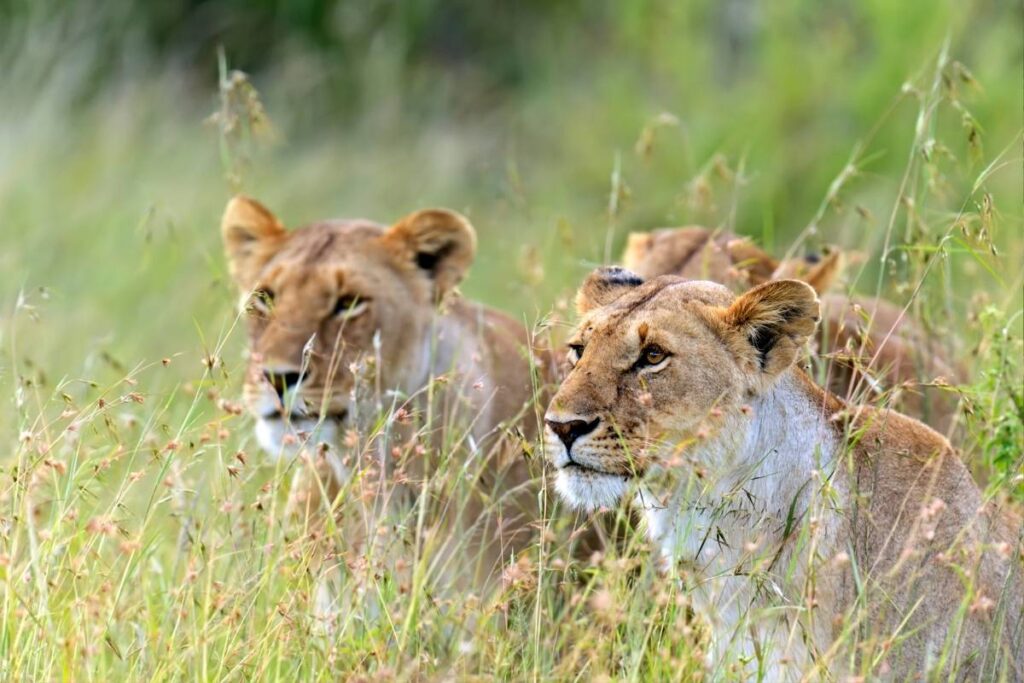
It’s home to one of the largest lion populations on the continent, and the chances of seeing all Big Five (lion, leopard, elephant, buffalo, rhinoceros) in a single game drive are genuinely high. Cultural encounters with the Maasai people, whose traditional villages border the reserve, add a human dimension that most safari destinations lack.
Best time to visit: July to October for the migration and river crossings, though game viewing is excellent year-round.
Okavango Delta, Botswana
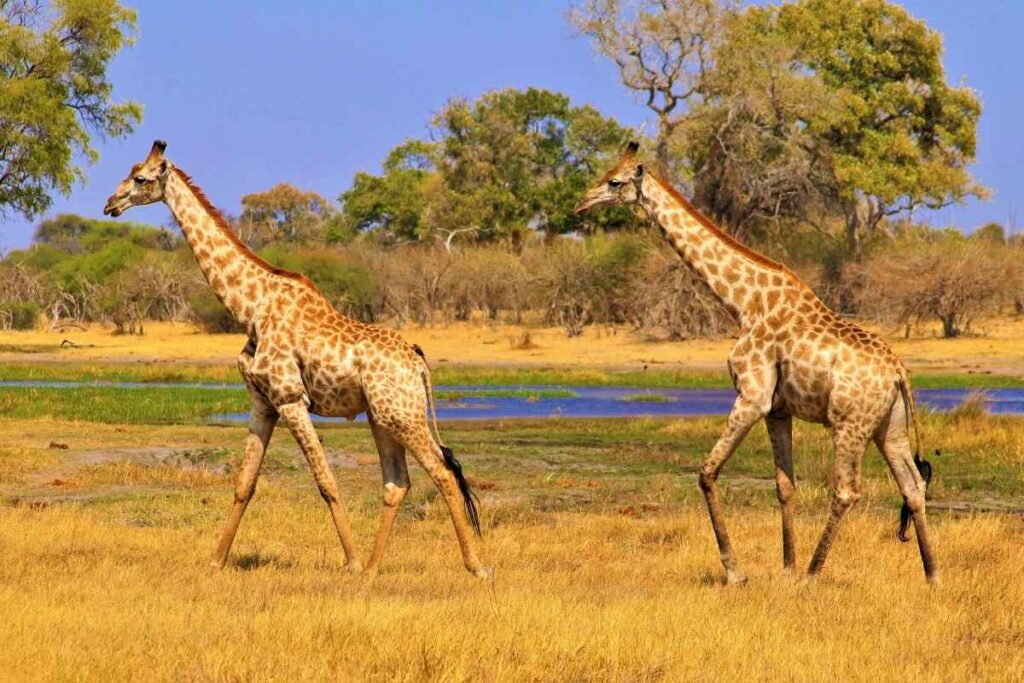
The Okavango Delta is unlike any other safari destination on Earth. Instead of flowing into the sea, the Okavango River empties into the Kalahari Desert, creating a vast inland delta of channels, lagoons, and islands that floods seasonally and supports one of the most biodiverse ecosystems in Africa.
The safari experience here is defined by water. Game drives happen on land, but the signature activity is a mokoro (dugout canoe) excursion through the delta’s reed-lined channels, with elephants wading through the shallows and hippos surfacing nearby.
The camps are remote, accessible only by light aircraft, and the exclusivity comes at a premium, but the sense of wilderness is total.
Botswana operates a high-value, low-volume tourism model that limits visitor numbers and keeps the ecosystem remarkably intact. This is not the cheapest safari destination, but it may be the most pristine.
Best time to visit: May to October, when the floodwaters are high and the dry-season game concentrations peak.
Kruger National Park and Sabi Sand, South Africa
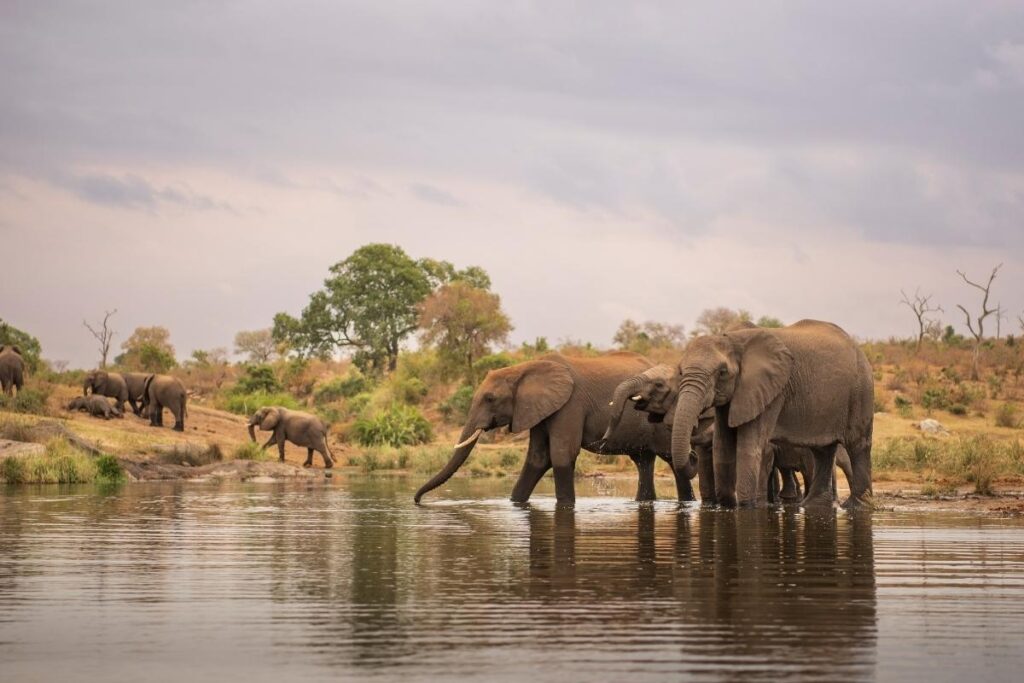
For first-time safari travelers, Kruger National Park and its adjacent private reserves, particularly the Sabi Sand Game Reserve, offer the most accessible and reliable Big Five experience in Africa. Kruger is enormous (19,485 square kilometers), well-managed, and connected to international airports that let you be on a game drive within hours of landing.
The Sabi Sand, which shares an unfenced border with Kruger, is widely considered the best place on Earth to see leopards. The private traversing rights, limited vehicle numbers, and experienced trackers create an intimacy with the wildlife that the main Kruger roads can’t replicate. Accommodation ranges from budget-friendly rest camps inside Kruger to world-class lodges in the Sabi Sand, making this one of the most versatile safari destinations for any budget.
A guided multi-day safari through Kruger and the Sabi Sand pairs exceptionally well with Cape Town and the Winelands for travelers who want to combine wildlife with urban culture.
Best time to visit: May to September (dry winter months), when vegetation thins and animals congregate around water sources.
Ngorongoro Crater, Tanzania
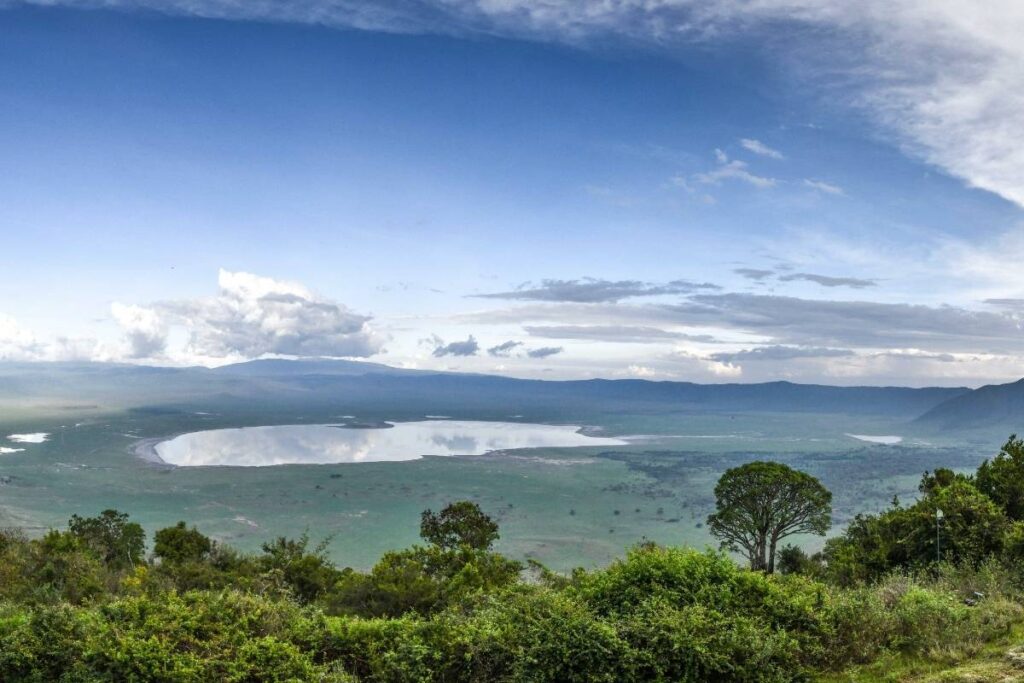
The Ngorongoro Crater is a collapsed volcanic caldera roughly 20 kilometers in diameter, and its floor supports one of the densest concentrations of large mammals anywhere in Africa. The crater walls rise 600 meters above the floor, creating a natural enclosure where approximately 25,000 animals live permanently, including a small population of critically endangered black rhinoceros.
The combination of scale and containment makes game viewing here almost guaranteed. A single day in the crater can produce sightings of lion, elephant, buffalo, hippo, flamingo, and, with luck, rhino. Most visitors combine Ngorongoro with the Serengeti on a northern Tanzania safari circuit.
Best time to visit: June to October for dry-season visibility, November to March for lush green landscapes and bird migrations.
Volcanoes National Park, Rwanda
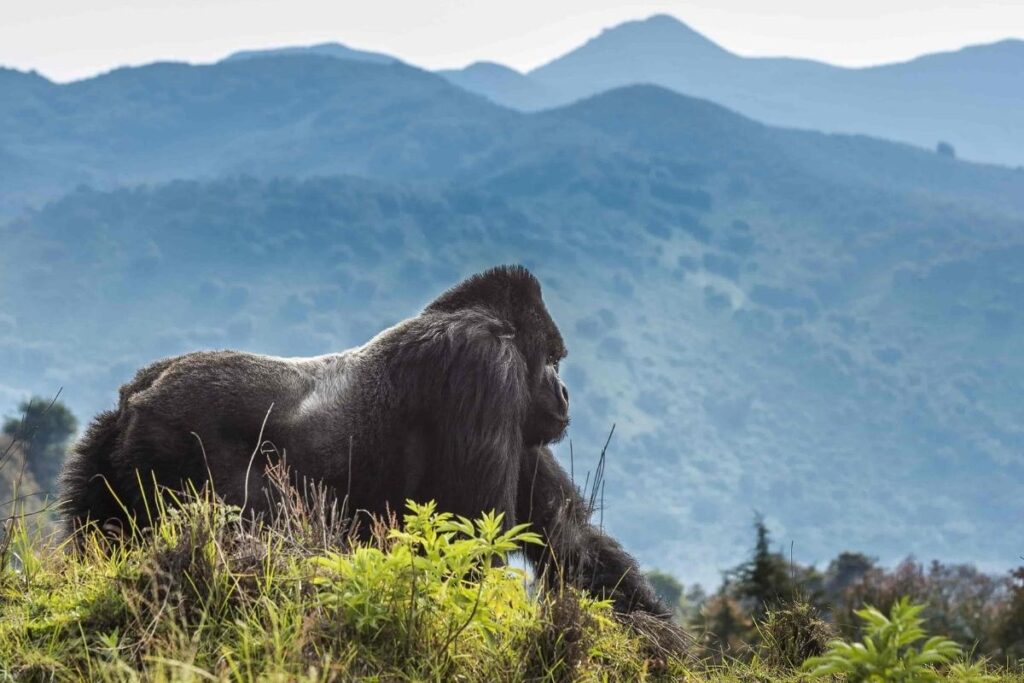
Gorilla trekking in Rwanda is not a traditional game drive safari. It’s a hike through dense bamboo forest on the slopes of the Virunga Mountains, guided by trackers who locate one of the park’s habituated gorilla families, followed by one hour spent sitting in the presence of a silverback and his group at a distance of just a few meters. The experience is quietly profound in a way that no savanna safari replicates.
Rwanda has invested heavily in conservation, and the mountain gorilla population has rebounded from roughly 250 individuals in the 1980s to over 1,000 today. Permits cost USD 1,500 per person and sell out months in advance. The revenue funds both conservation and community development, making this one of the most ethically grounded wildlife experiences in the world.
Best time to visit: June to September and December to February (dry seasons with easier trekking conditions).
South Luangwa National Park, Zambia
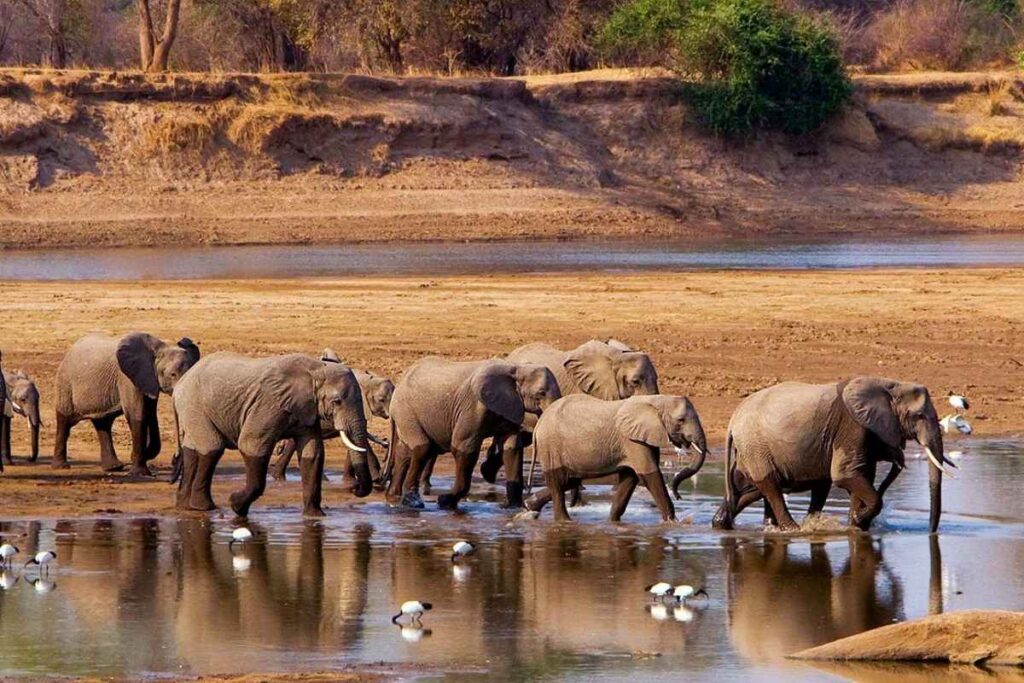
South Luangwa is where the walking safari was invented, and it remains the best place in Africa to experience wildlife on foot. Unlike vehicle-based game drives, a walking safari puts you at eye level with the bush, tracking animals by their prints and dung with an armed guide and an intensity of awareness that transforms the experience from observation to immersion.
The Luangwa River attracts massive concentrations of hippos and crocodiles, and the park’s leopard population is one of the densest in southern Africa. The camps here are smaller, less luxurious, and more focused on the guiding than on the thread count, which is exactly what draws a specific type of safari traveler.
Best time to visit: May to October, with the best walking conditions from June to September.
Safaris Beyond Africa
Safari is not exclusively African. Ranthambore National Park in Rajasthan, India, offers the best chance of seeing a Bengal tiger in the wild, set against the backdrop of a 10th-century fortress.
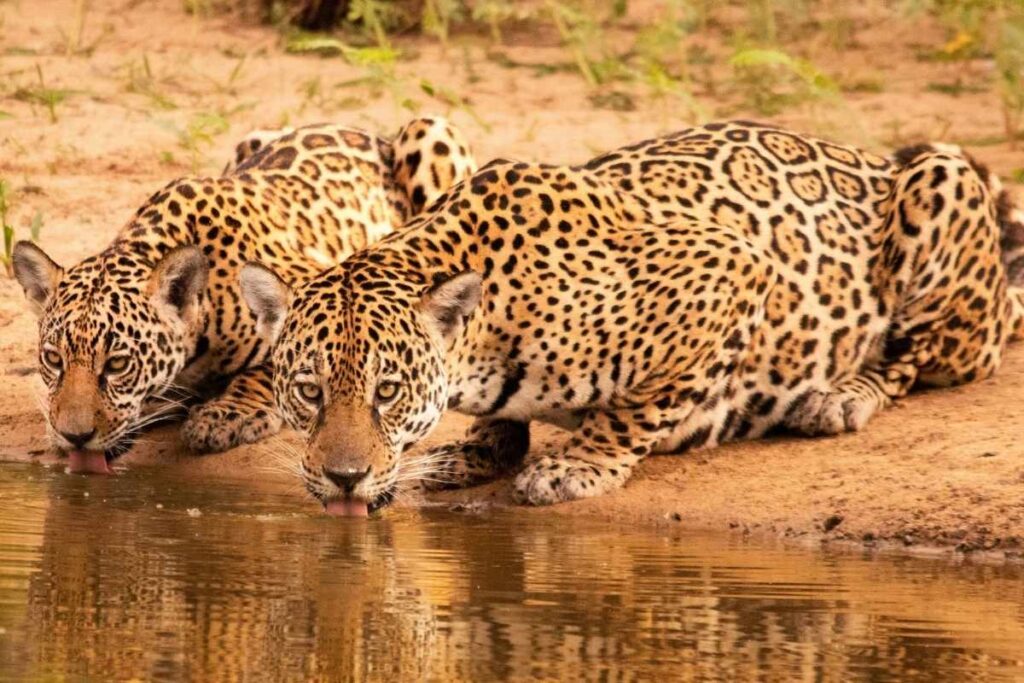
The Pantanal in Brazil (photo) is the world’s largest tropical wetland and the best place on Earth to see jaguars in the wild, particularly along the Cuiabá River between June and October. The Galápagos Islands in Ecuador deliver a wildlife experience where the animals show no fear of humans, because they evolved without land predators, allowing encounters with giant tortoises, marine iguanas, and blue-footed boobies at arm’s length.
Each of these destinations offers something Africa cannot, and for travelers who have already experienced the classic savanna safari, they represent the next chapter.
Choosing Your Safari
The best safari destination depends on what you want to see and how you want to see it. For the migration, choose the Serengeti or the Masai Mara. For exclusivity and water, the Okavango Delta. For accessibility and Big Five reliability, Kruger and the Sabi Sand. For gorillas, Rwanda. For walking, South Luangwa. For tigers, Ranthambore. For jaguars, the Pantanal.
The one recommendation I give to every traveler planning a safari is to invest in the guiding rather than the lodge. A great guide will find you animals you’d never see on your own, explain behaviors you’d never understand, and turn a game drive into something you’ll carry for the rest of your life. The tent you sleep in matters far less than the person who wakes you up at 5:30 AM and says, “the leopard is back.”