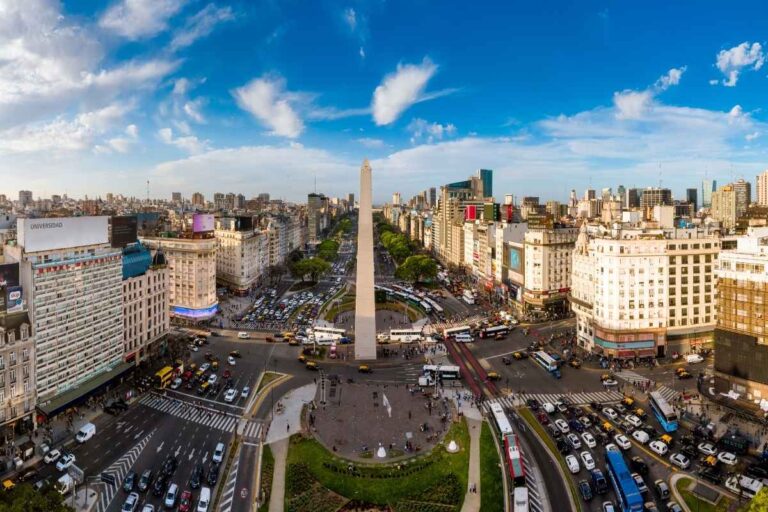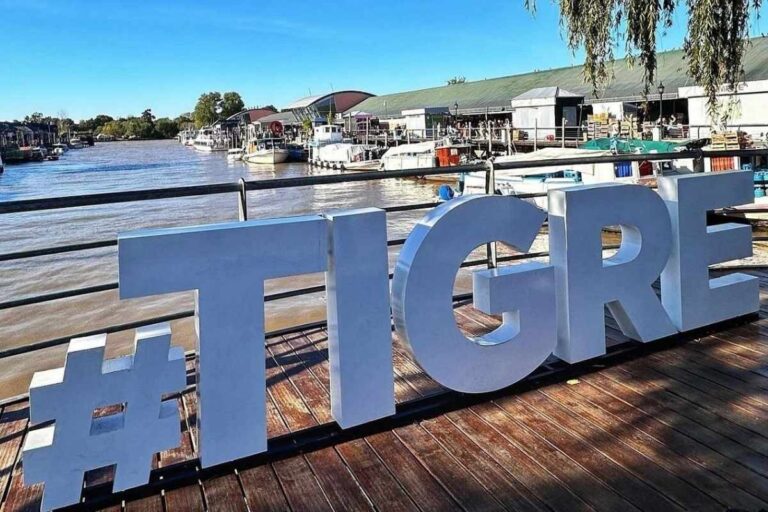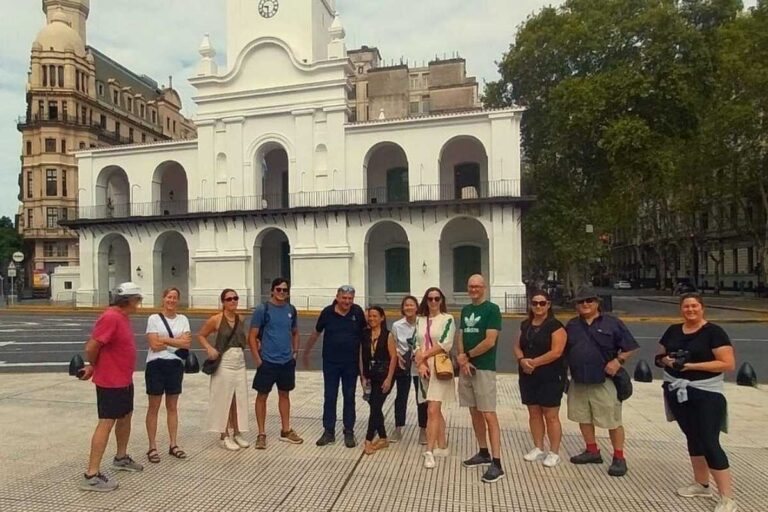

The neighborhood you choose in Buenos Aires will shape your trip more than the hotel itself. This is a city of 48 barrios, each with its own architecture, food culture, noise level, and personality, and the difference between staying in the right one and the wrong one is the difference between walking out your door into the trip you wanted and spending half your mornings in a taxi getting to it.
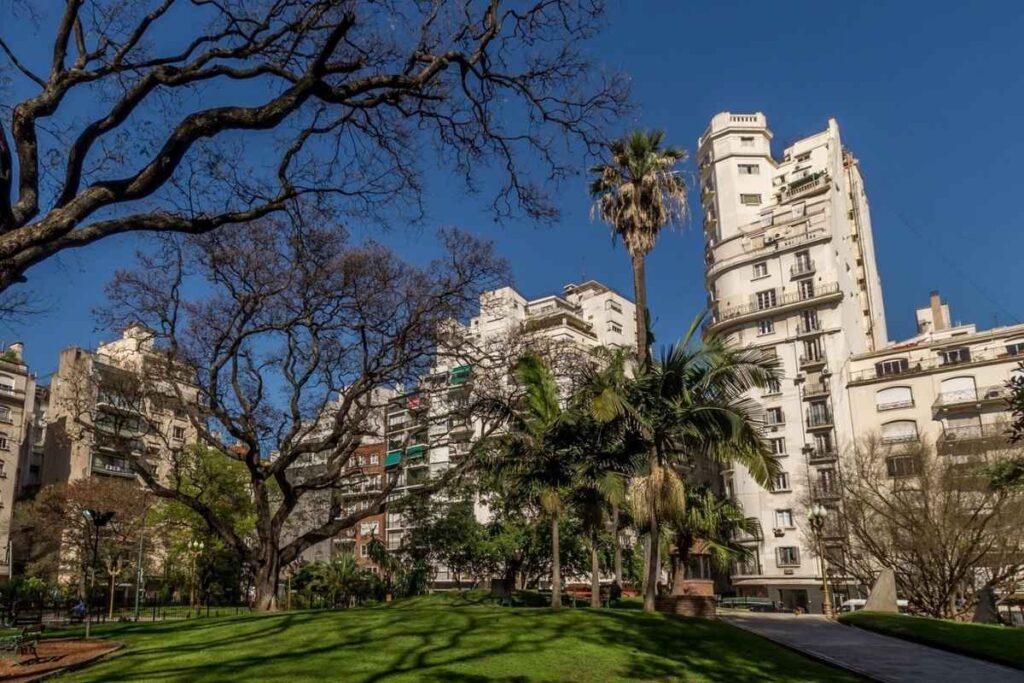
The three neighborhoods that matter most for visitors are Palermo, Recoleta, and San Telmo. They cover different price points, different vibes, and different versions of Buenos Aires. A fourth option, Puerto Madero, appeals to a specific type of traveler and deserves a mention, though it sits outside the city’s real character in ways the other three don’t.
Here I discuss the neighborhoods: what they are known as, who they are best suited for, how they connect to the rest of the city, and what you will actually experience when staying in each one. For specific hotel recommendations by area and price range, please see Buenos Aires hotels on our accommodations page.
San Telmo: The One With Soul
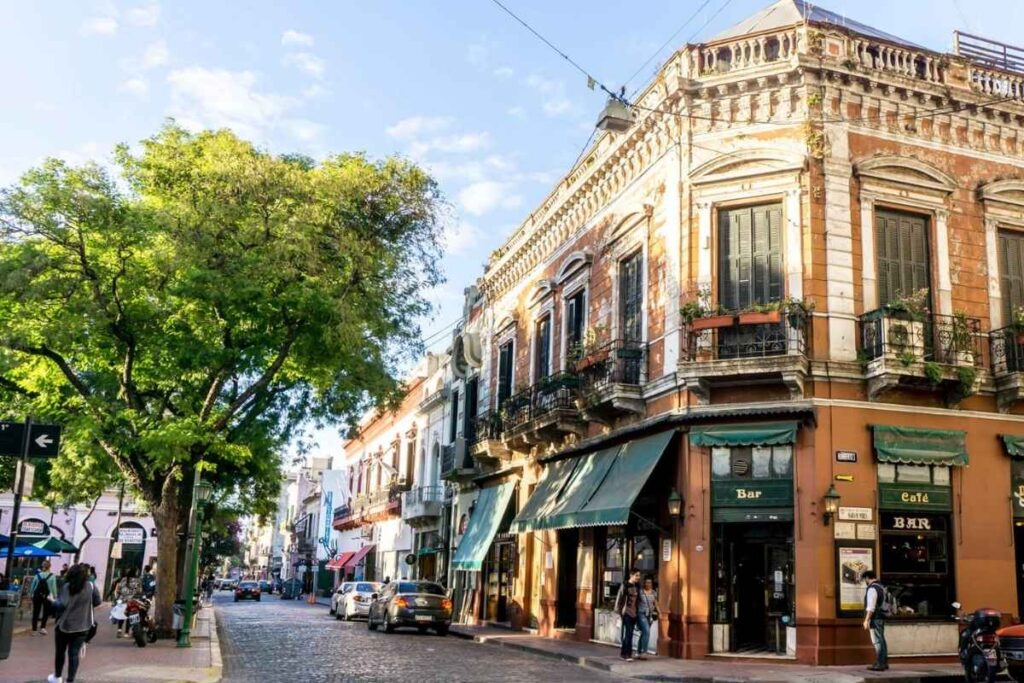
San Telmo is the oldest residential neighborhood in Buenos Aires and the one that feels most like it belongs to the city rather than to the tourists visiting it. The streets are paved in cobblestone (adoquines), the buildings are low and colonial, the paint is peeling in exactly the right way, and the general atmosphere is a mix of antique shops, tango bars, artists’ studios, and family-run restaurants that have been serving the same dishes for decades.
Who It Suits
Couples. Solo travelers. Anyone who values atmosphere over polish. If your idea of a good evening is a bottle of Malbec at a sidewalk table on a quiet cobblestoned street while a tango trio plays three doors down, San Telmo is your neighborhood.
What It Sounds Like
Quieter than Palermo at night, louder on Sundays when the Feria de San Telmo fills Calle Defensa with 30 blocks of market stalls, street performers, and crowds. On weekday evenings, the noise level is low. You’ll hear dogs, the occasional bus on Avenida San Juan, and music from the bars around Plaza Dorrego. The residential blocks between the main streets are genuinely peaceful.
Getting Around
San Telmo sits in the southern half of the city’s tourist corridor. Plaza de Mayo and Centro are a 15-minute walk north. La Boca is reachable by bus or taxi in 10 minutes (don’t walk). The Subte (subway) serves San Telmo via Line C (San Juan station) and Line E (Independencia), connecting you to Retiro, Recoleta, and the train stations. Getting to Palermo requires a 20-minute Subte ride or a 15-minute Uber.
The Trade-Offs
San Telmo is not the newest or most polished neighborhood. Some streets feel neglected after dark, and the area around Avenida Paseo Colón and the edges toward La Boca require the same awareness you’d apply in any large South American city. Understanding safety by neighborhood matters here more than in Recoleta or Palermo, particularly if you plan to walk home late.
The restaurant scene is excellent but narrower than Palermo’s. You won’t find as much international variety, but what you will find, traditional Argentine cooking, historic cafés, and parrillas with serious reputations, tends to be more authentic and less performative.
Recoleta: The One With Elegance
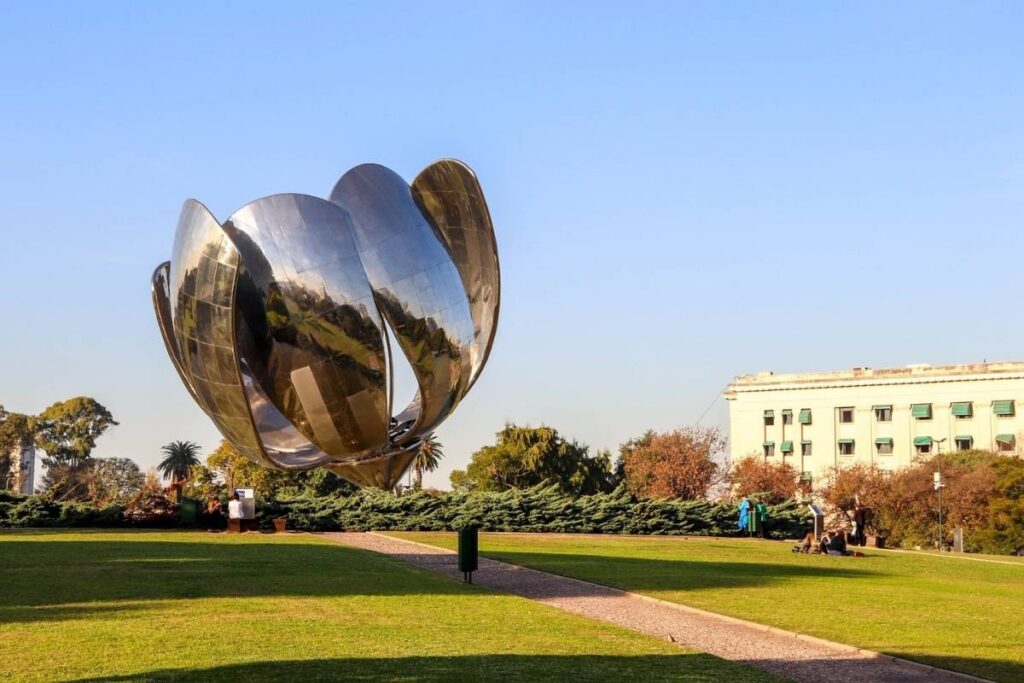
Recoleta is Buenos Aires at its most European. The architecture is predominantly French-influenced, the avenues are wide and tree-lined, the cultural institutions are serious, and the general atmosphere is closer to a prosperous Parisian arrondissement than to anything you’d expect in South America. This is where the city’s old money lives, and it shows, not in an exclusionary way, but in the maintenance of the buildings, the quality of the infrastructure, and the overall feeling that everything here has been designed to last.
Who It Suits
Older couples. Families. Travelers who prioritize comfort, safety, and proximity to museums and parks over nightlife and street culture. If you want to wake up, walk to the Museo Nacional de Bellas Artes (free entry, exceptional collection), and have lunch at a white-tablecloth restaurant without crossing a single major avenue, Recoleta is the neighborhood.
What It Sounds Like
Recoleta is the quietest of the three, particularly the blocks between Avenida Alvear, Avenida Las Heras, and the Bosques de Palermo. The residential streets are almost suburban in their stillness after 10:00 PM. The noisier exceptions are Avenida Santa Fe, which carries heavy traffic, and the area directly around the Recoleta Cemetery and Plaza Francia, which draws crowds on weekends when the artisan fair is running.
Getting Around
Recoleta’s main drawback is its Subte access, which is limited. The nearest stations are Callao (Line D) and Las Heras (Line H), both on the neighborhood’s edges. In practice, most visitors in Recoleta rely on taxis and Uber for anything beyond walking distance. The upside is that the Cementerio de la Recoleta, the Museo de Bellas Artes, and the transition into Palermo are all walkable, and the Bosques de Palermo begin just a few blocks northwest.
The Trade-Offs
Recoleta is not where Buenos Aires goes to have fun at night. The restaurant scene is more formal and more expensive than Palermo or San Telmo, and the options after midnight are limited. If your priority is nightlife, cocktail bars, or spontaneous late-night dining, you’ll spend most evenings in a taxi to Palermo.
The other consideration is personality. Recoleta is beautiful, comfortable, and safe, but it can feel a little removed from the energy that makes Buenos Aires exciting. It’s the neighborhood you recommend to your parents. That’s not an insult. It just means it plays a specific role.
Palermo: The One With Everything (Almost)
Palermo is the largest barrio in Buenos Aires, and within the tourism context, it operates as at least four distinct sub-neighborhoods. Understanding the differences between them matters, because staying in the wrong part of Palermo can mean a very different experience from what you expected.
Palermo Soho
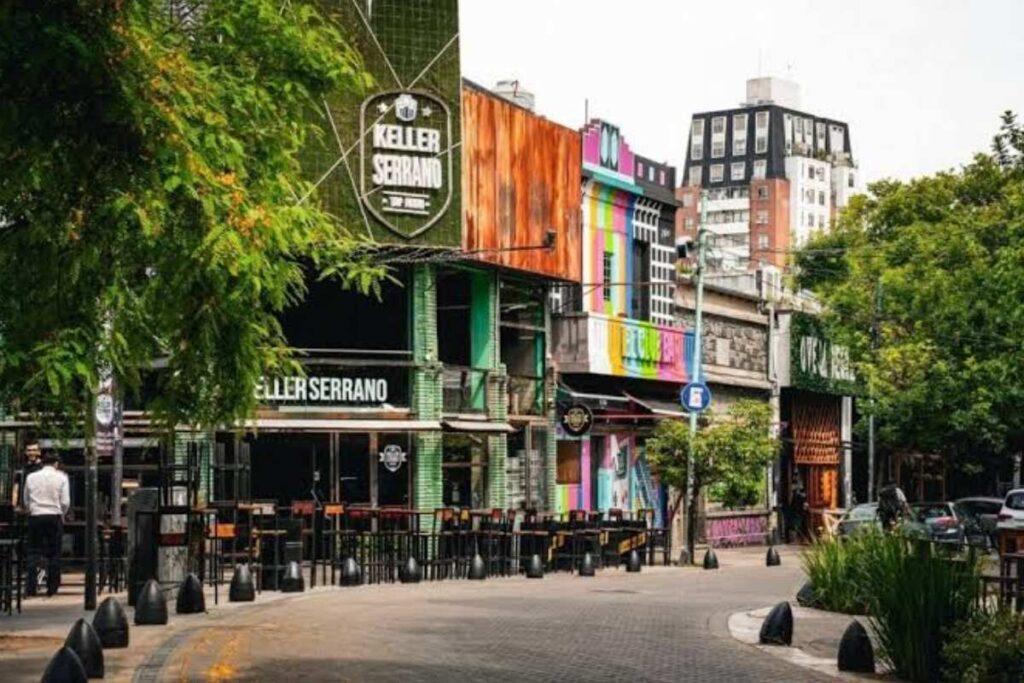
Palermo Soho is the area roughly bounded by Avenida Santa Fe to the south, Avenida Juan B. Justo to the west, Avenida Córdoba to the north, and Scalabrini Ortiz to the east. The center of gravity is Plaza Serrano (officially Plaza Julio Cortázar), a small square surrounded by bars, restaurants, and designer shops that fills with people every evening and overflows on weekends.
This is the neighborhood with the most international restaurant options in the city: Japanese, Peruvian, Vietnamese, Middle Eastern, and modern Argentine kitchens sit next to each other on almost every block. The street art is dense and constantly changing. The independent boutiques sell Argentine fashion and design that you won’t find in malls. And the bar scene runs from craft beer joints to serious cocktail bars that could hold their own in any global city.
Who it suits: younger travelers, couples who want nightlife walking distance from their hotel, food-obsessed visitors, anyone who wants variety.
What it sounds like: Palermo Soho is loud, especially on Thursday, Friday, and Saturday nights. The blocks around Plaza Serrano generate significant noise from bars and outdoor dining well past midnight. If you’re a light sleeper, request a room facing a courtyard or choose a hotel a few blocks from the plaza.
Palermo Hollywood
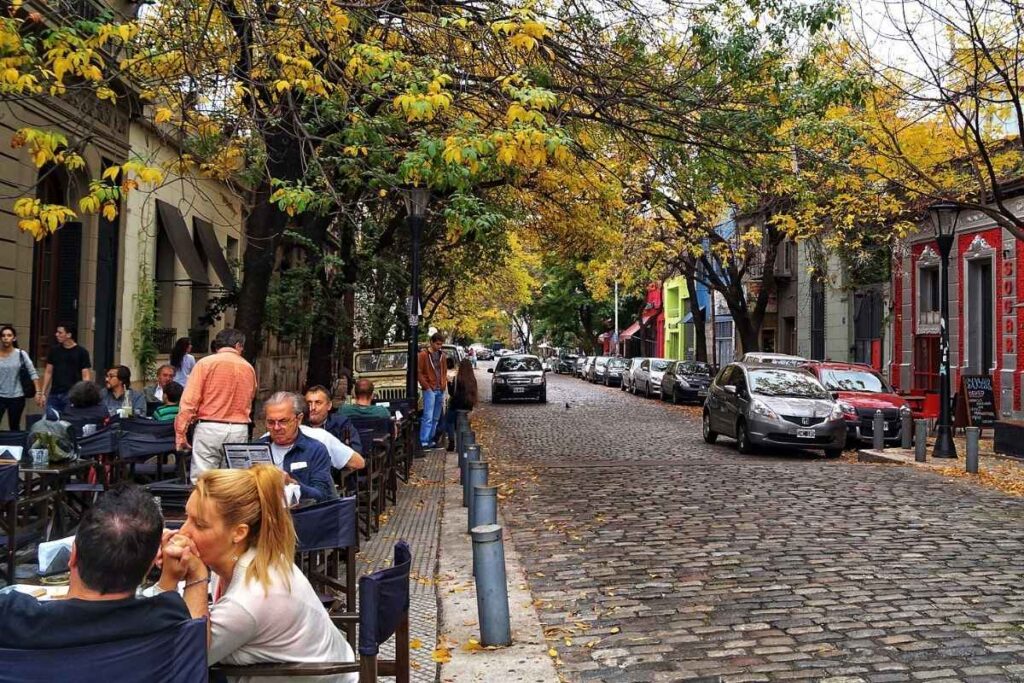
Cross Avenida Juan B. Justo heading west and you’re in Palermo Hollywood, named for the television and film production companies that set up here in the early 2000s. Hollywood is slightly less dense than Soho, with wider streets, more trees, and a scene that skews slightly older and more relaxed. The restaurants here tend to be bigger, the cocktail bars more curated, and the foot traffic less intense.
Who it suits: travelers who want Palermo’s food and nightlife without Soho’s weekend chaos. Couples in their 30s and 40s. Visitors who prefer a neighborhood that’s walkable and interesting but doesn’t vibrate until 3:00 AM beneath their window.
The difference that matters: if you draw a line at Avenida Juan B. Justo, Soho is east (louder, denser, more shopping) and Hollywood is west (calmer, slightly more residential, equally good food). Many visitors don’t distinguish between the two, but if noise sensitivity or evening atmosphere matters to you, the distinction is worth making.
Palermo Viejo and Palermo Chico
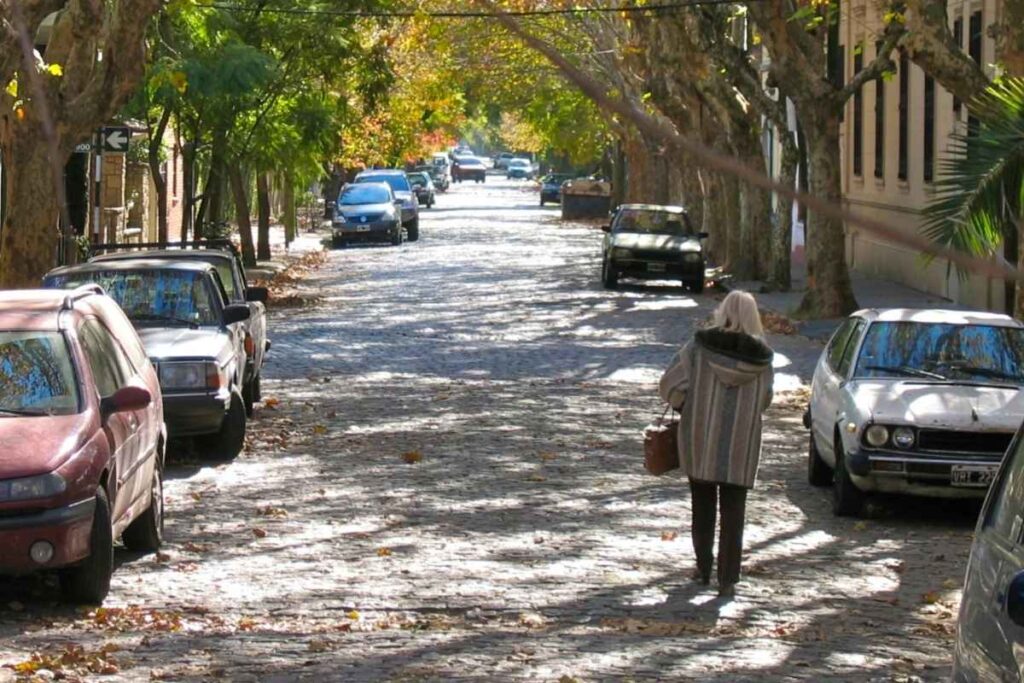
For completeness: Palermo Viejo is the broader term that encompasses much of Soho and its surrounding residential streets. Palermo Chico, wedged between Recoleta and the Bosques de Palermo, is a tiny enclave of embassies, mansions, and the MALBA (Museo de Arte Latinoamericano de Buenos Aires). It’s not a practical area to stay in, but it’s worth walking through.
Getting Around From Palermo
Palermo has excellent connections. Subte Line D runs through the neighborhood with stops at Plaza Italia, Scalabrini Ortiz, and Bulnes. Line B crosses the southern edge. Buses are everywhere. And the flat, grid-based streets make walking easy and intuitive. Getting to San Telmo takes about 20 minutes by Subte or 15 by Uber. Recoleta is a 15-minute walk southeast. The Bosques de Palermo and the Rosedal are on the neighborhood’s northern edge.
The Trade-Offs
Palermo’s main downside is distance from the historic core. Plaza de Mayo, the Colosseum of Buenos Aires tourism, is a 25-minute Subte ride or a 20-minute taxi. If your itinerary is heavily weighted toward Centro, San Telmo, and La Boca, staying in Palermo means commuting south every morning. The neighborhood also lacks the architectural gravitas of Recoleta and the bohemian texture of San Telmo. Palermo is newer, more commercial, and more international in character.
For Palermo accommodation options by sub-neighborhood, browse Palermo hotels on our accommodation page.
Puerto Madero: A Note
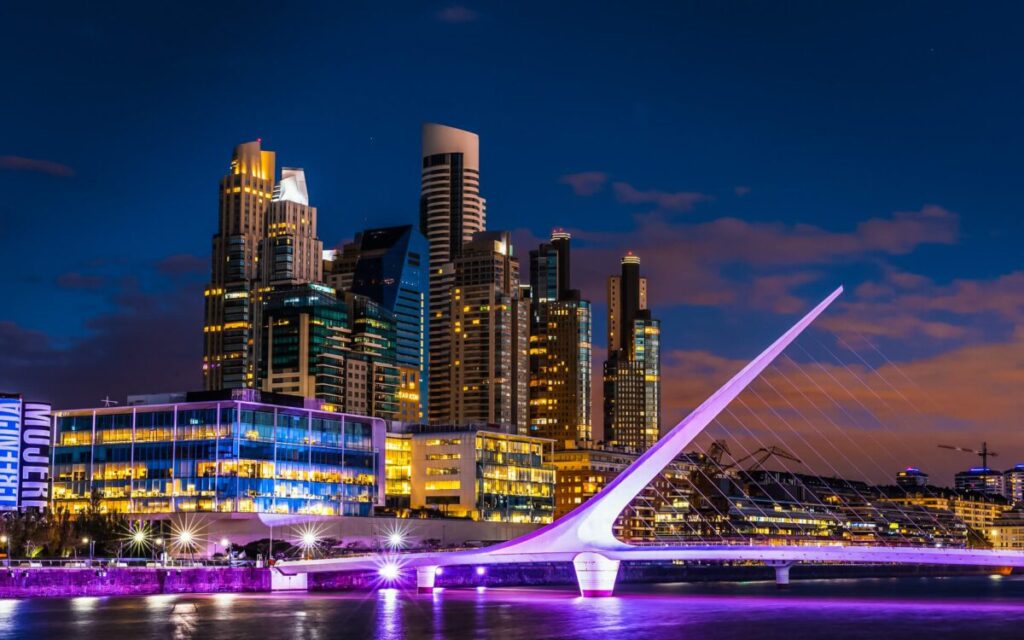
Puerto Madero gets mentioned because visitors see the waterfront photos and assume it’s a great place to stay. It’s not, for most people. The neighborhood is a strip of converted docklands with glass towers, chain restaurants, and a waterfront promenade that’s pleasant but disconnected from the rest of the city. There’s no subway station. The restaurant prices are higher than neighboring San Telmo for comparable or lower quality. And at night, the area empties out almost completely.
Puerto Madero works for business travelers who want a modern hotel with a river view and don’t plan to explore on foot. For everyone else, the three neighborhoods above are better choices in every measurable way.
So, Which One?
The decision comes down to what you want your mornings, afternoons, and evenings to feel like.
Choose San Telmo if you want character, cobblestones, tango on your doorstep, and the feeling of staying in the real Buenos Aires. Accept that it’s rougher around the edges than the alternatives.
Choose Recoleta if you want elegance, quiet, cultural institutions within walking distance, and a neighborhood that feels safe and refined at every hour. Accept that you’ll taxi to the nightlife.
Choose Palermo Soho if you want restaurants, bars, nightlife, and variety at your door. Accept the noise.
Choose Palermo Hollywood if you want everything Soho offers but with a few decibels less and a few years more maturity.
Whichever neighborhood you pick, the 4-day itinerary is structured to work from any of them, with transit times calculated so you spend your days in the streets rather than on the way to them.