
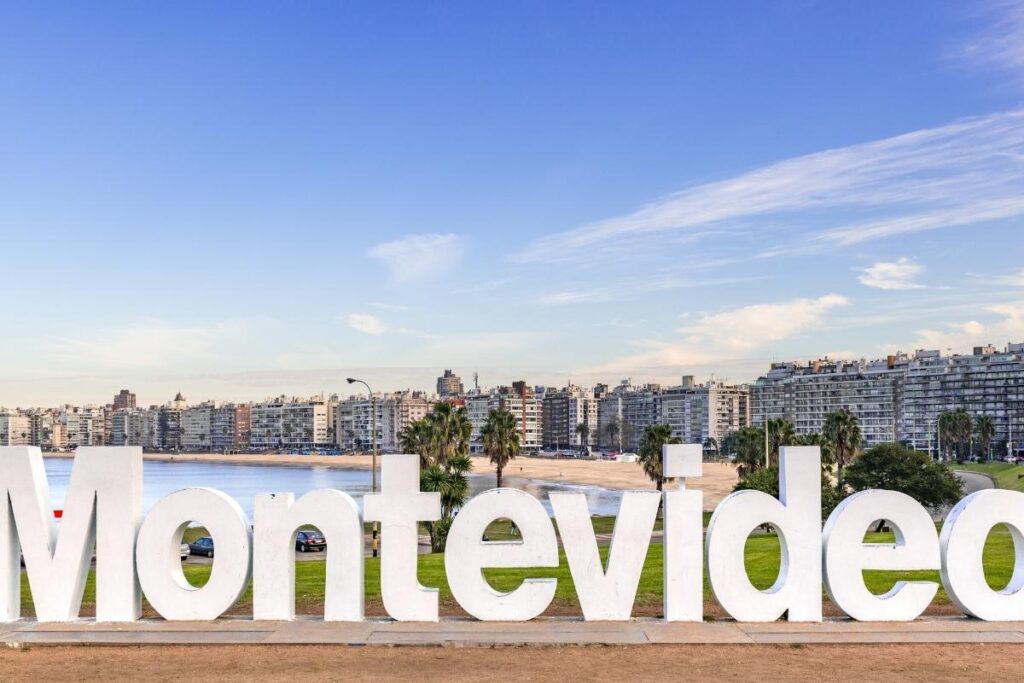
Montevideo is the kind of city that surprises people who weren’t expecting much. It doesn’t shout for your attention the way Buenos Aires does across the river. It doesn’t make anyone’s list of “must-see capitals.” And that’s precisely what makes it worth visiting. Uruguay’s capital is a quiet, confident, deeply livable city where the coastline stretches for 22 kilometers along La Rambla, where people drink mate on the sidewalk like it’s a constitutional right, and where the food, the culture, and the pace of life reward anyone willing to slow down and pay attention.
In my experience, destinations people love most are often the ones they almost skipped. Montevideo fits that description perfectly. But like any international trip, the experience improves significantly when the practical details are sorted before you board the plane. Here’s everything you need to know.
Uruguay Visa and Entry Requirements
Montevideo makes entry simple. Citizens of the United States, Canada, the United Kingdom, the European Union, Australia, and most Latin American countries do not need a visa to enter Uruguay for stays of up to 90 days. You’ll receive an entry stamp in your passport at immigration, and in many cases, the process takes less than five minutes.
What you need: a valid passport (check that it won’t expire during your trip), a return or onward ticket, and the ability to show proof of accommodation if asked. Immigration officers at Carrasco International Airport are generally straightforward and rarely request detailed financial documentation, but having a hotel confirmation accessible on your phone is always good practice.
There is no special health declaration or vaccination requirement for most travelers entering Uruguay.
Currency and Money
The official currency is the Uruguayan peso (UYU). Credit and debit cards (Visa and Mastercard) are widely accepted in hotels, restaurants, shopping centers, and most established businesses in Montevideo. Contactless payments work in many places, and the infrastructure is more card-friendly than most of South America.
That said, carry some cash. Local buses, smaller markets, street vendors, and some traditional restaurants in Ciudad Vieja still operate on a cash-only basis. ATMs (labeled “RedBrou” or “Banred”) are available throughout the city and dispense pesos. Withdrawal fees vary by bank and by your home card issuer, so check before you travel.
The US dollar is widely understood and accepted in tourist areas, hotels, and currency exchange offices, though paying in pesos almost always gets you a better rate. Avoid exchanging money at the airport, where rates are consistently unfavorable. Downtown cambios (exchange houses) along Avenida 18 de Julio offer better deals.
Tipping is customary at around 10% in restaurants when service is not already included. Small tips for hotel staff and taxi drivers are appreciated but not mandatory.
Electricity and Plugs in Montevideo
Uruguay uses 220V electricity with plug types C, F, and L. Type C and F are the standard European round two-pin plugs. Type L has three round pins in a row. If you’re coming from the US, UK, or Asia, you’ll need an adapter. A universal adapter is the safest bet, as socket types can vary even within the same hotel.
Most modern chargers for phones and laptops are bivolt (100-240V), so they’ll work fine with just an adapter. Hair dryers and straighteners designed for 110V will not work without a voltage converter, and using them without one risks burning the device.
Getting There and Getting Around
Carrasco International Airport (MVD) is located about 20 kilometers east of the city center. It’s a modern, well-organized airport that handles both international and regional flights.
Taxi: the ride to the center takes about 25 to 35 minutes and costs approximately UYU 1,500 to 2,000 (roughly USD 35 to 45). Use only official taxis from the airport stand, and confirm that the meter is running.
Uber: fully operational in Montevideo and generally cheaper than taxis. The same airport-to-center ride typically costs USD 20 to 30, depending on demand. The app works reliably and is the most convenient option for most travelers.
Buses: Montevideo has an extensive public bus network. The STM card (a rechargeable transit card) is the easiest way to pay. Individual rides cost around UYU 52 (roughly USD 1.20). Apps like Cómo Ir and Moovit help navigate the routes. Buses are affordable and frequent, though they can be confusing for first-time visitors.
Walking: the city center, particularly Ciudad Vieja, the Rambla, and the neighborhoods of Centro and Cordón, is very walkable. Montevideo is flat, the blocks are short, and the coastal promenade invites long, unhurried walks.
For day trips to Colonia del Sacramento or Punta del Este, intercity buses are comfortable, affordable, and run frequently from the Tres Cruces Bus Terminal. The ferry to Buenos Aires via Colonia (operated by Buquebus and Colonia Express) is another popular option.
Where to Stay in Montevideo
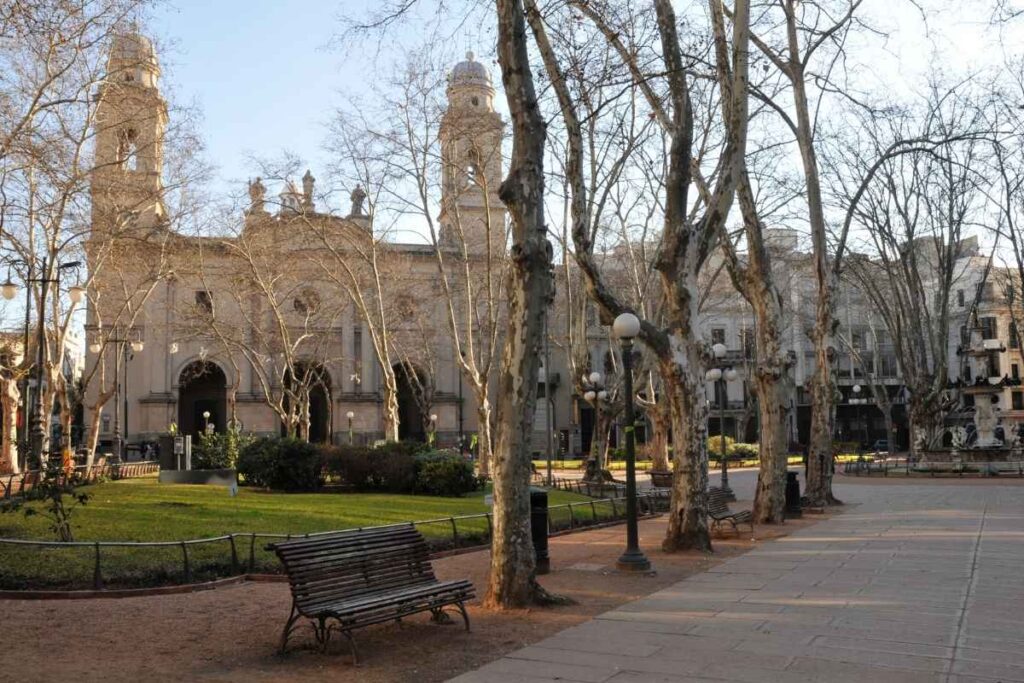
The neighborhood you choose shapes the experience. Ciudad Vieja (Old Town) is the historic heart of the city, with colonial architecture, street art, the Mercado del Puerto, and a growing number of boutique hotels and restored guesthouses. It’s the best base for travelers who want to walk everywhere and be close to the cultural core, though it quiets down significantly after dark.
Centro and Cordón sit along Avenida 18 de Julio, the city’s main commercial artery. This area is well-connected by public transport, affordable, and puts you within walking distance of theaters, museums, and some of the best cafés in the city. It’s practical rather than glamorous, and that’s exactly why many repeat visitors prefer it.
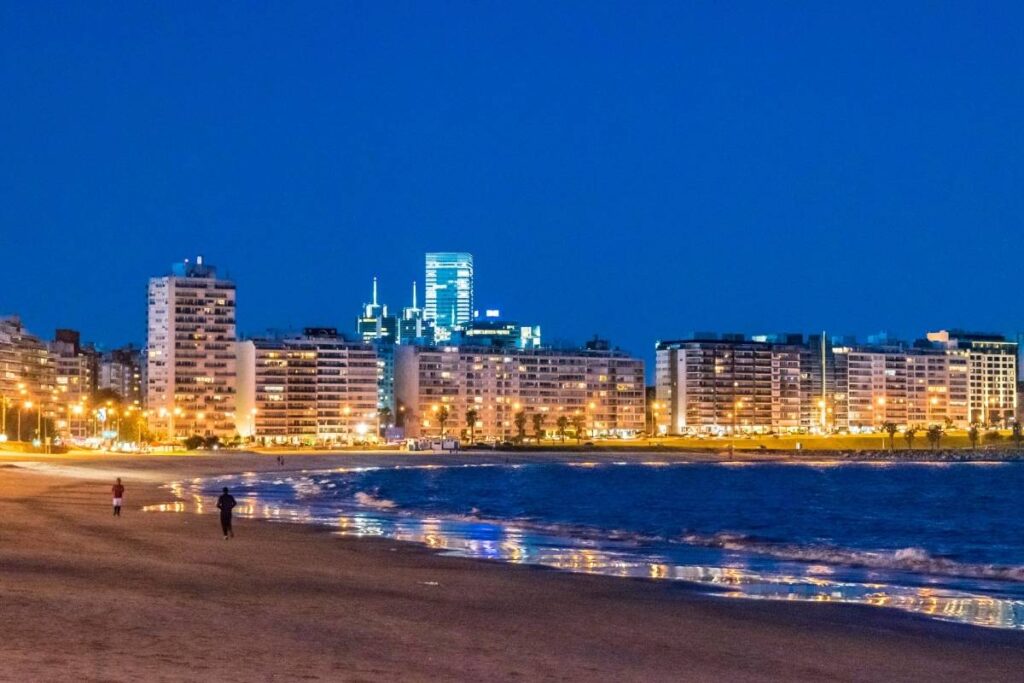
Pocitos is the most popular neighborhood for tourists and expats. It runs along a wide, crescent-shaped beach with a promenade that connects to La Rambla, and offers the highest concentration of restaurants, bars, and modern apartment rentals. If you want a residential feel with beach access and nightlife within reach, Pocitos is the default choice.
Punta Carretas, just west of Pocitos, is quieter, slightly more upscale, and home to a converted former prison that now houses one of the city’s main shopping centers. It’s an excellent option for couples or travelers who want comfort without the bustle.
Carrasco, near the airport, feels almost like a separate town, with tree-lined streets, elegant early-20th-century houses, and the landmark Sofitel Montevideo Casino Carrasco. It’s worth considering if you arrive late or depart early, or if you simply prefer staying outside the urban center.
For a full breakdown of options by budget and neighborhood, check our guide to hotels in Montevideo, with curated recommendations for every travel style.
Climate and Best Time to Visit Montevideo
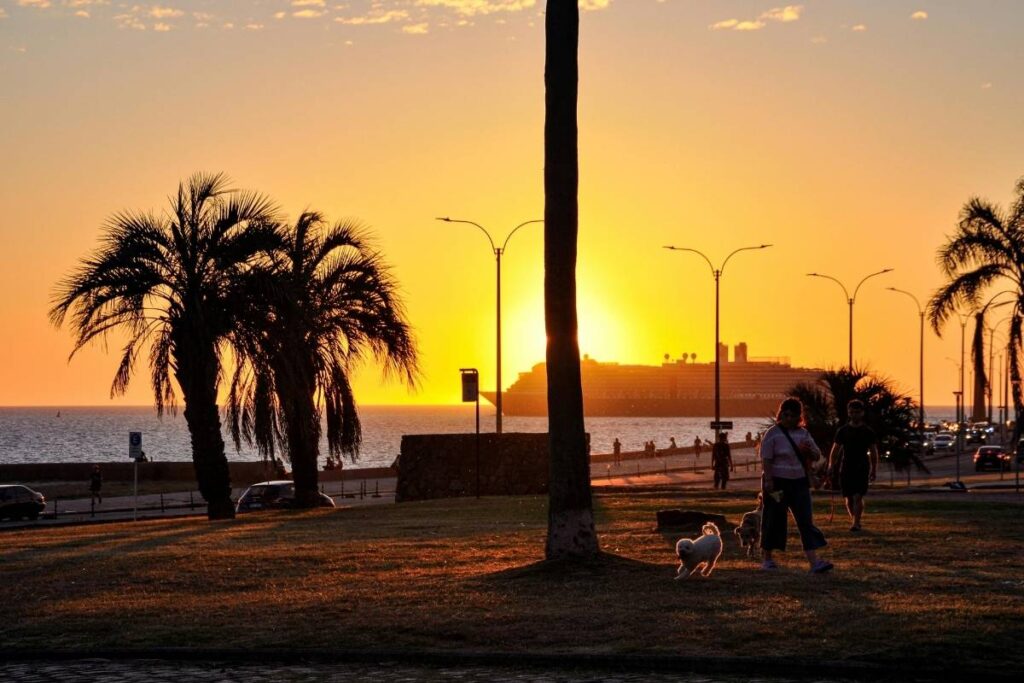
Montevideo has a temperate climate with four distinct seasons. Summers (December to March) are warm, with temperatures between 25°C and 32°C, long daylight hours, and a lively beach culture along Playa Pocitos and Playa Ramírez. Winters (June to August) are cool and gray, with temperatures between 6°C and 14°C, occasional rain, and a more subdued atmosphere.
The best time to visit is October to April, when the weather is pleasant, outdoor life is in full swing, and the city’s restaurants and cultural venues are at their most active. February is Carnival season, and Montevideo’s Carnival is the longest in the world, running for over 40 days. The celebrations center on murga, a uniquely Uruguayan form of satirical musical theater that combines chorus, percussion, and sharp political commentary. If your visit coincides with Carnival, the street parades and tablado performances in neighborhood stages across the city are an experience unlike anything else in South America.
Montevideo is a Safe Place to Go?
Uruguay is widely regarded as one of the safest countries in South America, with stable democratic institutions, progressive social policies, and a low risk of terrorism. That said, Montevideo is still a large city, and petty crime occurs, particularly in crowded areas and at night.
Standard precautions apply: avoid displaying expensive jewelry or electronics on the street, don’t carry large amounts of cash, stay aware of your surroundings in Ciudad Vieja after dark, and use ATMs inside banks or shopping malls rather than on the street. The Rambla, Pocitos, and Punta Carretas neighborhoods are generally considered safe and well-patrolled.
Mate Culture

You will see mate everywhere. On the bus, in the park, at the office, on the beach. Mate (pronounced MAH-teh) is Uruguay’s national drink, a caffeine-rich herbal infusion made from dried yerba mate leaves, sipped through a metal straw called a bombilla from a hollowed-out gourd. It is not just a beverage. It is a social ritual, a daily constant, and arguably the most visible expression of Uruguayan identity.
If someone offers to share their mate with you, accept it. Drinking from the same bombilla is normal and considered a gesture of friendship. Don’t stir the yerba, don’t say “thank you” unless you’re done drinking (saying gracias signals you don’t want more), and don’t rush. Mate is meant to be slow.
What to Pack to a Trip do Montevideo
Bring an electrical adapter (priority), comfortable walking shoes (the Rambla alone is 22 kilometers), layers for unpredictable weather (even summer evenings can cool down), sunscreen (the UV index in Uruguay is high, even on overcast days), and a reusable water bottle, since tap water in Montevideo is safe to drink.
Montevideo doesn’t try to impress you. It just is what it is: a coastal capital with excellent food, strong coffee, one of the longest waterfronts in the world, and a rhythm that makes you wonder why you were ever in a hurry. Come prepared, walk slowly, accept the mate, and the city will do the rest.