

Colonia del Sacramento occupies a rare position on the map. It sits on the northern bank of the Río de la Plata, roughly equidistant between Uruguay’s capital and Argentina’s, which means it belongs to two travel itineraries at once. From Montevideo, it’s a 2.5-hour bus ride west. From Buenos Aires, it’s a 1-hour-15-minute ferry crossing east. Both routes deliver you to the same cobblestoned, UNESCO-listed colonial town, and both work comfortably as a day trip.
This guide covers the town itself and both routes in full, because the origin you’re traveling from shapes the logistics, the timing, and even what you prioritize once you arrive. If you’d rather have the transport and walking tour handled as a package, you can book a Colonia tour that covers pickup, guide, and return from either city.
What Colonia del Sacramento Actually Is
Colonia was founded by the Portuguese in 1680 as a smuggling post designed to bypass Spanish colonial trade restrictions on Buenos Aires. The location was strategic: close enough to the Spanish capital to run contraband across the river, far enough to maintain a defensible position on the opposite bank. Spain and Portugal fought over the settlement for the next century, trading control multiple times, and the architectural result is a town that carries the DNA of both empires in its walls.
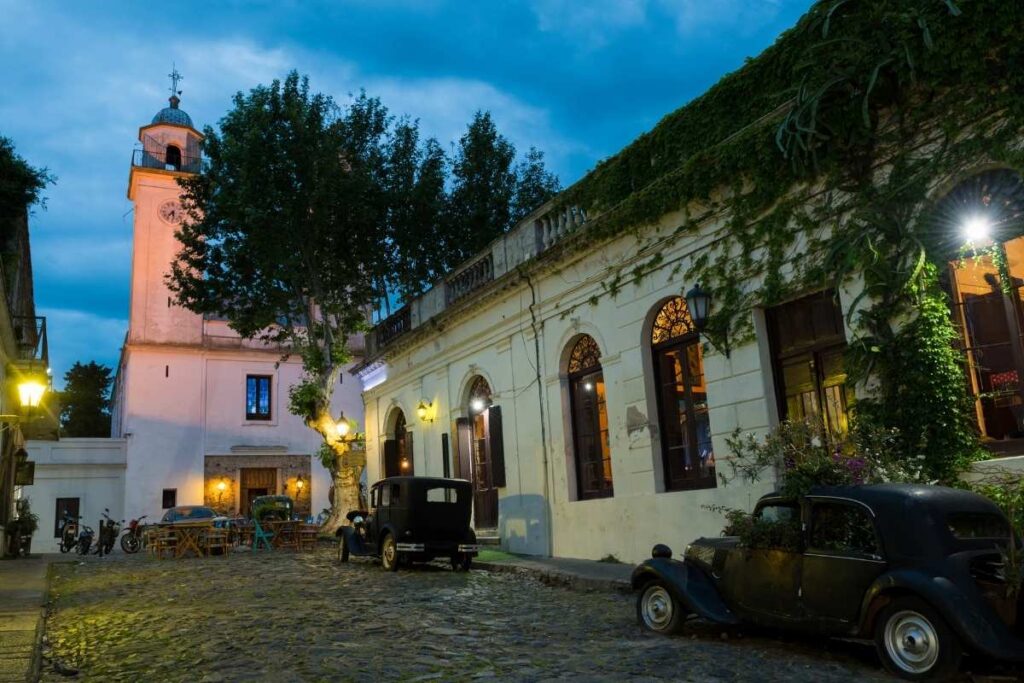
The Barrio Histórico (Historic Quarter) was designated a UNESCO World Heritage Site in 1995, and it remains one of the most intact colonial settlements in South America. The quarter covers roughly 12 compact blocks on a peninsula jutting into the river, which means you can walk the entire historic core in a few hours without rushing. The streets are paved in rough stone, the buildings are painted in faded pastels, and vintage cars from the 1950s and 60s sit parked along the lanes as though someone simply forgot to move them decades ago.
What to See
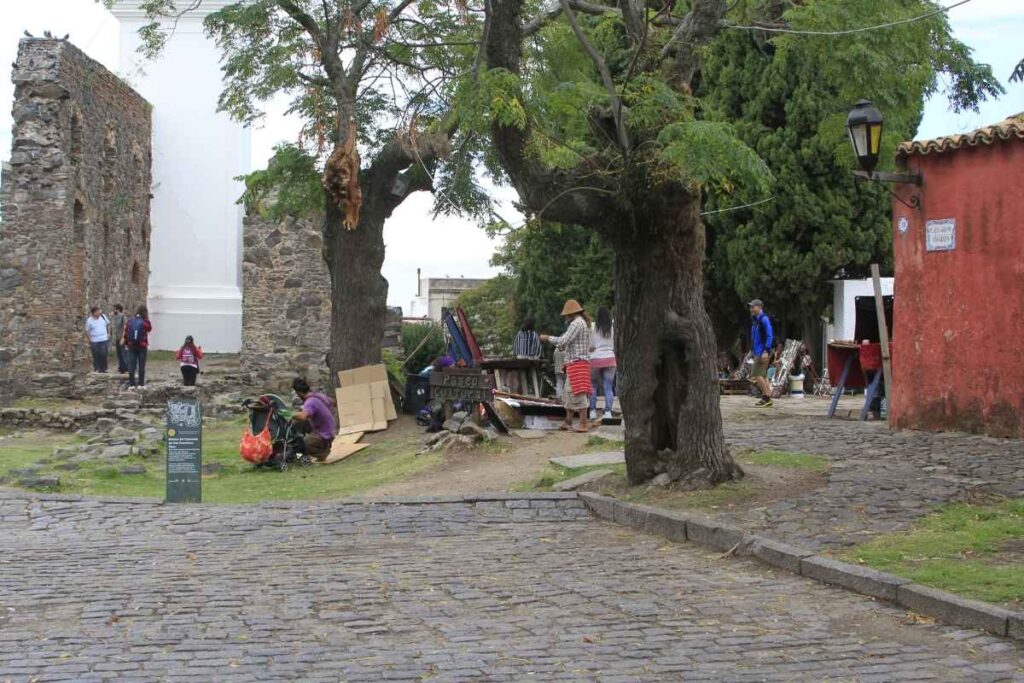
The Portón de Campo (Field Gate) marks the formal entrance to the Barrio Histórico and is the remnant of the original Portuguese fortification wall. From here, the walking route follows the natural flow of the streets.
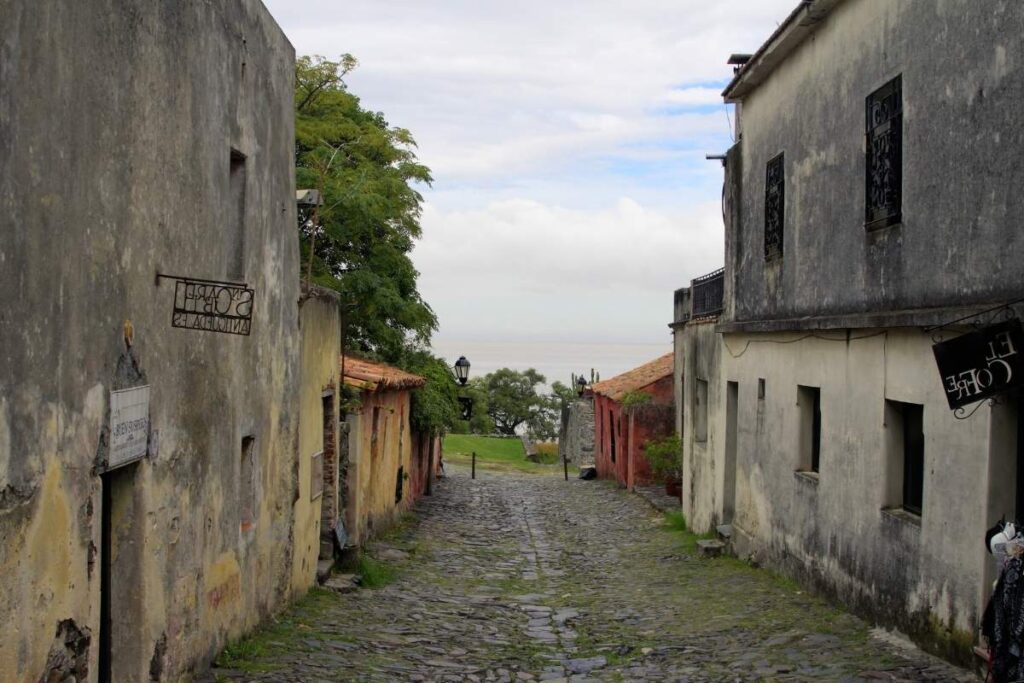
Calle de los Suspiros (Street of Sighs) is the most photographed street in the town: a narrow lane of Portuguese and Spanish colonial houses with their original stonework and colored plaster intact. The name’s origin is debated. Some say it refers to the sighs of prisoners being led to execution. Others attribute it to the brothels that once lined the street near the port. Either way, it’s atmospheric and short enough to walk twice.
Plaza Mayor is the central square of the Barrio Histórico, surrounded by museums, colonial buildings, and the thick roots of ancient trees. Several small museums ring the square, including the Museo Portugués, the Museo Municipal, and the Museo del Azulejo (a tile museum in a restored Portuguese house), all of which can be visited on a combined ticket.
The Real de San Carlos, about a 20-minute walk north of the historic quarter, is a complex of early 20th-century entertainment venues built by an Argentine businessman, including the ruins of a bullring that hosted exactly eight corridas before Uruguay banned bullfighting in 1912. The remains are striking and oddly melancholic: a massive brick arena designed for thousands, used for a few months, and abandoned for over a century.
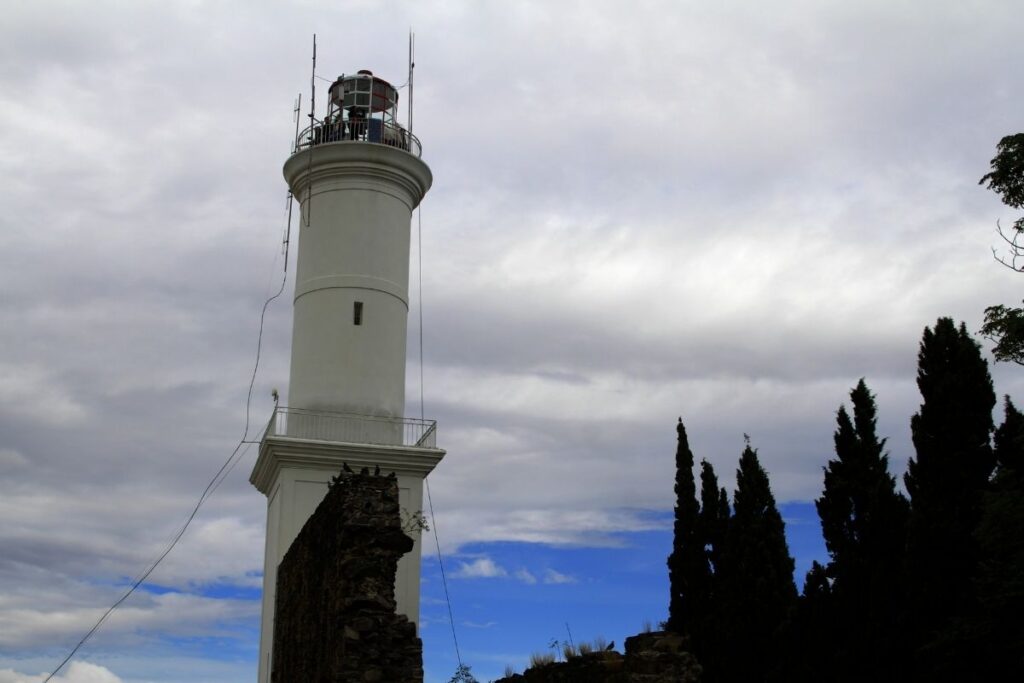
The lighthouse (Faro de Colonia) was built on the ruins of a 17th-century Convent of San Francisco and offers the best view of the town, the river, and on clear days, the Buenos Aires skyline faintly visible on the opposite shore. The climb is narrow and steep but takes less than five minutes.
The Light and the Sunset
Colonia faces west across the Río de la Plata, which means the afternoon light is exceptional and the sunsets are the best in the region. If your schedule allows, timing your visit so you’re still in the Barrio Histórico at golden hour transforms the already photogenic streets into something close to cinematic. The waterfront near the lighthouse and the rocks along the southern shore are the best spots.
From Montevideo: The Bus Route
How to Get There
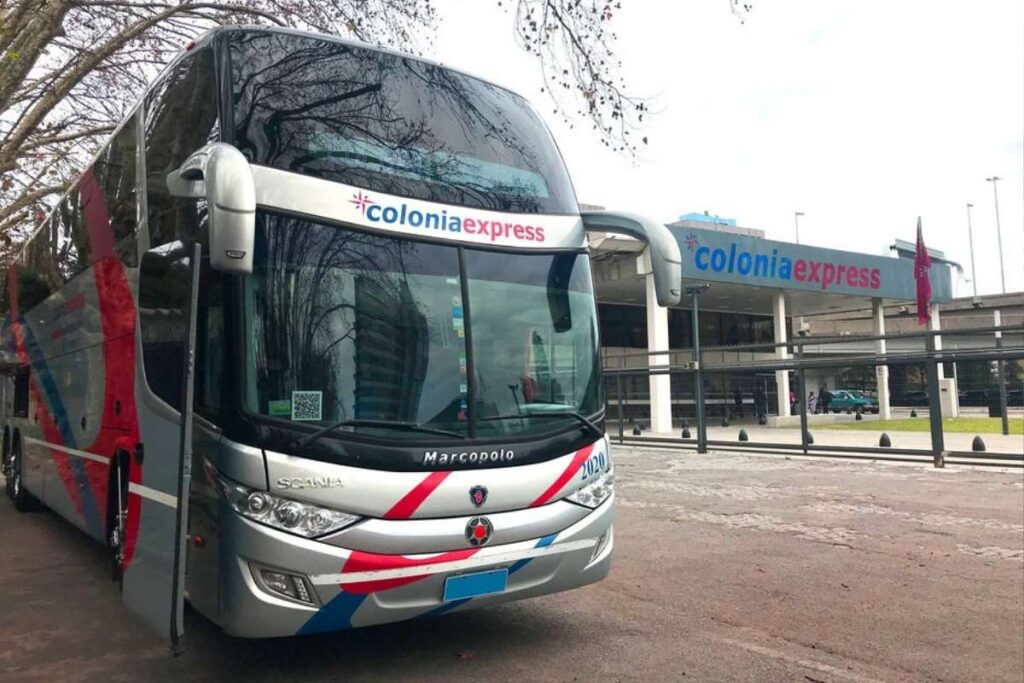
Intercity buses to Colonia depart from Tres Cruces Bus Terminal in Montevideo, operated primarily by COT, Turil, and Buquebus (which runs a combined bus service). Departures are frequent, roughly every hour during the day, and the ride takes approximately 2 hours and 30 minutes on a comfortable highway coach with air conditioning, reclining seats, and onboard restrooms.
One-way tickets cost between USD 12 and 18, depending on the company and the class of service. Buy tickets at the terminal counter or online through the bus company websites. No advance purchase is strictly necessary on weekdays, but weekend departures can fill up, especially in summer.
The Day Trip Structure From Montevideo
Morning departure: take a bus leaving between 7:30 and 9:00 AM to arrive by mid-morning. Full day in Colonia: walk the Barrio Histórico, visit the lighthouse and museums, explore the Real de San Carlos, have lunch. Evening return: buses back to Montevideo run throughout the afternoon and evening. A 6:00 to 7:00 PM departure gets you back to Montevideo by 8:30 to 9:30 PM.
This structure gives you roughly 6 to 8 hours in Colonia, which is more than enough to see everything at a comfortable pace with a long lunch built in.
Driving From Montevideo

The drive from Montevideo to Colonia is approximately 180 kilometers on Ruta 1, a well-maintained highway that runs along the coast. The drive takes about 2 hours in normal traffic. Renting a car for the drive makes sense if you want to stop along the way (the small towns of Rosario and Juan Lacaze are worth a pause) or if you plan to continue from Colonia to other parts of Uruguay’s coast rather than returning to Montevideo. For the day trip alone, the bus is simpler and avoids the question of parking in Colonia’s narrow historic streets.
From Buenos Aires: The Ferry Route
How to Get There
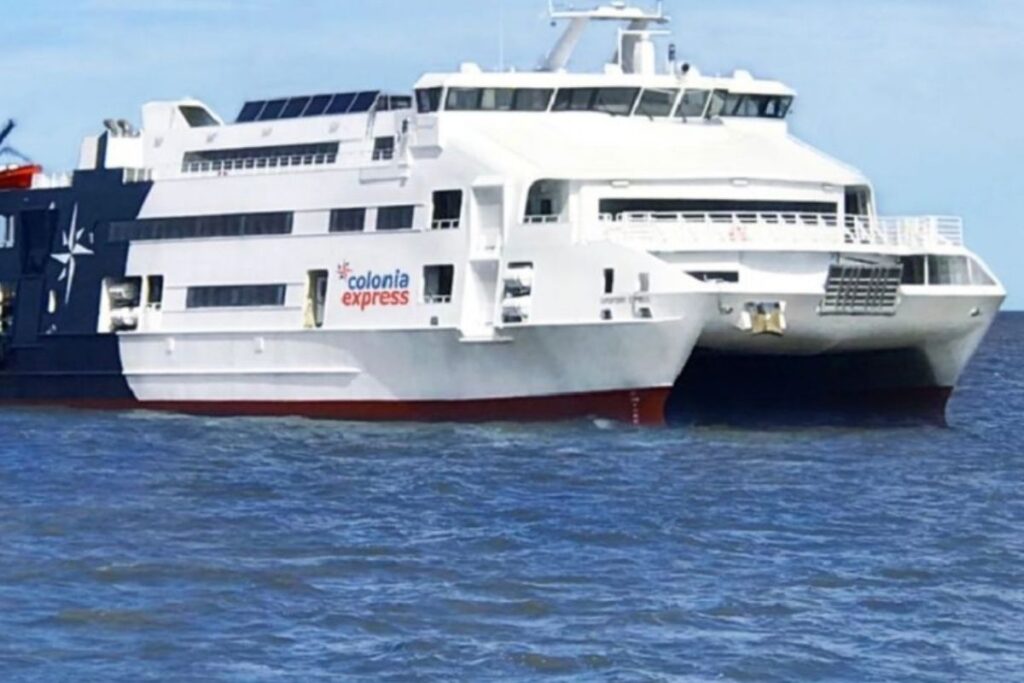
The ferry crossing from Buenos Aires to Colonia is operated by Buquebus and Colonia Express, both departing from waterfront terminals near Puerto Madero.
Buquebus offers two services: the fast catamaran (approximately 1 hour 15 minutes) and a slower conventional ferry (approximately 3 hours). The fast ferry is the standard choice for day-trippers. Colonia Express runs a competing fast service, often at lower prices, with a similar crossing time.
Round-trip fares range from roughly USD 50 to 120 per person depending on the company, the speed of service, the class of seat, and how far in advance you book. Prices rise significantly on weekends and during Argentine holidays. Book early for the best fares.
Border Crossing
This is an international crossing, so you’ll need your passport. Argentine exit immigration and Uruguayan entry immigration are handled at the Buenos Aires terminal before boarding. The process adds 30 to 45 minutes to your departure timeline, so arrive at the terminal with margin. On the return, Uruguayan exit and Argentine re-entry are processed at the Colonia terminal.
Colonia’s ferry terminal sits 100 meters from the entrance to the Barrio Histórico. You walk off the boat, through the terminal, and directly into the Portón de Campo. No taxi, no bus, no transfer. This immediate access is one of Colonia’s greatest practical advantages as a day trip.
The Day Trip Structure From Buenos Aires
Morning departure: take the earliest fast ferry, typically departing between 7:30 and 9:00 AM. Arrive by mid-morning. Full day in Colonia: same itinerary as above. The Barrio Histórico, the lighthouse, the museums, lunch, the waterfront. Evening return: fast ferries back to Buenos Aires run in the late afternoon and evening. A 5:00 to 7:00 PM departure gets you to Buenos Aires by early evening.
For travelers building this into a broader Argentine itinerary, the Colonia day trip is one of the most popular day trips from Buenos Aires and the only one that adds a second country to your passport.
Where to Eat
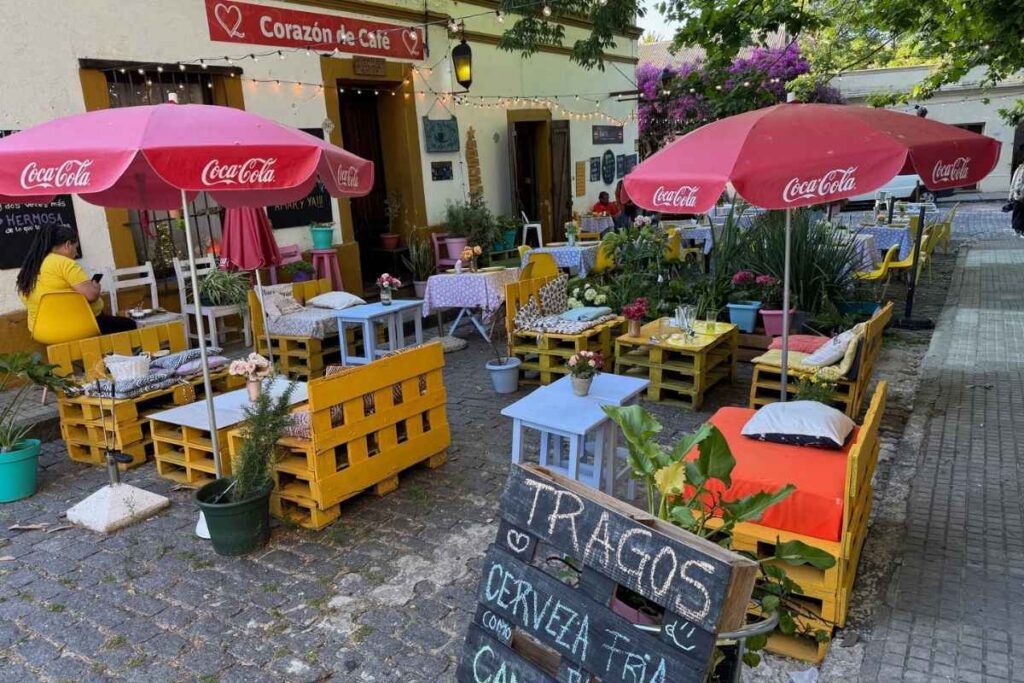
Lunch is part of the experience, and Colonia does it well. The restaurants along Calle del Comercio and inside the Barrio Histórico serve a mix of Uruguayan and international food, with an emphasis on grilled meats, fresh river fish, and pasta. Tannat wine, Uruguay’s signature red grape, is available everywhere and pairs naturally with the grilled dishes.
The chivito, Uruguay’s national sandwich (a stacked combination of steak, ham, mozzarella, egg, lettuce, tomato, and mayo on a toasted roll), is practically mandatory. It’s richer than it sounds and more satisfying than it has any right to be.
For a lighter option, the waterfront cafés near the lighthouse serve coffee, pastries, and simpler plates with views of the river. Eating here in the late afternoon, with the light softening over the water, is one of the best moments a day in Colonia can offer.
Colonia as a Stopover
Colonia also works as a transit point between Buenos Aires and Montevideo, and this option is underused. Instead of flying between the two capitals or taking the direct Buquebus ferry to Montevideo (which exists but is less frequent), you can ferry from Buenos Aires to Colonia in the morning, spend the day exploring, and then catch an evening bus from Colonia to Montevideo. You see the town, avoid backtracking, and connect both sides of the Río de la Plata in a single day. The bus terminal and the ferry terminal in Colonia are walking distance from each other, making the transfer simple.
Is an Overnight Worth It?
A day trip covers the historic core thoroughly. But if you have the flexibility, staying one night changes the experience. The day-trippers leave by late afternoon, and Colonia after dark is a different town: quieter, more intimate, lit by streetlamps that make the cobblestones glow. The sunset and the early evening hours, when you have the streets mostly to yourself, are worth the hotel room.
That said, if your schedule is tight, a full day gives you everything you need. Colonia is small enough that one focused visit leaves you satisfied rather than rushed. Come early, walk slowly, eat well, stay for the light, and let the rest of the Río de la Plata wait.