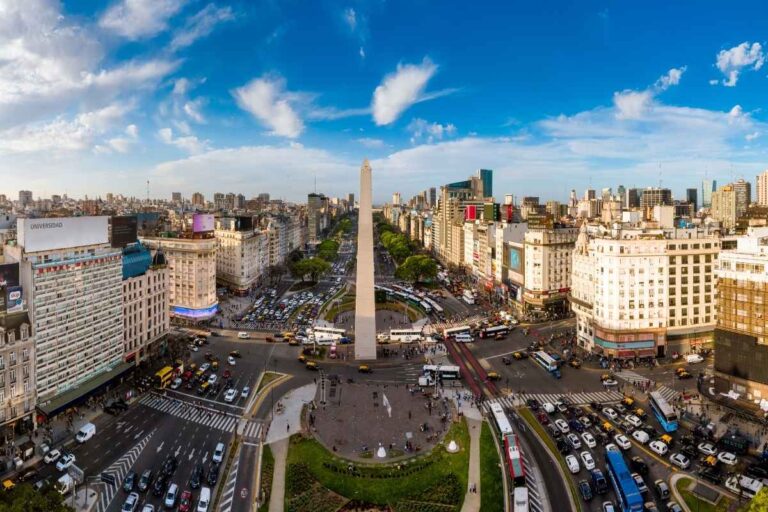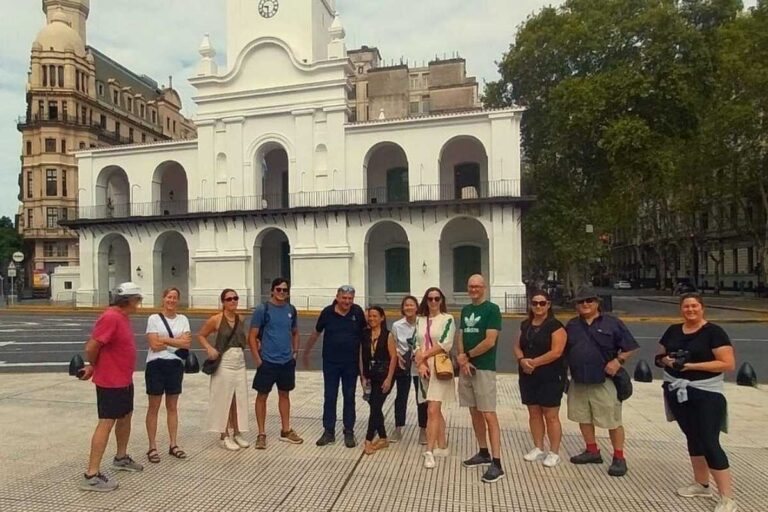

Buenos Aires has one of the most distinctive food cultures in the Americas, and the reason is written into its DNA. This is a city built by Italian and Spanish immigrants who brought their recipes, their ingredients, and their obsession with eating well to the southern tip of South America, where those traditions collided with the gaucho cattle culture of the Argentine pampas.
The result is a cuisine that is simultaneously European and unmistakably its own: generous, unapologetic, built on beef and flour and dulce de leche, and served with the kind of unhurried confidence that only comes from a city that has been feeding people extraordinarily well for over a century.
I have eaten in Buenos Aires many times, across every kind of establishment from white-tablecloth parrillas to corner pizza counters where the slices come on wax paper and nobody remembers what you ordered because it doesn’t matter. And the thing that strikes me every time is how little performativity there is in the food here. Buenos Aires doesn’t chase trends. It perfects traditions. The best meal in the city is almost never the newest one.
Asado: The Ritual at the Center of Everything
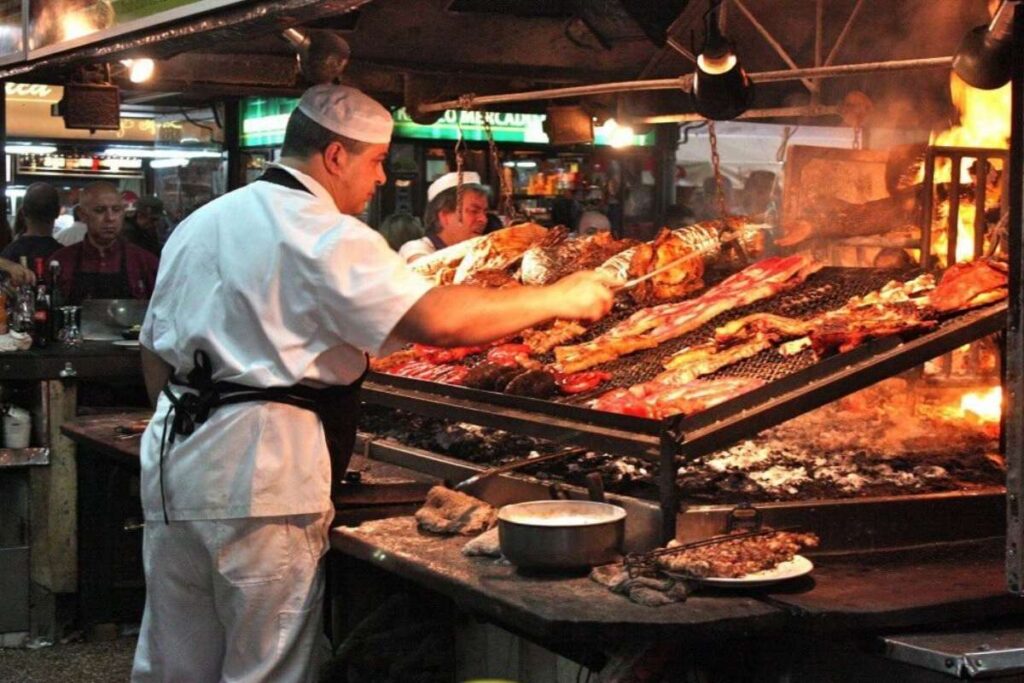
You cannot understand Buenos Aires food without understanding asado, and you cannot understand asado without understanding that it is not a dish. It is an event. A social institution. A weekend religion practiced with fire, salt, and patience.
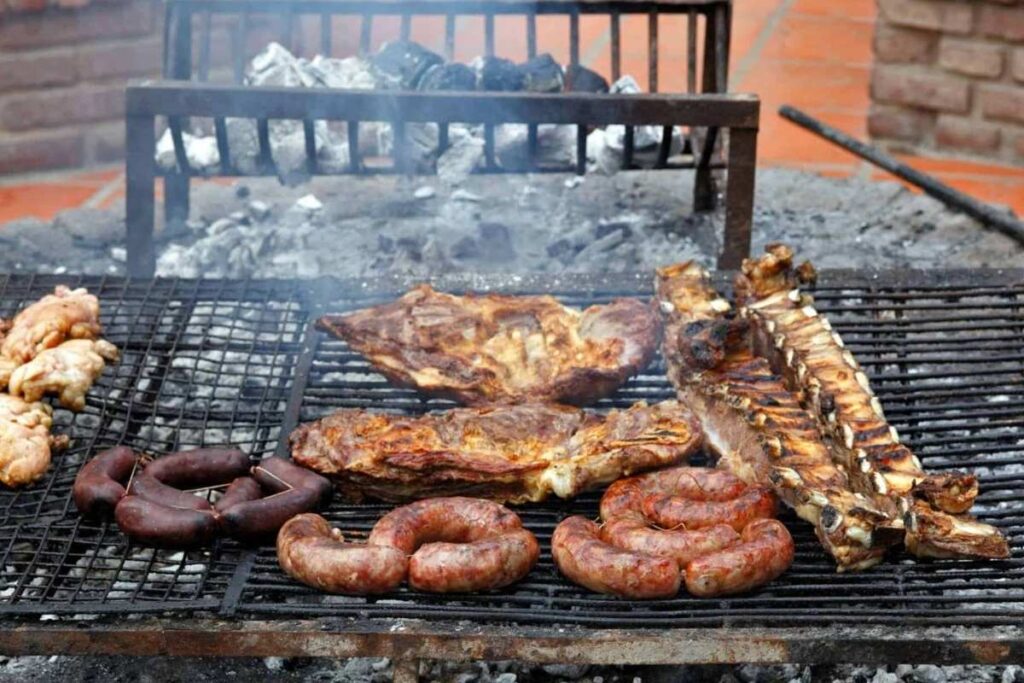
An asado involves slow-cooking various cuts of beef, pork, and offal over a wood or charcoal fire on a parrilla (a heavy iron grill). The cuts are specific and meaningful: tira de asado (short ribs), vacío (flank steak), entraña (skirt steak), chorizo and morcilla (blood sausage). The cooking is low, slow, and managed entirely by the asador, the person tending the grill, whose judgment about when to move the coals, when to turn the meat, and when each cut has reached its moment is treated with genuine respect.
Every Argentine family has a Sunday asado. Every neighborhood has its parrilla. And the best ones are rarely the most advertised. In San Telmo, you’ll find historic parrillas tucked into the streets around the Mercado de San Telmo where the smoke drifts across cobblestones that haven’t changed in a century. In Palermo, the grills tend to be more polished but no less serious. In Chacarita, a neighborhood that most tourists never reach, some of the city’s most authentic parrillas operate with a doorbell, a handwritten menu, and no interest in being discovered by anyone who isn’t already there.
If you want the full experience without guessing your way through the city, a chef-led food tour is the most efficient way in. The Chef Tours runs small-group experiences of just six guests, led by professional chefs who know exactly which parrillas, hidden restaurants, and unmarked bars serve the real thing. There are no scripts, no tourist traps, and no umbrella-waving guides. Just a local chef walking you through the neighborhoods where Buenos Aires actually eats, with the kind of context that turns a meal into a story.
Empanadas: The Country in a Pocket of Dough
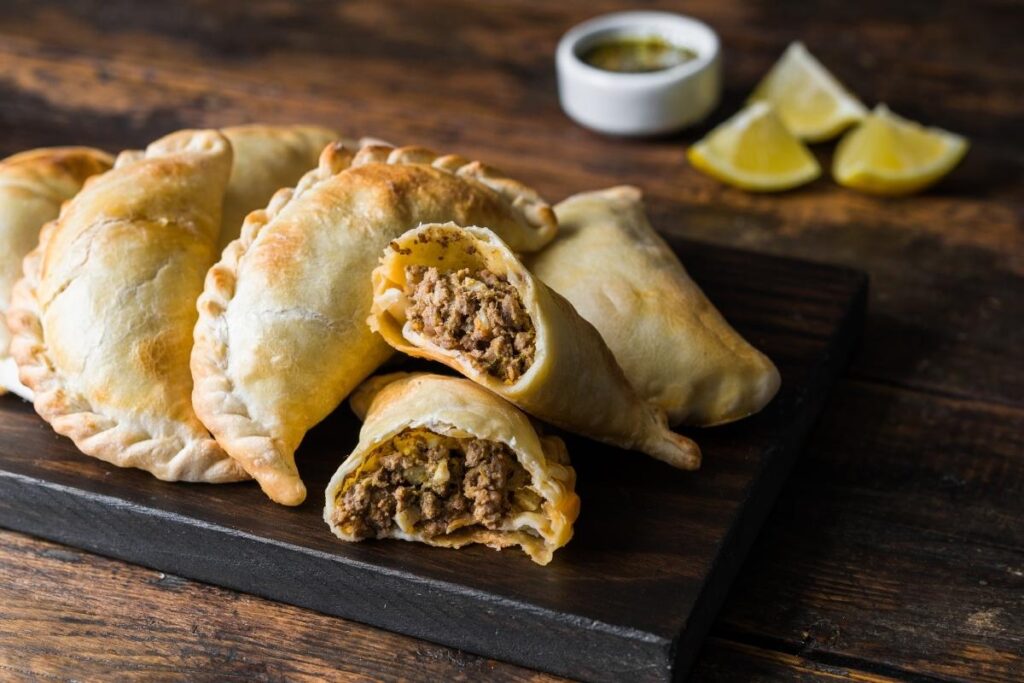
Empanadas are everywhere in Buenos Aires, and every province in Argentina claims its own version. Salta makes them with cumin, boiled egg, and potato. Tucumán folds them shut by hand with a distinctive repulgue (crimped edge). Buenos Aires borrows from all of them and adds its own interpretations.
The classic empanada de carne in Buenos Aires uses hand-cut beef (never ground), green olives, hard-boiled egg, and a touch of cumin, baked or fried depending on the shop. The best empanaderías treat the filling-to-dough ratio with the seriousness it deserves: too much dough and you’re eating bread, too little and the whole thing falls apart.
Look for places where the empanadas are made fresh and sold by the dozen. If the locals are lined up at a counter and eating standing, you’re in the right place.
Pizza: Italian Roots, Argentine Rules
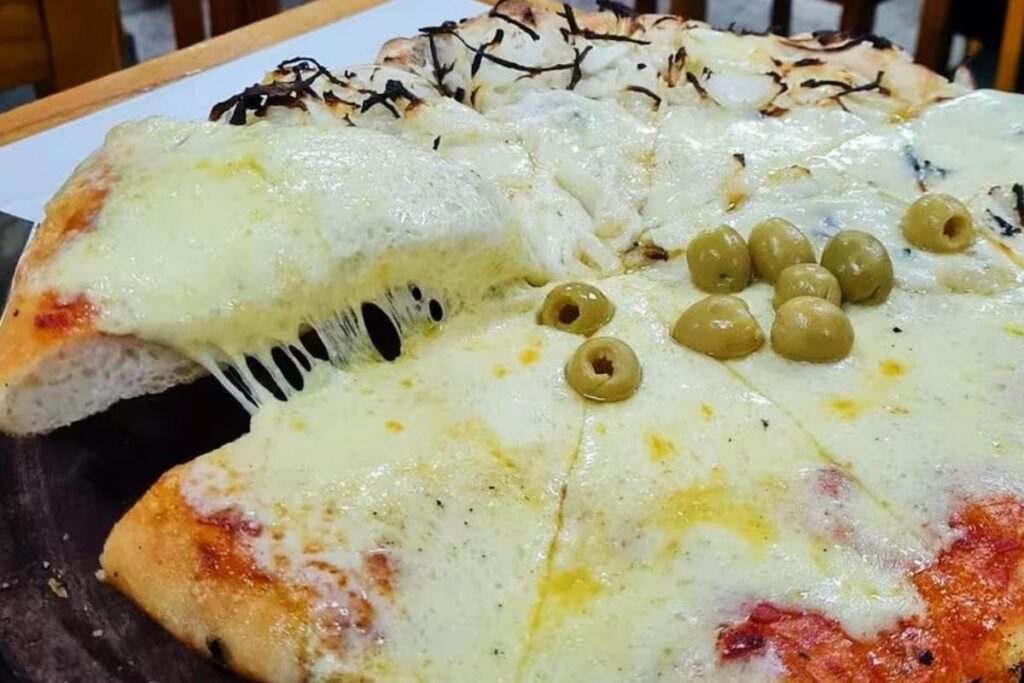
Buenos Aires pizza is not Italian pizza, and it is not American pizza. It is its own category entirely, born from the massive wave of Italian immigration in the late 19th and early 20th centuries that transformed the city’s food culture permanently.
The porteño style is characterized by a thick, airy dough, an enormous amount of mozzarella cheese, and a sauce that sits on top of the cheese rather than beneath it. The most traditional variety is pizza de molde (pan pizza), and the classic order is a slice of muzzarella with a glass of moscato (sweet sparkling wine) at the counter. Fugazza, topped with onions and no sauce, and fainá, a chickpea-flour flatbread served on top of the pizza slice, are essential variations.
El Cuartito in the Microcentro and Güerrín on Avenida Corrientes are two of the most iconic pizzerías in the city, both operating since the mid-20th century and both serving slices that haven’t changed since your parents’ generation.
Café Culture: Medialunas, Cortados, and the Art of Sitting Still
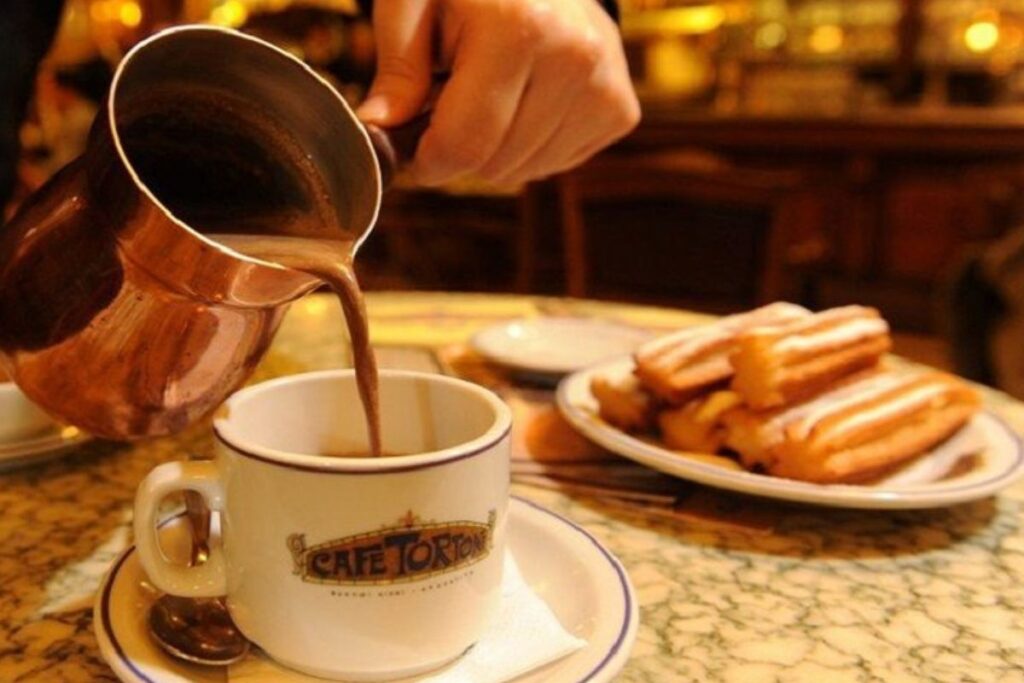
Buenos Aires has one of the richest café cultures in the Americas. The cafés notables, historic coffeehouses protected by city ordinance, are architectural landmarks where writers, politicians, and tango musicians have been sitting for over a century.
Café Tortoni, open since 1858, is the most famous and still serves excellent medialunas (croissant-like pastries that come in sweet and savory versions) with a cortado (espresso cut with a small amount of steamed milk). El Ateneo Grand Splendid, a former theater converted into a bookstore with a café on the stage, is worth visiting even if you don’t read Spanish. And the smaller, less touristed cafés notables scattered across Monserrat, San Nicolás, and Boedo offer the same coffee and pastries without the crowds.
The morning ritual is simple and consistent: a café con leche and two medialunas, eaten standing at the counter or seated at a marble table. It costs almost nothing and sets the rhythm for the day.
Dulce de Leche and the Sweet Side
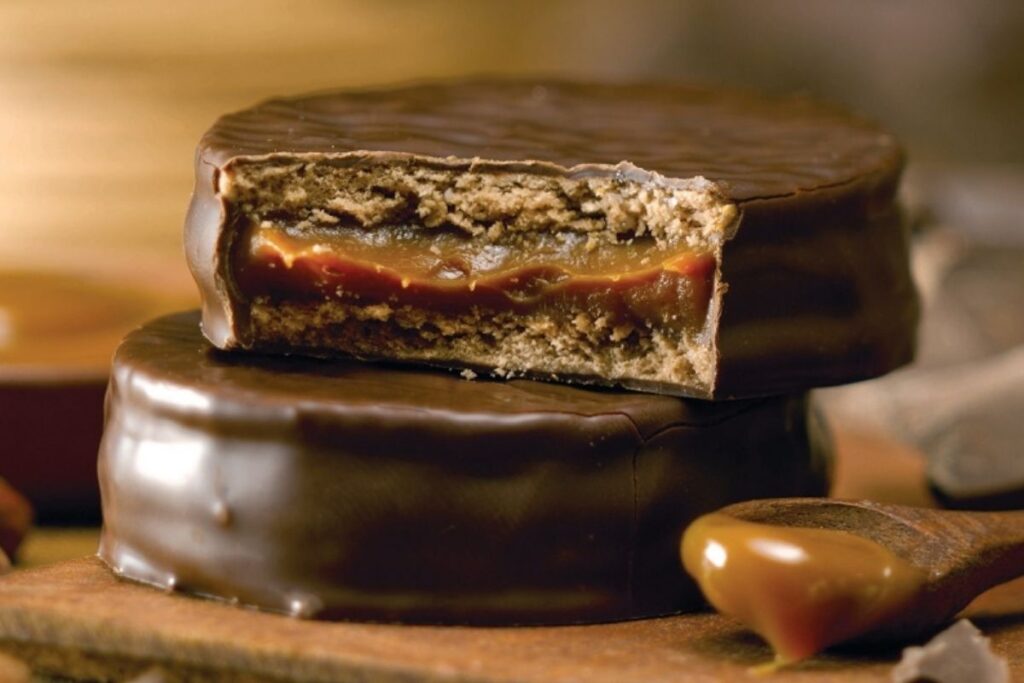
Dulce de leche is to Argentina what Nutella is to Italy, except that Argentines would consider the comparison an insult. This caramelized milk spread appears in virtually every dessert in the city: alfajores (sandwich cookies filled with dulce de leche and coated in chocolate or meringue), facturas (Argentine pastries sold by the dozen at bakeries), flan con dulce de leche, and helado (ice cream) in flavors that dedicate entire display cases to dulce de leche variations.
Havanna and Cachafaz are two of the most recognized alfajor brands, but the best versions often come from small bakeries and confiterías that make them in-house.
Argentine heladerías deserve special mention. The ice cream culture here is deeply Italian in origin and rivals anything you’ll find in Rome. Portions are generous, the quality of the milk and cream is exceptional (thanks to the pampas), and a trip to a neighborhood heladería in Palermo or Belgrano after dinner is as much a part of the routine as the dinner itself.
Malbec and the Wine Culture
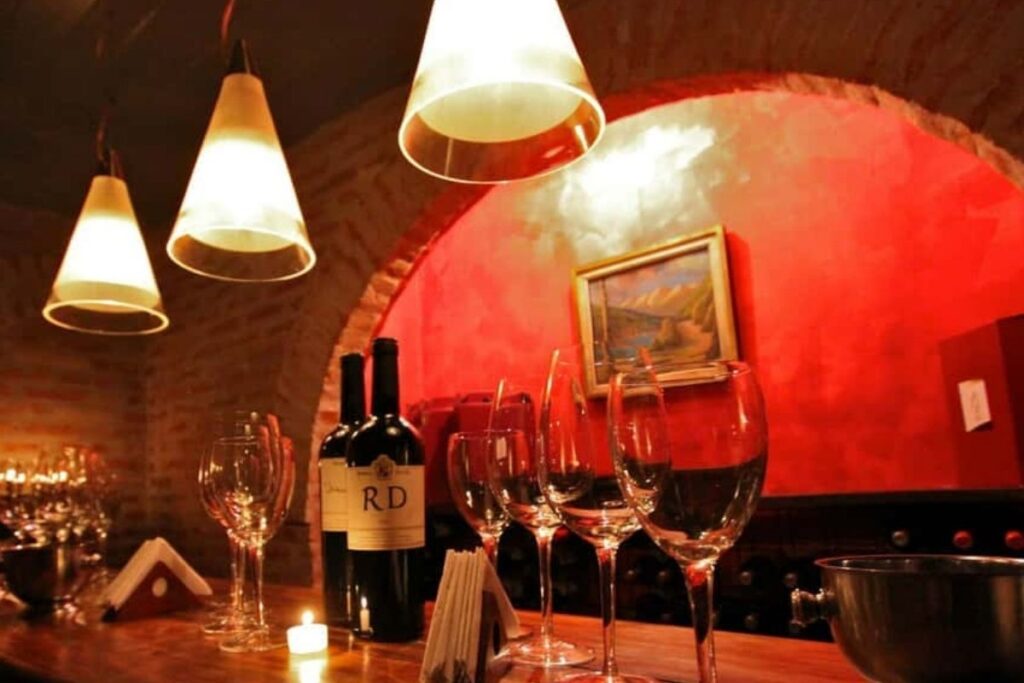
Argentina is the world’s largest producer of Malbec, and Buenos Aires is where much of it is consumed. The city’s wine bars, particularly in Palermo Soho and San Telmo, stock bottles from Mendoza, Salta, and Patagonia at prices that would be unthinkable in Europe or the United States.
A good Malbec pairs naturally with the richness of asado, and most parrillas offer house wines that are surprisingly good for the price. For a more curated experience, the wine bars in Palermo offer tastings that move through the country’s regions, and the sommeliers tend to be knowledgeable and genuinely passionate about helping you navigate the options.
Where to Eat by Neighborhood
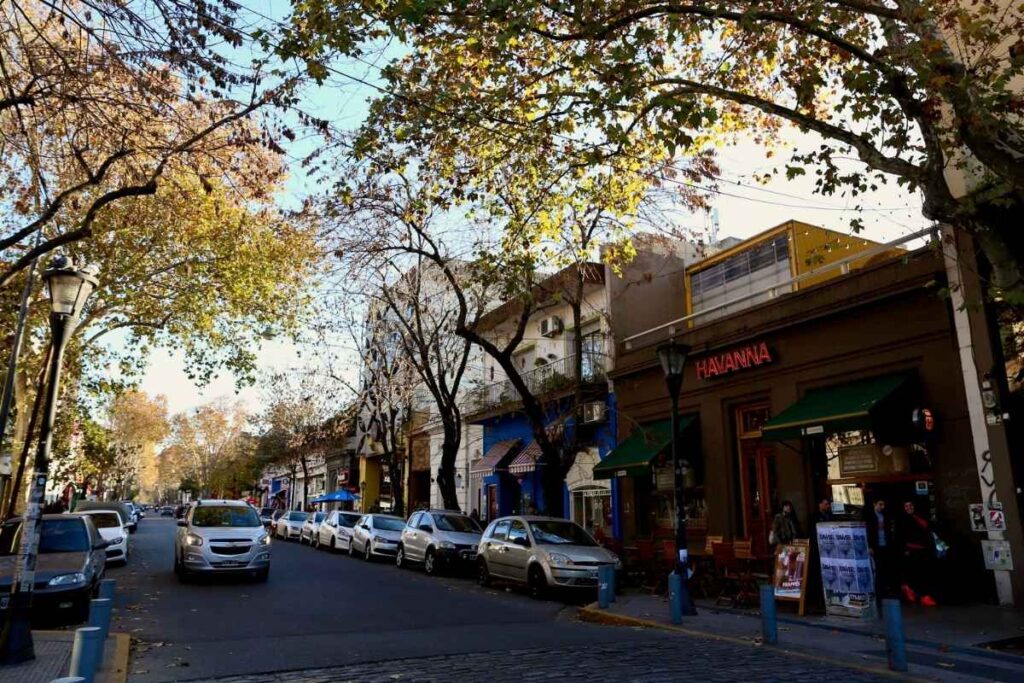
San Telmo is the historic heart of the food scene: cobblestone streets, traditional parrillas, the Sunday antiques market, and some of the city’s oldest bodegones (family-run restaurants with short menus and long histories). Palermo, especially Palermo Soho and Palermo Hollywood, is where the newer restaurants, wine bars, and international kitchens concentrate. La Boca offers color and tourist energy but the food is better a few blocks away from Caminito. Recoleta is more formal, with French-influenced restaurants and elegant confiterías. And Villa Crespo, adjacent to Palermo, has quietly become one of the most interesting food neighborhoods in the city, with restaurants that blend Argentine traditions with Middle Eastern and Asian influences.
The best food in Buenos Aires is rarely on the main avenues. It’s one street back, behind an unremarkable facade, in a room where the waiter knows most of the tables by name. Getting to those places on your own takes time and luck. Getting to them with a chef who grew up eating in those same rooms takes about three hours and changes how you see the city.
Buenos Aires doesn’t just feed you. It feeds you with conviction, with history, and with the quiet understanding that a meal done right is one of the few things in life that doesn’t need to be complicated to be extraordinary.