
The top sights to see in Santorini are not hidden. They’re built into the edge of a volcanic crater, painted white against the Aegean blue, and visible from almost everywhere on the island. What makes Santorini exceptional isn’t discovery. It’s the way the geology, the light, and 4,000 years of human history converge on a crescent of cliff-top villages that look like they were designed specifically to be stared at. The island delivers exactly what its photographs promise, which is rare, and it rewards travelers who look beyond the postcard, which is rarer.
Here’s what’s worth your time.
Oia and the Sunset
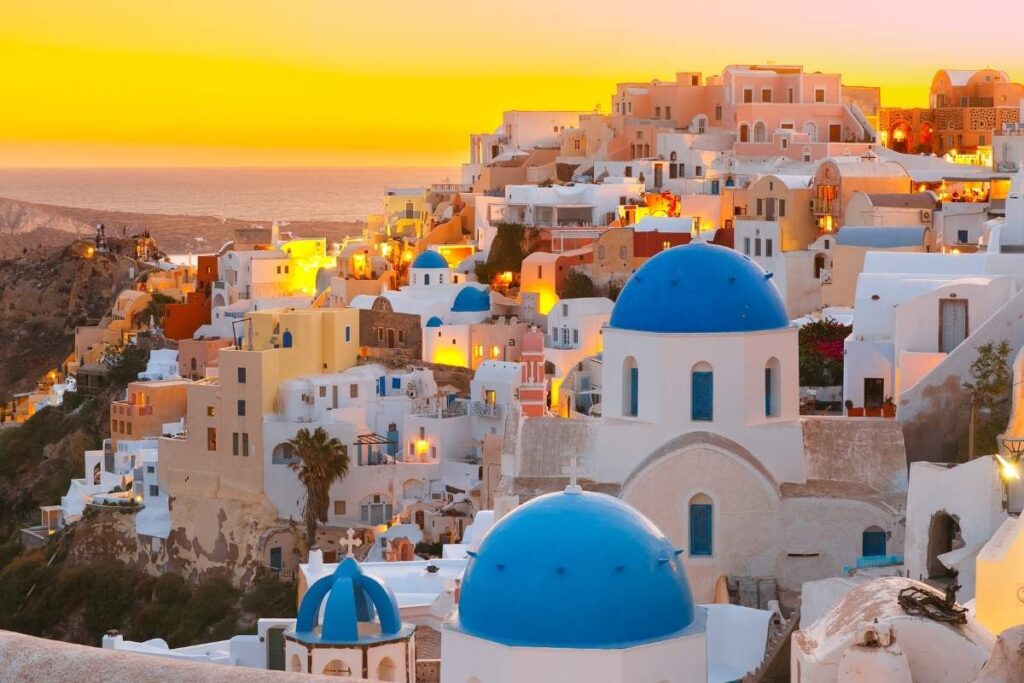
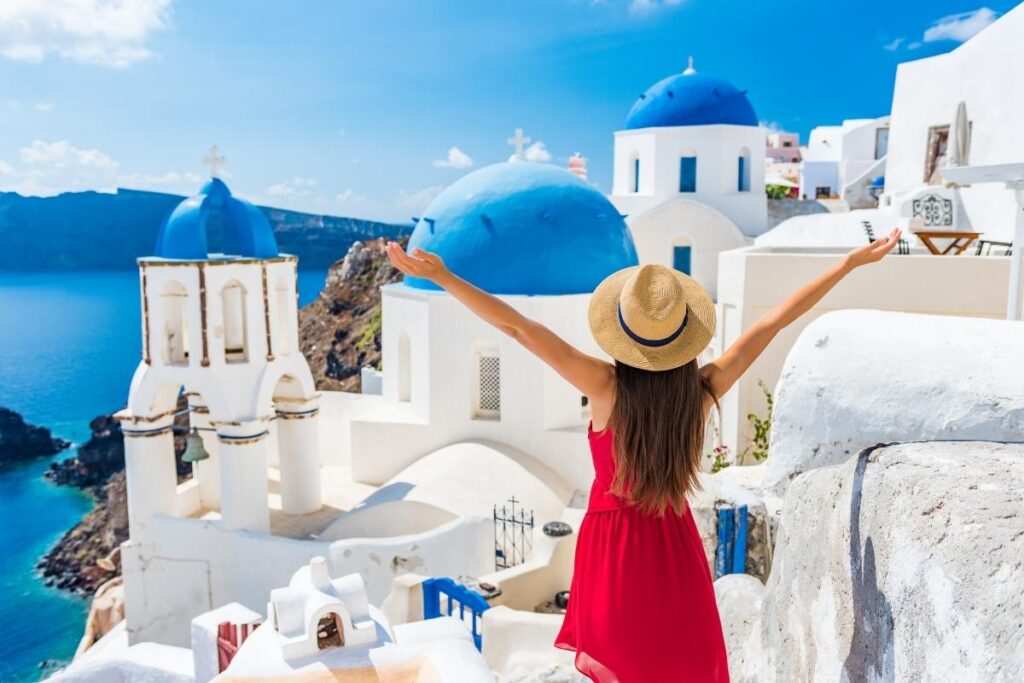
Oia (pronounced ee-ah) is the village at the northern tip of the caldera, and it is the most photographed settlement in Greece. The whitewashed houses, blue-domed churches, and restored windmills cascade down the cliff face in a visual density that feels almost staged. The Church of Ekklisia Panagia Platsani and the smaller blue dome chapels below the castle ruins are the specific structures you’ve seen in every Santorini image ever published.
The sunset from Oia Castle (the ruins of the Byzantine Kastro at the village’s western tip) draws thousands of people every evening in peak season. It is genuinely beautiful, but it can also feel like a stadium event. For a quieter alternative, the Akrotiri Lighthouse at the island’s southwestern tip offers the same sunset over the caldera with a fraction of the crowd.
Below Oia, a steep path of 300 steps descends to Ammoudi Bay, a tiny harbor tucked beneath the red cliffs where seafood tavernas serve grilled octopus and fresh fish at tables practically touching the water. The climb back up is real exercise, but donkeys are available for those who prefer four legs to two.
The Fira to Oia Caldera Hike
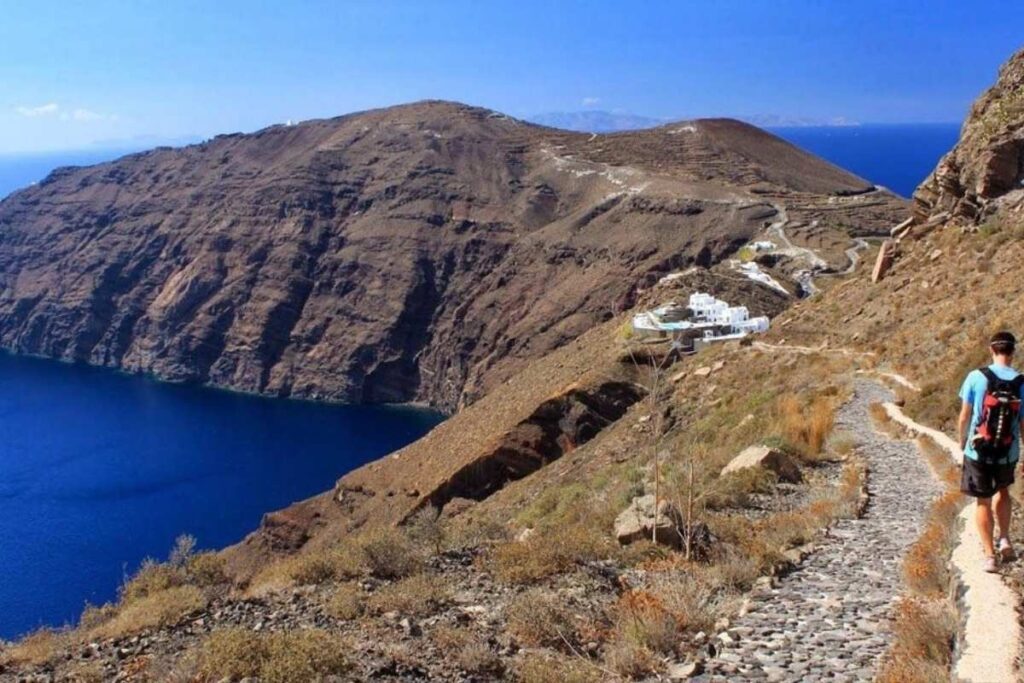
The 10.5-kilometer trail from the capital Fira to Oia follows the caldera rim and is the single best way to understand Santorini’s geography. The path passes through Firostefani (known for the iconic blue dome of Agios Theodori framed against the caldera) and Imerovigli (the highest village on the cliff, sometimes called the “balcony to the Aegean”), with continuous views of the volcanic islands, the sea, and the cliff face dropping 300 meters below your feet.
The hike takes approximately 3 to 4 hours, is mostly well-marked, and should be started early in the morning during summer to avoid the midday heat. There is almost no shade. Carry water, wear sun protection, and good shoes with grip for the rocky and uneven sections between Imerovigli and Oia.
Akrotiri: The Pompeii of Greece
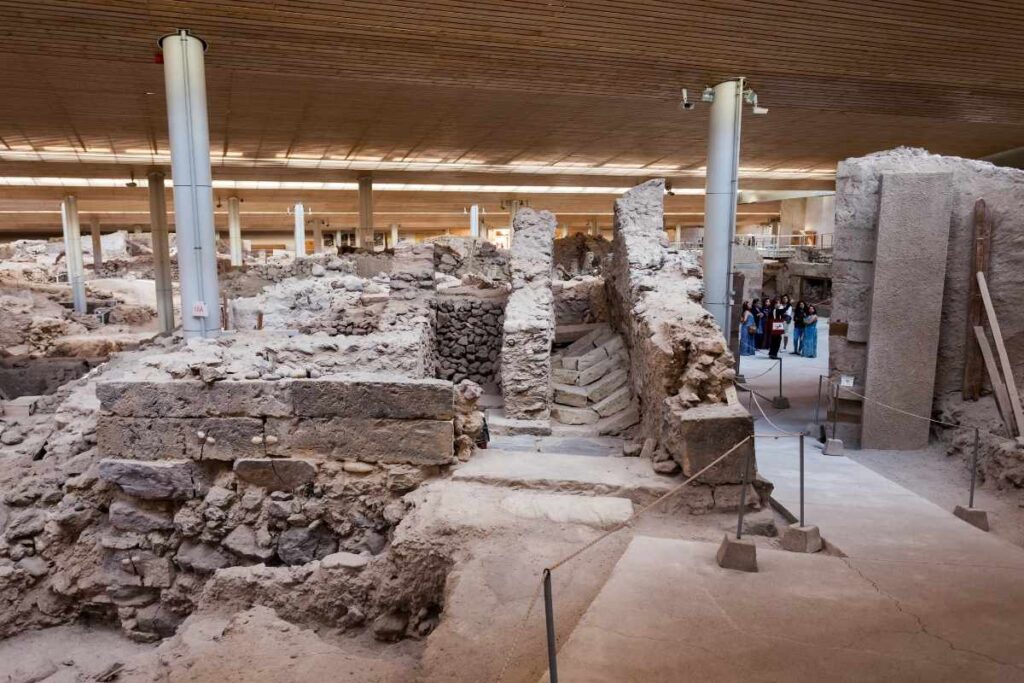
Akrotiri is a Bronze Age settlement buried by the same volcanic eruption (around 1600 BC) that created Santorini’s caldera and devastated the Minoan civilization on Crete. Unlike Pompeii, no human remains have been found, which suggests the inhabitants evacuated before the eruption. What they left behind is extraordinary: multi-story buildings, advanced drainage systems, ceramic vessels, and frescoes that are now displayed in the Museum of Prehistoric Thera in Fira.
The excavation site is covered by a modern roof structure and is walkable on elevated platforms above the ruins. A visit takes roughly 60 to 90 minutes with a guide, and the experience is significantly better with commentary, because the ruins require context to appreciate. Akrotiri is one of the most important archaeological sites in the Eastern Mediterranean, and it remains only partially excavated.
The Volcano and Hot Springs
The caldera itself is the sight. The flooded volcanic crater, roughly 12 kilometers long and 7 kilometers wide, is what gives Santorini its shape.
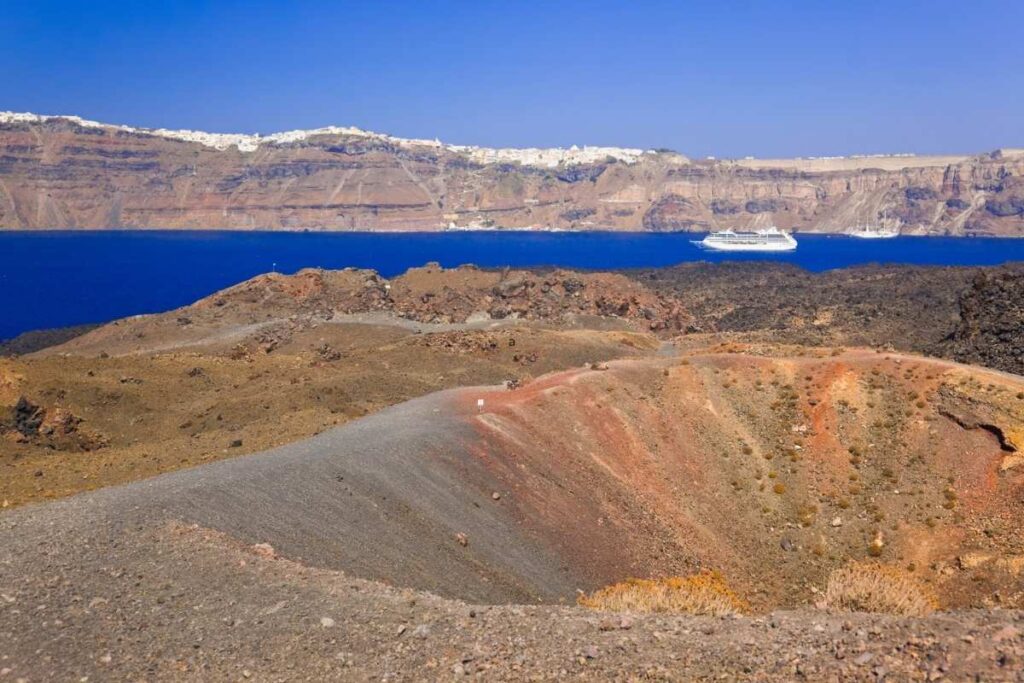
At its center sits Nea Kameni, the active volcanic island that last erupted in 1950. Boat tours from Fira’s Old Port (reachable by cable car, foot path, or donkey) circle the caldera, stop at Nea Kameni for a hike to the crater rim where sulfurous steam still rises from the vents, and continue to the hot springs near Palea Kameni, where geothermally heated water turns the sea a murky orange-brown.
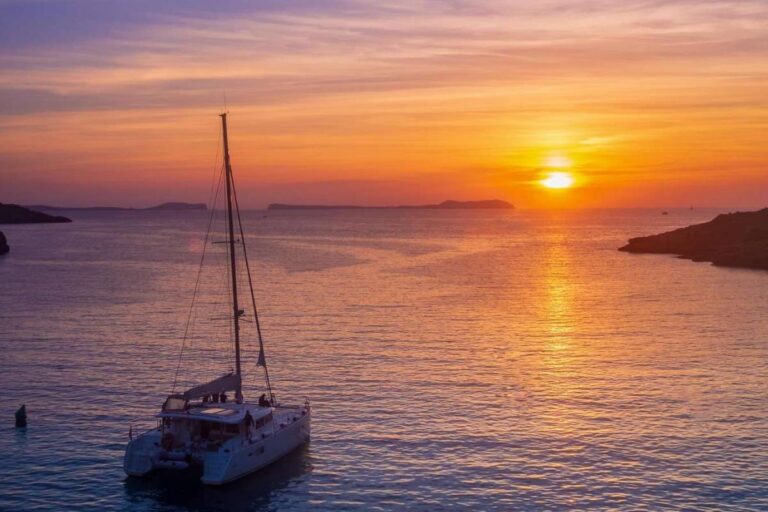
A catamaran or sailing cruise around the caldera, particularly at sunset, is one of the defining Santorini experiences. Most departures include the volcano stop, swimming at the hot springs, and dinner or drinks on board as the sun drops behind the western cliffs.
The Beaches of Santorini
Santorini’s beaches are volcanic, not tropical, and they’re interesting precisely because of that.
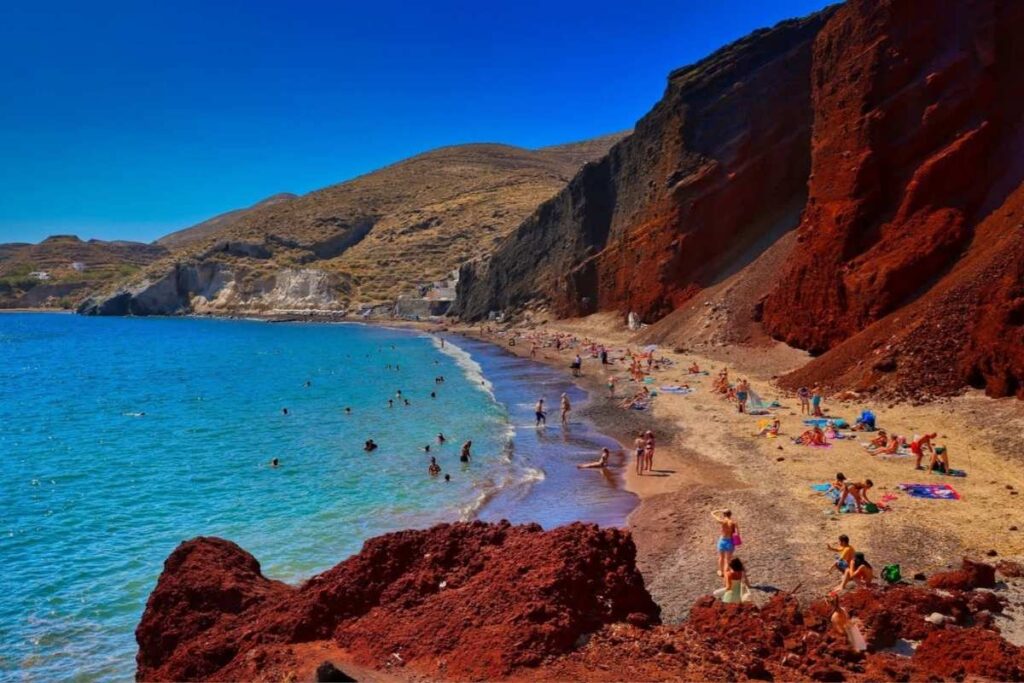
Red Beach, near Akrotiri, sits beneath towering cliffs of red and black volcanic rock that make the setting feel almost Martian. Kamari and Perissa, on the island’s eastern coast, have black sand beaches backed by restaurants and beach bars, with calmer water and a more conventional beach day atmosphere. White Beach, accessible only by boat from Red Beach, is the most secluded option.
None of these are the finest beaches in Greece (the Cyclades islands of Milos and Naxos outperform Santorini on sand and water quality), but the volcanic landscape gives them a dramatic character that conventional beaches lack.
The Wine
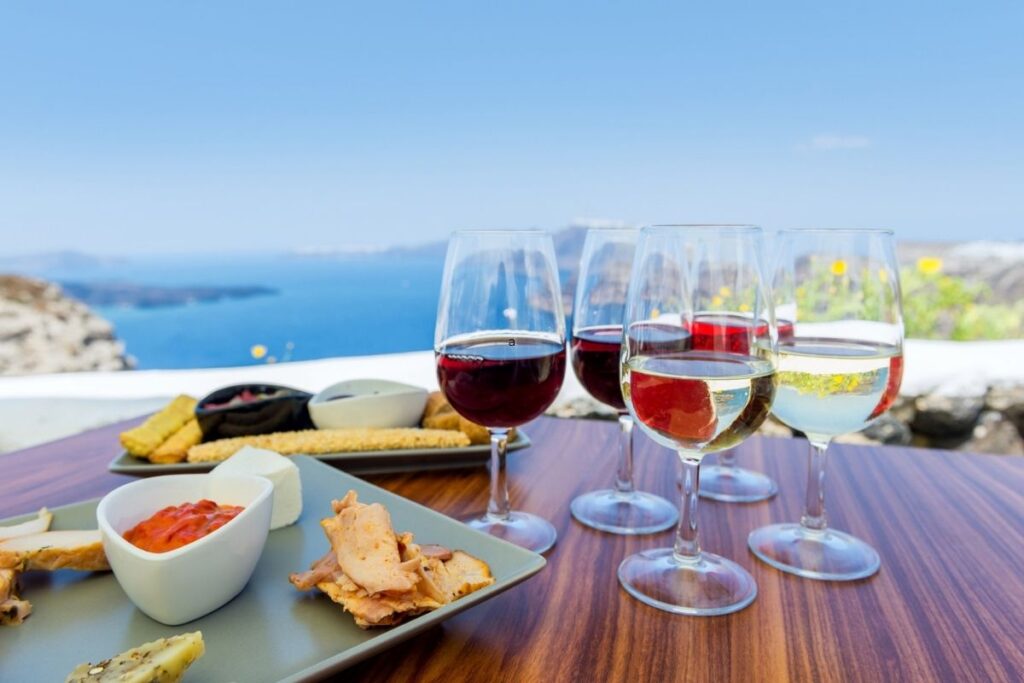
Santorini produces some of the most distinctive wines in Greece, grown in volcanic soil using a traditional method called kouloura, where the vines are woven into low, basket-shaped nests close to the ground to protect them from the relentless Aegean wind. Assyrtiko, the island’s signature white grape, produces a crisp, mineral-driven wine with a salinity that comes directly from the terroir.
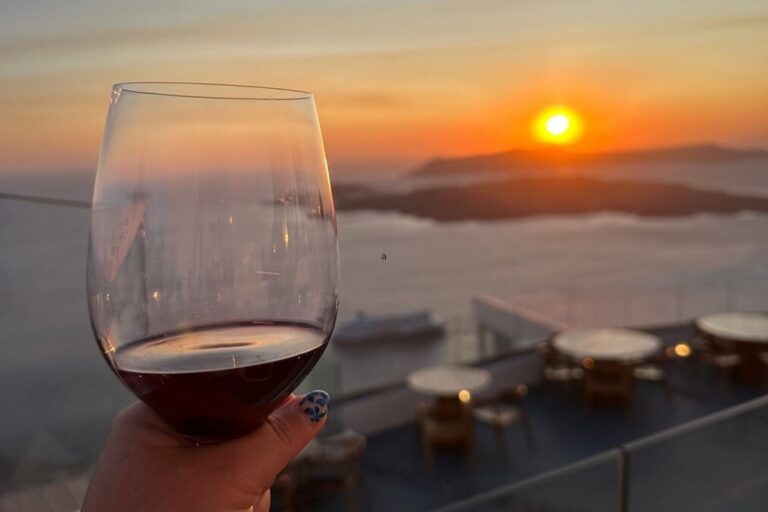
A visit to one of the caldera-facing wineries like Santo Wines, Venetsanos, or Estate Argyros pairs the tasting with views that make the wine taste even better. The combination of volcanic geology, indigenous grape varieties, and 3,500 years of continuous winemaking tradition makes Santorini’s wine culture genuinely world-class, not just a tourist activity.
Santorini earns its reputation. The caldera is as dramatic as the photos suggest, the archaeological depth at Akrotiri is real, and the sunset, whether seen from Oia or from the deck of a catamaran, remains one of the great natural performances in the Mediterranean. Come early in the day, stay for the light, and give the island more than just the postcard.