
The local foods you should try in Punta Cana exist mostly outside the resort buffet, and that distinction matters. The all-inclusive spread will keep you fed, but it won’t show you what Dominican cooking actually tastes like. For that, you need the dishes that families eat at home, the ones that market vendors serve from steam trays at noon, and the flavors shaped by three centuries of Taíno, Spanish, and West African culinary traditions mixing on a single island. Dominican cuisine is built on plantains, rice, beans, slow-cooked meats, and a relationship with garlic and citrus that borders on devotion.
Here’s what to eat, and why each dish matters.
Mangú and Los Tres Golpes
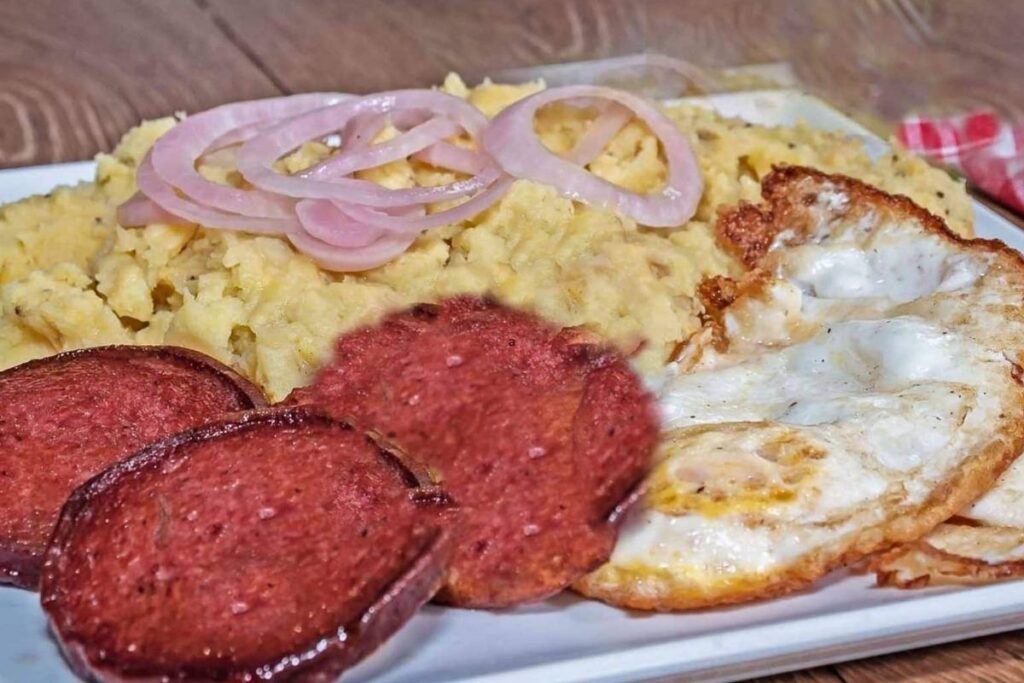
Mangú is the foundation of the Dominican breakfast. It’s a smooth, creamy purée of boiled green plantains, mashed with butter and finished with tangy red onions sautéed in vinegar (known as cebolla curtida). The word itself traces back to the West African term “mangusi,” referring to any boiled and mashed root vegetable, a linguistic thread that connects the dish directly to the enslaved Africans who brought the technique to the island during the colonial era.
Served alongside fried cheese (queso frito), fried salami, and a fried egg, the combination is called los tres golpes, or “the three hits.” It’s heavy, it’s filling, and it’s exactly what a morning in the Caribbean heat requires. You’ll find it at any local comedor (informal eatery) for a few dollars, and it tastes nothing like what the resort kitchen attempts to reproduce.
La Bandera Dominicana
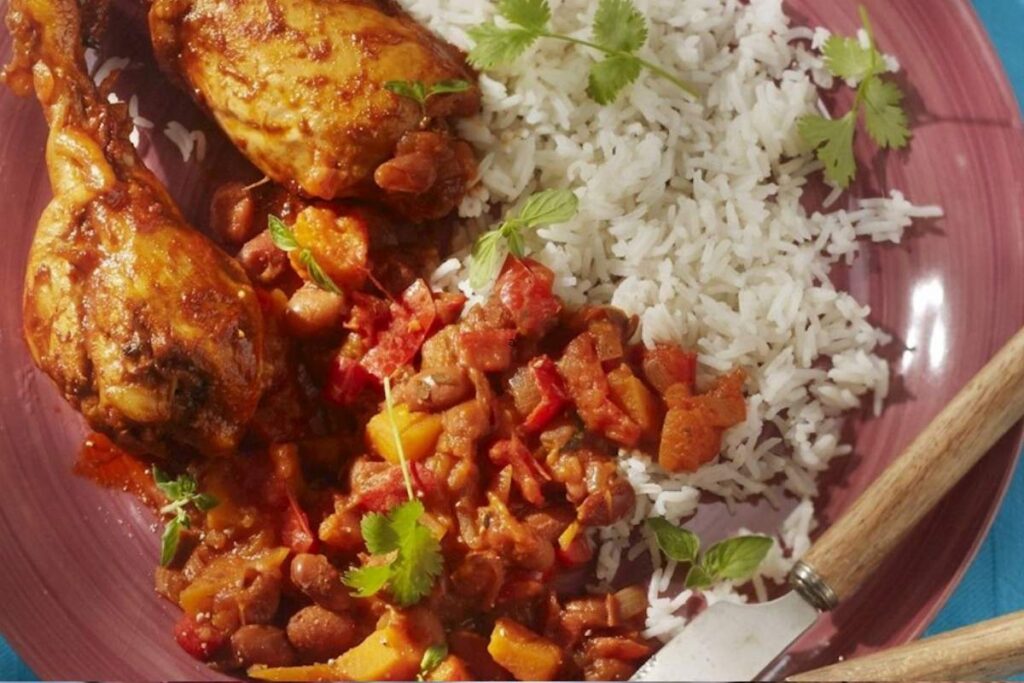
La Bandera translates to “the flag,” and it is the undisputed national dish of the Dominican Republic. The composition is straightforward: white rice, stewed red beans, and braised meat (chicken, beef, or pork), typically served with a side of sweet fried plantains (maduros) and a simple salad. The name references the colors of the Dominican flag, and the dish carries a weight that goes beyond nutrition. This is what most Dominicans eat for lunch, every day, across the entire country.
The beauty of La Bandera is in the execution. The beans are slow-cooked with sofrito (a base of garlic, onion, peppers, oregano, and cilantro) until they thicken into a rich, aromatic sauce. The meat is braised until it falls apart. And the rice, always white, always fluffy, is the canvas that holds everything together. Look for it as the plato del día (daily special) at any local restaurant near Bávaro or El Cortecito.
Mofongo
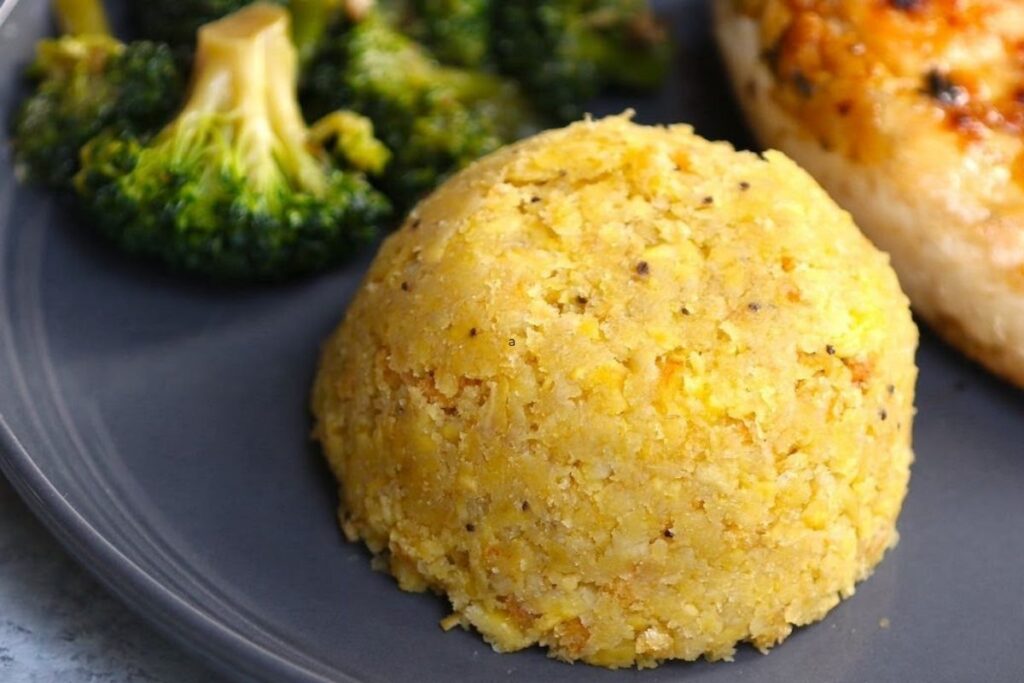
Mofongo originated in Puerto Rico but has been fully adopted across the Dominican Republic, and in Punta Cana it appears on nearly every menu that takes itself seriously. The dish is made by frying green plantains, then mashing them in a wooden mortar (pilón) with garlic, olive oil, and chicharrón (fried pork skin) until the mixture forms a dense, fragrant mound.
The mofongo itself is the base. What goes on top or around it defines the experience: shrimp in garlic butter, braised beef, stewed chicken, or a hot broth poured tableside that softens the plantain and creates something closer to a stew. The best versions arrive at the table in the wooden mortar itself, still steaming.
Sancocho
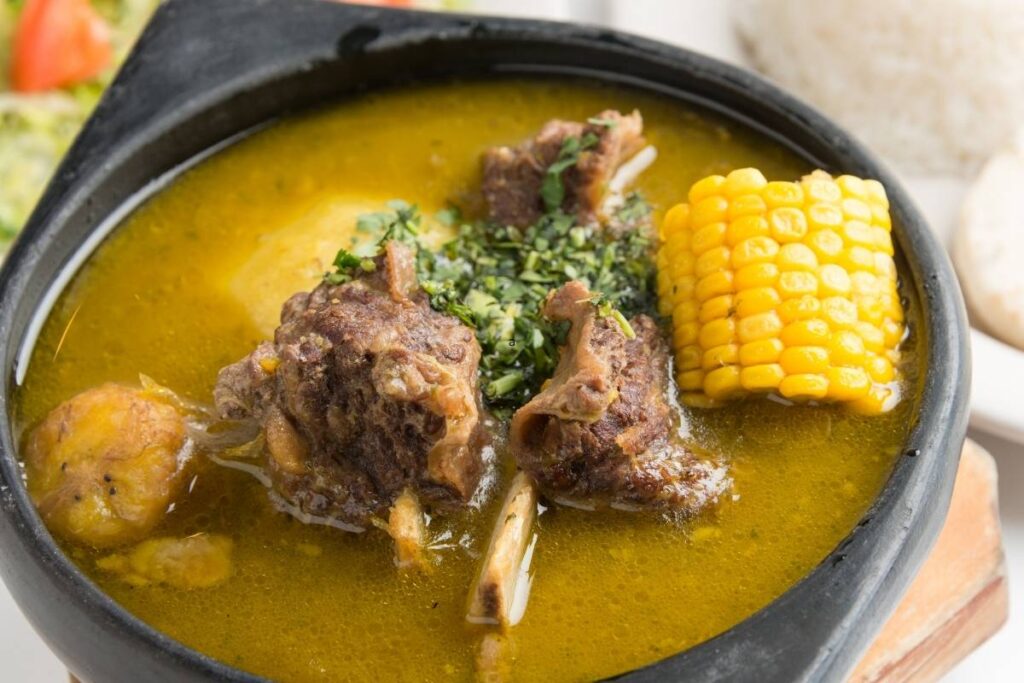
Sancocho is the dish Dominican families cook when everyone comes together. It’s a thick, slow-simmered stew that combines up to seven different meats (chicken, pork, beef, goat, longaniza sausage, and various offcuts) with root vegetables like yuca, yam, green plantain, and corn, all cooked for hours in a broth seasoned with garlic, cilantro, oregano, and a squeeze of bitter orange.
The result is layered, deeply savory, and substantial enough to serve as an entire meal. It’s traditionally accompanied by white rice and a wedge of avocado, and it improves with every reheat. Sancocho is comfort food in the most literal sense, and finding a version made properly in a local restaurant rather than a resort is worth the effort.
Pescado Frito and Tostones
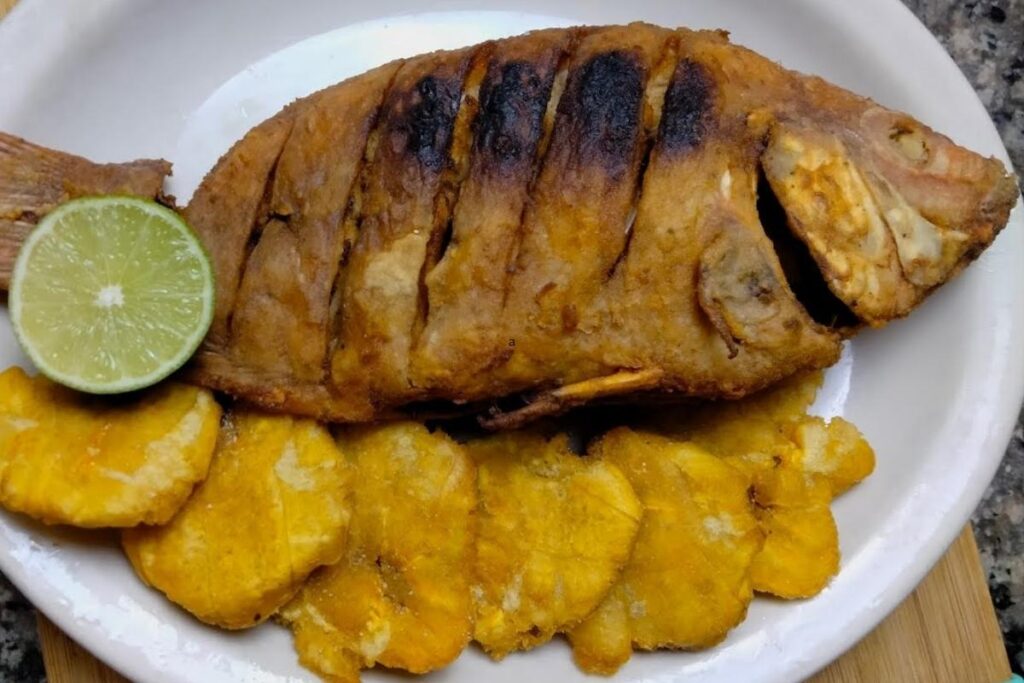
In a destination surrounded by Caribbean water, fried whole fish (pescado frito) is essential eating. The fish, typically red snapper or sea bream, is scored, seasoned with lime and garlic, and deep-fried until the skin is shatteringly crisp and the flesh inside stays moist and flaky. It’s served with tostones (twice-fried green plantain slices, pressed flat between frying rounds until they’re golden and crunchy) and a squeeze of lime.
This is beach food, market food, street food. It’s the dish you eat at a plastic table under a palm roof somewhere along the coast, with a cold Presidente beer in your other hand.
Habichuelas con Dulce
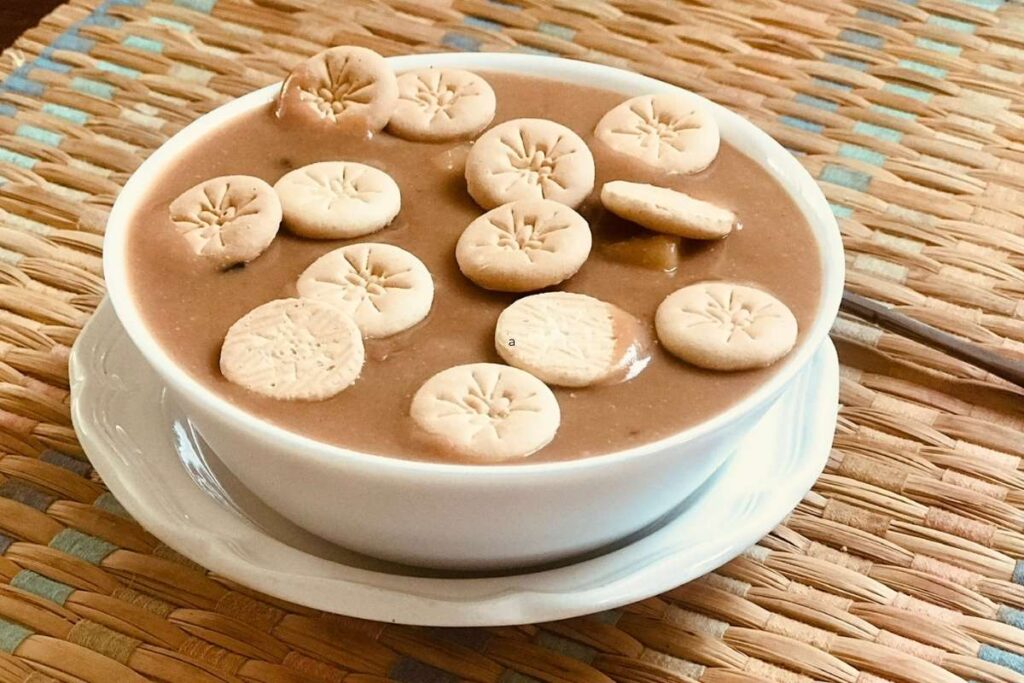
If you visit during Lent or Easter, you’ll encounter habichuelas con dulce, one of the most unexpected desserts in Caribbean cuisine. It’s a sweet cream made from red kidney beans blended with coconut milk, evaporated milk, sugar, cinnamon, cloves, and raisins, served cold with small cookies called galletitas de leche floating on top.
The combination sounds improbable. It works. The bean flavor disappears into the sweetness, and what remains is a spiced, creamy drink-dessert that Dominicans associate with family, tradition, and the specific weeks of the year when it appears everywhere.
Where to Find It
The most important piece of advice is also the simplest: leave the resort. The local comedores and restaurants in Bávaro, El Cortecito, Los Corales, and Punta Cana Village serve all of the dishes above at prices that rarely exceed $5 to $10 per plate. If a restaurant has a handwritten menu, plastic chairs, and a line of locals at noon, sit down. The food inside will teach you more about the Dominican Republic than any guided tour of the resort grounds.