
Surfing is one of those rare activities where the destination matters as much as the sport itself. The wave you ride is shaped by the reef beneath it, the wind direction, the season, the ocean floor, and centuries of geological history. But the experience around the wave, the culture of the town, the food you eat after a session, the people you share a lineup with, matters just as much.
I have spent years working in tourism and hospitality across coastal destinations, and I have watched surfing evolve from a niche subculture into one of the most powerful drivers of travel in the world. Entire economies now depend on it. Towns that were fishing villages a generation ago are now internationally recognized because of the quality of their waves. And the travelers who come for surfing tend to stay longer, spend more locally, and return more often than almost any other segment of tourism.
This is not a quick list of famous breaks. What I want to do here is introduce you to fifteen destinations where the surfing, the setting, and the broader travel experience come together in a way that makes the trip genuinely worthwhile, whether you’re paddling out for the first time or you’ve been riding waves for decades.
1. North Shore, Oahu, Hawaii
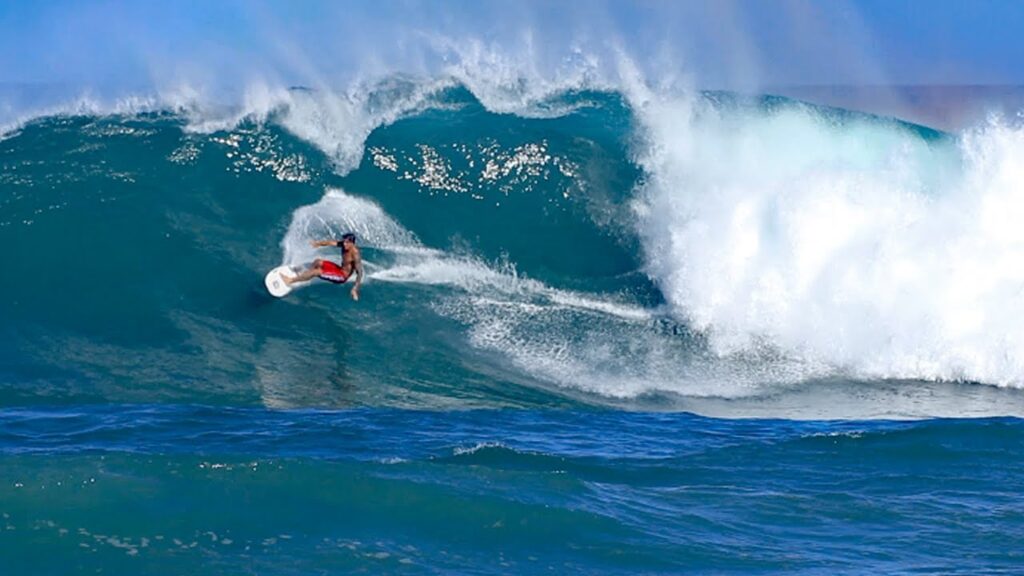
You cannot write about surfing destinations without starting here. The North Shore of Oahu is the spiritual center of modern surf culture, and the stretch of coastline between Haleiwa and Sunset Beach, sometimes called the Seven Mile Miracle, contains some of the most consequential waves in the sport’s history.
The most famous of them is Banzai Pipeline. The wave was first surfed in 1961 by Phil Edwards, filmed by Bruce Brown for the 1962 surf movie Hollow Days, and named after the concrete pipes at a nearby construction site that reminded the group of the cylindrical shape of the breaking wave. In the 1970s, Gerry Lopez earned the nickname “Mr. Pipeline” by mastering the art of riding deep inside its barrels with a calm that seemed to defy the violence of the wave itself.
Pipeline breaks over a shallow, flat tabletop reef riddled with underwater lava caverns. The wave is considered one of the deadliest in the world, having killed multiple surfers and photographers over the decades. It is also, without question, one of the most beautiful. The Pipe Masters, held every December, remains the most coveted title in professional surfing.
But the North Shore is far more than Pipeline. Sunset Beach offers massive, shifting open-ocean swells. Waimea Bay produces some of the largest rideable waves on Earth during big northwest swells. And the culture here, rooted in Native Hawaiian traditions of wave riding that predate European contact by centuries, gives the whole experience a depth that no other surfing destination can replicate.
The best time to visit is between November and February, when consistent North Pacific swells deliver the big winter surf the North Shore is famous for. Summer months bring calmer conditions, better suited for swimming and snorkeling.
2. Ericeira, Portugal

Ericeira holds a distinction no other town in Europe can claim: it is a World Surfing Reserve, one of only a handful on the planet, recognized for the quality, consistency, and environmental significance of its waves. The designation covers a four-kilometer stretch of coastline with roughly a dozen breaks, ranging from beginner-friendly beach breaks to world-class reef barrels.
Ribeira d’Ilhas is the best-known wave, a right-hand point break that has hosted World Surf League events. Coxos, further north, is heavier and hollower, a serious wave for experienced surfers. And for those still learning, the beach breaks on Ericeira’s south side offer small, forgiving walls from spring through summer.
What makes Ericeira special from a travel perspective is its position. It’s a traditional Portuguese fishing village with cobblestone streets, whitewashed buildings, and excellent seafood restaurants, yet it sits just 35 minutes from Lisbon. You get the charm of a small coastal town with the accessibility of a major European capital.
The most consistent surf arrives between October and April, when Atlantic swells push through regularly. Summer is smaller and more suitable for beginners, with warmer water and lighter winds.
3. Jeffreys Bay, South Africa

Jeffreys Bay, or J-Bay, is home to what many surfers consider the finest right-hand point break on Earth. The wave at Supertubes, the crown section of a multi-part point break system, produces long, fast, hollow walls that can carry a surfer for over a kilometer when the swell lines up perfectly.
The town’s surf history begins with Bruce Brown’s 1966 film The Endless Summer, which featured a nearby break at Cape St. Francis and put this stretch of South African coastline on the global surfing map. Surfers who followed soon discovered that J-Bay’s waves were faster, more powerful, and more consistent than what the film had shown. By the 1980s, the WSL (then the ASP) was holding professional competitions at Supertubes, and the town had transformed from a small fishing community into Africa’s most iconic surf destination.
The best surf arrives between May and September, South Africa’s winter, when southwest swells generated by the Roaring Forties push into the bay with remarkable consistency. Water temperatures are cold, so a good wetsuit is essential. Beyond the surf, the surrounding coastline is part of the Garden Route, one of South Africa’s most scenic drives, with opportunities for whale watching, nature reserves, and excellent local seafood.
4. Hossegor, France

Hossegor sits on the southwest coast of France, in the Landes region, and produces some of the heaviest beach breaks in Europe. The waves here break over shifting sandbars shaped by the deep underwater canyon of Gouf de Capbreton, which funnels Atlantic swells directly onto the shore with unusual power and precision.
La Gravière is the most famous spot, a thick, fast barrel that has hosted numerous professional competitions and earned a reputation as one of the best beach breaks anywhere. But Hossegor’s appeal goes beyond one wave. The broader coastline, stretching through neighboring Seignosse and Capbreton, offers a range of conditions from gentle summer waves to heavy autumn barrels.
From a hospitality standpoint, Hossegor is exceptional. The town has a refined French sensibility, with excellent restaurants, boutique surf shops, pine-forested neighborhoods, and a food culture that takes the post-surf meal seriously. It’s also a center of the European surf industry, with several major brands headquartered nearby.
Peak surf season runs from September through November, when the first big autumn swells arrive and the summer crowds thin out. Summer offers smaller, friendlier waves and warmer water, ideal for beginners and families.
5. Uluwatu, Bali, Indonesia

Uluwatu is one of the most visually dramatic surf spots on the planet. The wave breaks in front of towering limestone cliffs on the southern tip of Bali’s Bukit Peninsula, and accessing the lineup requires descending a narrow staircase carved into the rock face, passing through a cave, and paddling out into the Indian Ocean.
The wave itself is a long, powerful left-hander that works best during the dry season, from April through October, when consistent swells from the Southern Ocean meet offshore winds that groom the faces to perfection. On its best days, Uluwatu can produce rides of 300 meters or more, with multiple sections that cater to different skill levels.
Bali’s broader surf infrastructure is among the best in the world. The island offers everything from luxury cliff-top resorts overlooking the break to budget guesthouses in nearby Padang Padang. Surf schools are everywhere, equipment rental is affordable, and the Balinese culture, with its Hindu temples, rice terrace landscapes, and warm hospitality, adds a layer of richness that elevates the trip well beyond the water.
For beginners, Canggu and Kuta on Bali’s south coast offer gentler beach breaks and excellent instruction. For intermediate to advanced surfers, the Bukit Peninsula concentrates some of the best reef breaks in Southeast Asia within a remarkably compact area.
6. Nazaré, Portugal
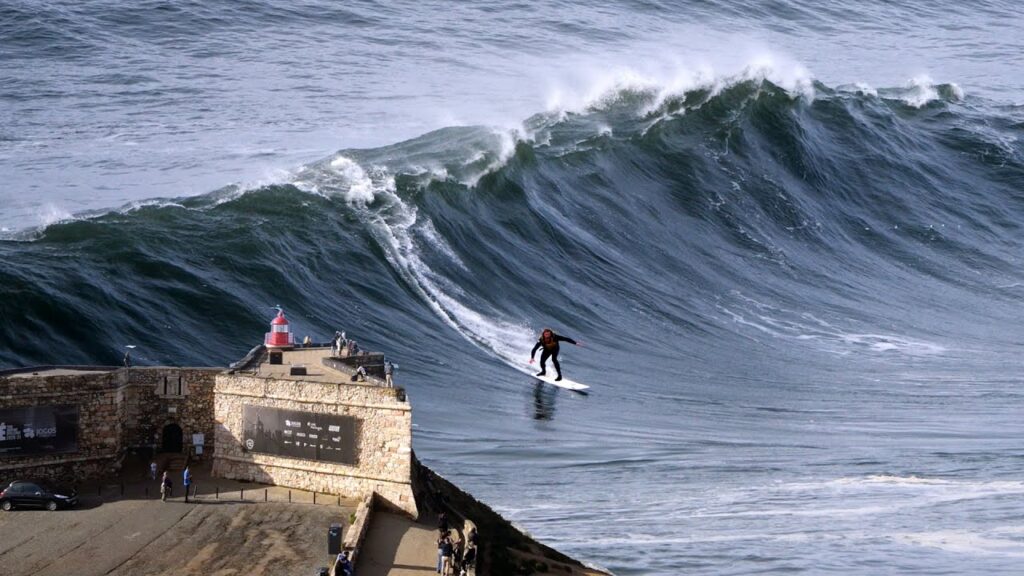
Nazaré occupies a unique place in surfing. This small fishing town on Portugal’s Silver Coast produces the largest waves ever ridden, with the current world record standing at 93.73 feet, set by German surfer Sebastian Steudtner in 2024.
The physics behind Nazaré’s giant waves are tied to the Nazaré Canyon, an underwater gorge that extends roughly 230 kilometers into the Atlantic and reaches depths of over 5,000 meters. When large North Atlantic swells travel across the ocean and hit the canyon, the bathymetry focuses and amplifies the wave energy, pushing walls of water onto the beach at Praia do Norte that are unlike anything found elsewhere.
Big wave surfing at Nazaré is strictly a spectator sport for all but the most elite tow-in surfers. But the town itself is a fascinating destination. The traditional fishing culture is still very much alive, with older women in traditional dress selling dried fish along the cobblestone streets near the harbor. The Sítio neighborhood, perched on a cliff above the beach, offers panoramic views of the break and is home to the iconic red lighthouse from which most of the famous photographs are taken.
The big wave season runs from October through March, with the largest swells typically arriving between November and February. During summer, Nazaré’s main beach offers calm, family-friendly swimming.
7. Taghazout, Morocco
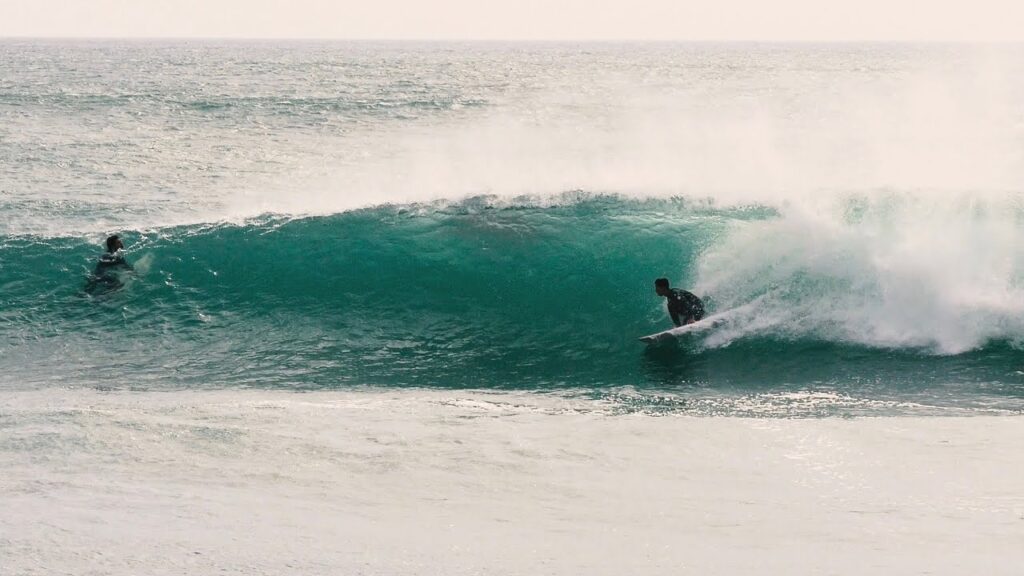
Morocco has quietly become one of the world’s best surfing destinations, and Taghazout is at the center of it. This small village on the Atlantic coast between Essaouira and Agadir sits within reach of a remarkable concentration of quality waves, from long, mellow right-hand points to heavy, barreling reef breaks.
Anchor Point and Killer Point are the headline waves, powerful right-handers that attract experienced surfers from across Europe and beyond. But what makes Taghazout particularly appealing for intermediate surfers is the abundance of accessible breaks like Hash Point, Panoramas, and Banana Point, which offer long, workable walls perfect for building skills and confidence.
The surf season peaks between November and March, when consistent North Atlantic swells wrap around the coast. The climate is dry and mild, and the cost of living is remarkably low compared to European surf destinations. A week in Taghazout, including accommodation, meals, and surf guiding, can cost a fraction of what a similar trip would run in Portugal or France.
The cultural dimension adds genuine depth to the experience. The village retains its Berber identity, and the hospitality is generous. Tagine cooked over charcoal, fresh mint tea, the call to prayer drifting over the lineup at sunset, these are the details that make Taghazout more than a surf trip.
8. Gold Coast, Queensland, Australia
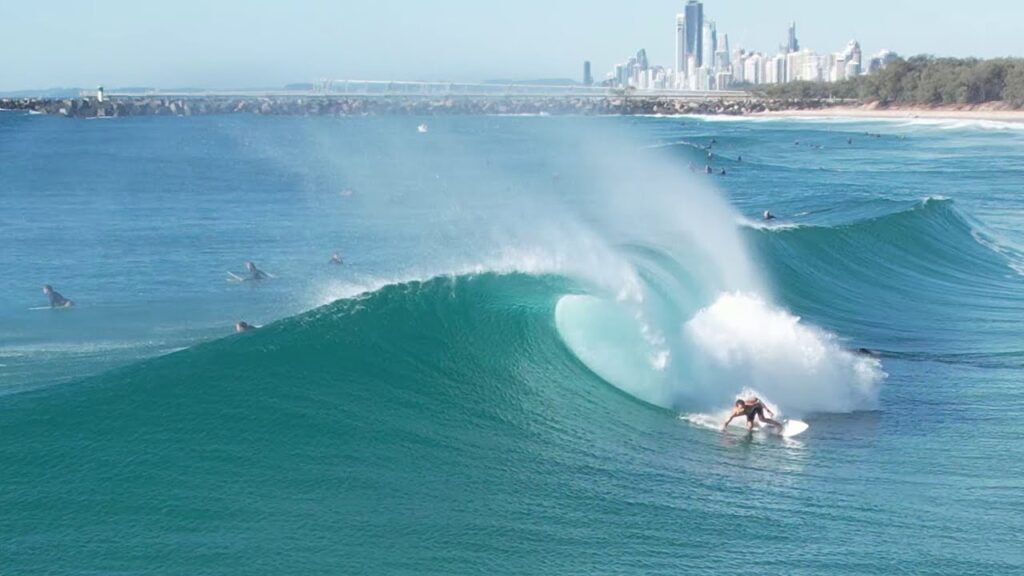
The Gold Coast is where Australian surf culture crystallized into something the rest of the world wanted to imitate. The stretch of coastline from Coolangatta to Burleigh Heads contains some of the most consistent, high-quality sand-bottom point breaks in the Southern Hemisphere, and the surf community here has produced generations of world champions.
Snapper Rocks is the jewel, a fast, hollow right-hander that connects through to Greenmount and Kirra on the right swell, creating one of the longest rideable sand-bottom waves in the world, thanks in part to the Tweed River sand-pumping system that continually reshapes the bottom contour. Burleigh Heads, further north, offers a different feel altogether, a heavier, more powerful right-hander that breaks over rock and produces thick barrels on its day.
The Gold Coast is also one of the most developed surf tourism economies on the planet. The infrastructure is excellent, the water is warm, the beaches are patrolled, and the range of accommodation runs from backpacker hostels to luxury high-rises. The WSL holds Championship Tour events here regularly, and the local surf industry, from board shapers to wetsuit manufacturers, is deeply established.
Cyclone season, from January through April, tends to produce the most consistent swells, though the Gold Coast picks up surf year-round.
9. Tamarindo, Costa Rica

Costa Rica’s Pacific coast has earned a reputation as one of the most accessible surf destinations in the Americas, and Tamarindo is the town that best represents that accessibility. The waves here are consistent, warm, and forgiving, which makes it one of the best places in the world for people learning to surf.
Playa Tamarindo itself offers gentle beach breaks that work across a range of tides and swell sizes. Nearby breaks like Playa Grande, Avellanas, and Langosta provide more variety for intermediate surfers looking to progress. And for those ready for something more challenging, Witch’s Rock and Ollie’s Point, accessible by boat from the Tamarindo area, deliver world-class waves in a remote, jungle-backed setting.
The broader appeal of Costa Rica as a destination is hard to overstate. The country’s commitment to conservation means that the coastline remains relatively unspoiled. The national parks, volcanic landscapes, and tropical wildlife are genuinely world-class. And the Pura Vida culture, that unhurried, appreciative approach to daily life, tends to recalibrate visitors in ways that last long after they leave.
The Pacific coast receives its most consistent surf from May through November, during the rainy season. December through April is drier and sunnier, with smaller but still rideable waves.
10. Mentawai Islands, Indonesia

If the North Shore is the spiritual center of competitive surfing, the Mentawais might be the spiritual center of the surf trip itself. This remote Indonesian archipelago off the western coast of Sumatra contains dozens of world-class breaks spread across islands that remain largely undeveloped, accessible primarily by boat charter or liveaboard surf charter from Padang.
The waves are the draw, and they deliver at a level that is difficult to overstate. Lance’s Right (also known as HTs) is a long, mechanical right-hander considered one of the best waves in the world. Macaronis offers a playful left with a wide, forgiving face ideal for long rides. And for experienced surfers, Telescopes and Rifles produce heavy, hollow barrels that rival anything in Hawaii.
The Mentawais operate on a different rhythm than most surf destinations. There are no roads between islands, no nightclubs, and very limited internet. The accommodation is either a liveaboard charter boat or a small, off-grid surf camp on one of the islands. This remoteness is precisely the point. A trip to the Mentawais is about disconnecting from everything except the ocean.
The optimal season runs from March through November, with April through October generally offering the most consistent conditions. Access is via Padang, which is connected by domestic flights from Jakarta and Bali.
11. Siargao, Philippines

Siargao has risen rapidly in the global surf consciousness, and Cloud 9, its signature wave, is the reason. This thick, hollow right-hand reef break produces some of the best barrels in the Western Pacific, and the backdrop of palm trees, turquoise water, and white sand makes the whole scene almost impossibly photogenic.
Cloud 9 is a serious wave that demands respect, but Siargao offers much more than one break. Tuason’s Point provides a heavy left-hand barrel nearby. Stimpy’s, Jacking Horse, and Rock Island serve up more accessible conditions for intermediate surfers. And the island’s laid-back atmosphere, good-value accommodation, and welcoming Filipino hospitality make it easy to settle in for a longer stay.
Beyond the surf, Siargao offers island-hopping excursions, mangrove forests, natural rock pools, and some of the clearest water in Southeast Asia. The cost of traveling here remains low by international standards, which has made it increasingly popular with surfers on tighter budgets.
The best surf arrives between August and November, with September and October typically producing the most consistent swells. The shoulder months of July and December can also deliver good conditions with fewer crowds.
12. Peniche, Portugal

Peniche is a working fishing town on Portugal’s central coast, and its position on a headland jutting into the Atlantic means it picks up swell from virtually every direction. Within a 15-kilometer radius, you’ll find over ten distinct breaks, making it one of the most wave-rich zones in Europe.
Supertubos is the headliner, a powerful beach break that produces fast, hollow barrels and regularly hosts WSL Championship Tour events. The wave earned its name honestly: on a solid swell with offshore winds, the tubes here rival anything in the world. But Supertubos is just one piece of the puzzle. Baleal, on the north side of the peninsula, offers sheltered, beginner-friendly beach breaks. Consolação has reef breaks that work on different swells and tides. And Molho Leste, inside the harbor, provides small, clean waves when everything else is too big.
Peniche remains refreshingly authentic. The town revolves around its fishing port, the restaurants serve whatever came in that morning, and the accommodation ranges from dedicated surf camps to simple guesthouses. It’s 90 minutes from Lisbon by car, making day trips to the capital easy.
The most powerful and consistent surf arrives between September and April. Summer is gentler and warmer, attracting a large population of surf school students and families.
13. Teahupo’o, Tahiti, French Polynesia

Teahupo’o is not a destination for casual surfers. It is, by most accounts, the heaviest wave on the planet, a mutant slab of water that breaks over a dangerously shallow reef with a force that has to be seen to be believed. The name itself roughly translates to “wall of skulls,” referencing a historical battle in which the defeated had their skulls collected by the victors.
The wave forms when deep-water South Pacific swells hit a sharply rising coral shelf, causing the energy to lurch upward into thick, perfectly cylindrical barrels that detonate just a few feet above the reef. On a big day, the lips of these waves are so thick and so powerful that even the world’s best surfers approach them with visible caution. Multiple surfers have been killed or seriously injured here.
For the global surf community, Teahupo’o has become a proving ground for big wave surfing and a regular stop on the WSL Championship Tour. It was also the venue for the surfing events at the 2024 Paris Olympic Games, which brought the wave to an audience of millions who had never seen anything like it.
As a travel destination, Tahiti offers warmth, Polynesian culture, exceptional diving, and the kind of remote Pacific beauty that feels increasingly rare. But a trip specifically for surfing Teahupo’o is best suited for advanced to expert surfers who understand the risks involved.
The best swells arrive between May and October, with August and September producing the most consistent large surf.
14. Raglan, New Zealand

Raglan is a small town on New Zealand’s North Island that has built its identity around one remarkable wave: a long, peeling left-hand point break at Manu Bay that, when the swell cooperates, can offer rides of several hundred meters. The wave is considered one of the longest left-handers on the planet.
The surf scene here is rooted in a community that values simplicity, environmental stewardship, and access. Raglan doesn’t have the luxury resorts or surf industry infrastructure of Bali or the Gold Coast. What it has instead is a genuine, tight-knit surf culture where locals still know each other by name and the lineup operates on mutual respect rather than aggressive competition.
In 2026, Raglan gained additional global recognition when the World Surf League added it to the Championship Tour schedule, replacing Jeffreys Bay for the season and giving the world’s best surfers a chance to compete on one of the Southern Hemisphere’s most iconic lefts.
Indicators, the main break at Manu Bay, works best on solid southwest swells with light easterly winds. The water is cold year-round and requires a thick wetsuit. The best and most consistent conditions typically fall between March and September, during the Southern Hemisphere’s autumn and winter.
15. El Salvador
El Salvador is Central America’s most underappreciated surf destination, and it’s worth understanding why. The country’s Pacific coast faces directly into the Southern Hemisphere swells that march up from New Zealand and Antarctica, producing consistent, warm-water waves from March through October. The result is a coastline that offers quality point breaks, reef breaks, and beach breaks across a remarkably compact stretch.
Punta Roca, in the town of La Libertad, is the country’s most famous wave, a fast right-hand point break that has hosted WSL Championship Tour events and earned recognition as one of the best waves in Central America. El Zonte, further east, has become a hub for surf tourism with a growing number of small hotels and surf camps. And El Sunzal offers accessible, fun waves that work well for intermediate surfers.
What sets El Salvador apart from other tropical surf destinations is the efficiency of getting there and the value once you arrive. Flights from major US cities land in San Salvador, and the best surf spots are less than an hour’s drive from the airport. Daily budgets for accommodation, food, and transport are among the lowest in the Americas for comparable wave quality.
The country has worked hard in recent years to develop its surf tourism infrastructure while maintaining the authenticity of its coastal communities. The local food, particularly the pupusas and fresh ceviche, the warm Pacific water, and the lack of the overcrowding that plagues more established destinations make El Salvador a destination that rewards the traveler willing to look beyond the obvious choices.
Choosing the Right Destination
Selecting a surf destination is ultimately a question of matching what you want from the experience with what a place can offer. If you’re a beginner, the gentle beach breaks of Tamarindo, Canggu, or Ericeira’s south side will serve you far better than the hollow reefs of Uluwatu or Teahupo’o. If you’re an experienced surfer chasing the best waves of your life, Pipeline, J-Bay, and the Mentawais sit in a category of their own. If you want to combine surfing with broader cultural exploration, Morocco, Bali, and Portugal offer the richest blend of waves and off-the-water experiences.
What I would encourage, regardless of your skill level, is to look beyond the wave itself. The best surf trips I have seen, both as a traveler and as someone who works in this industry, are the ones where people engage with the place they’re visiting. They eat the local food. They learn a few words in the local language. They understand the lineup etiquette and respect the people who surf there year-round. They treat the trip as a cultural exchange, not just an athletic one.
The ocean is the same everywhere. It’s what surrounds it that makes each destination worth the journey.